CompareHaloalkanes and Haloarenes
Haloalkanes and Haloarenes: relationships and examples
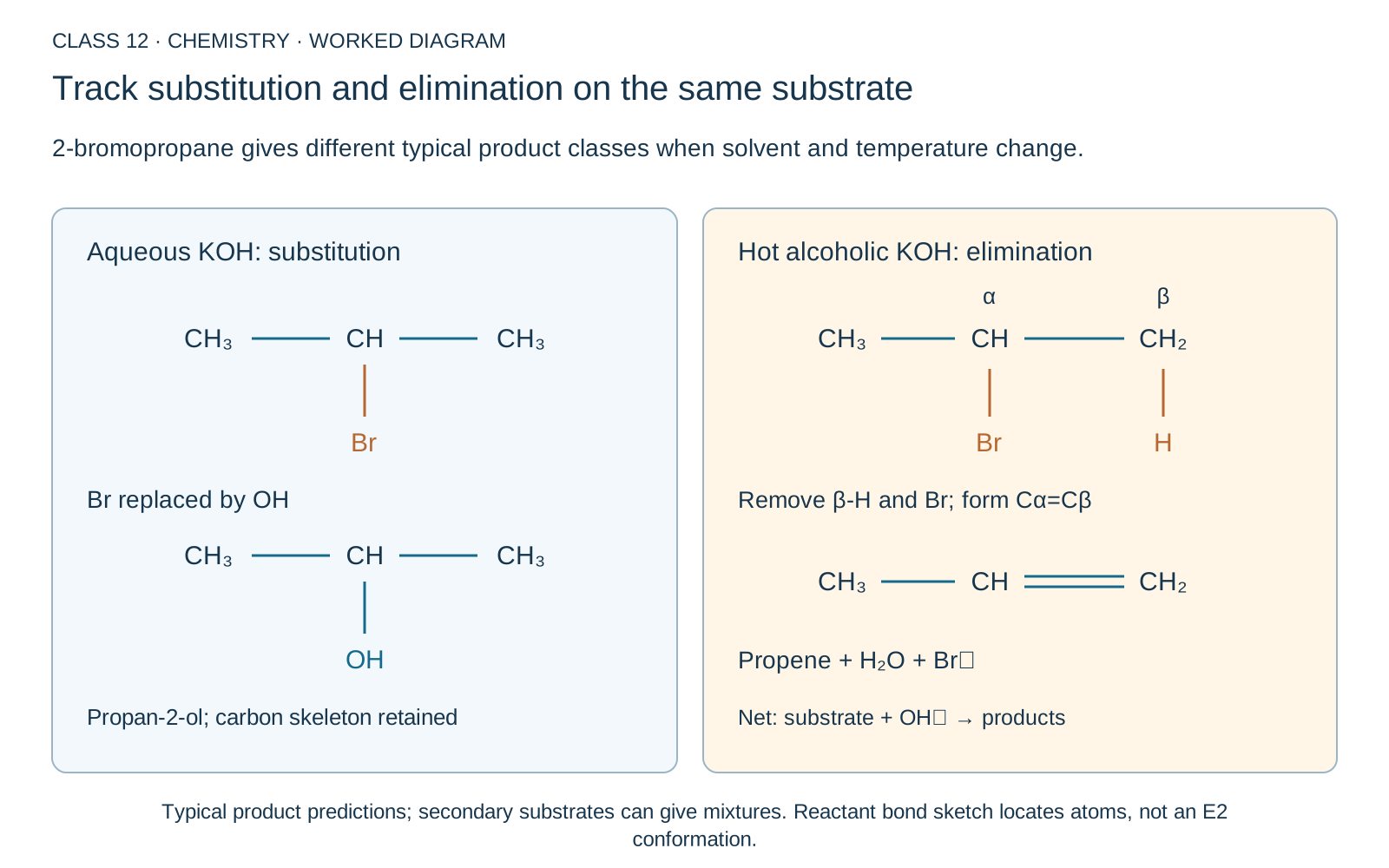
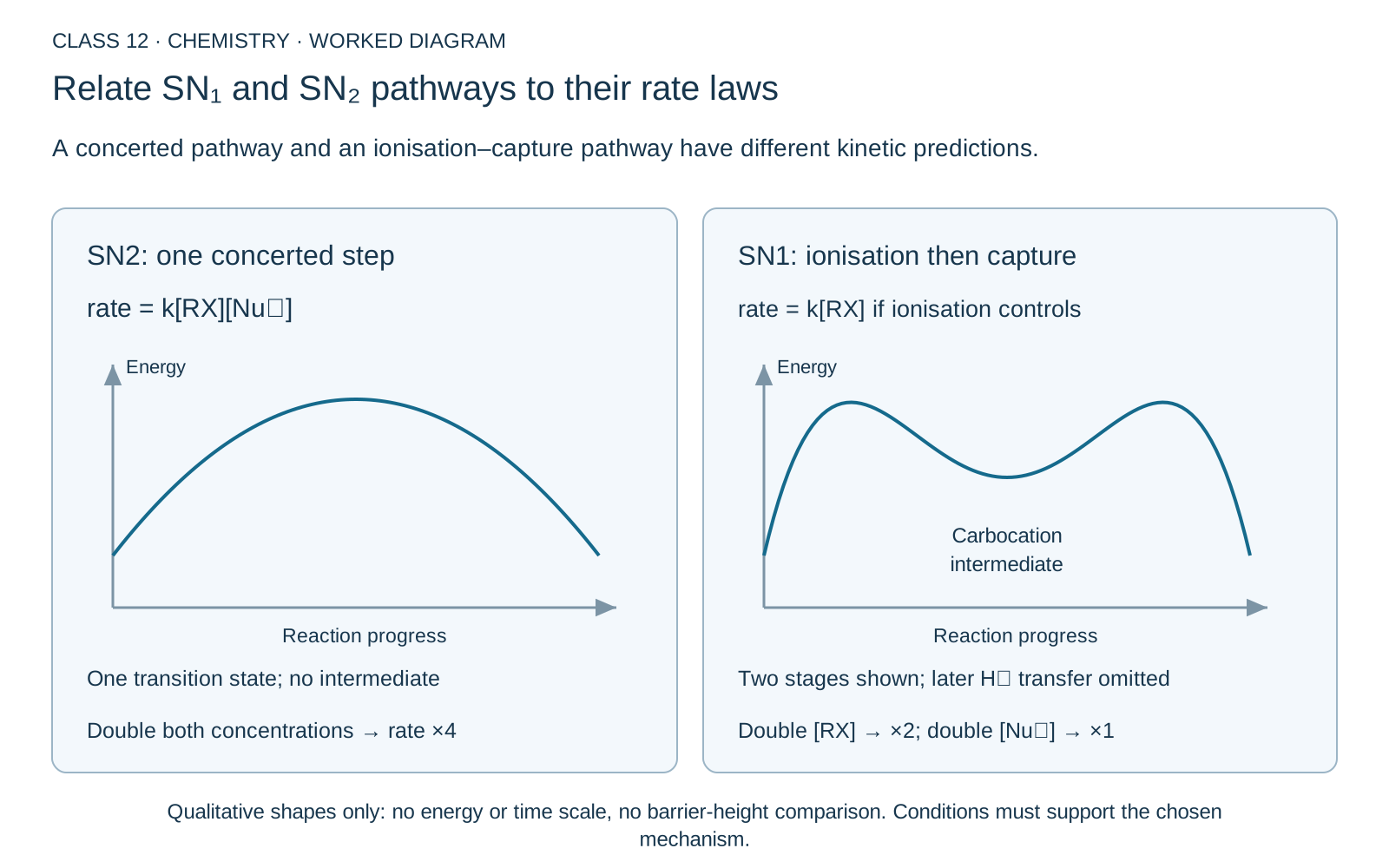
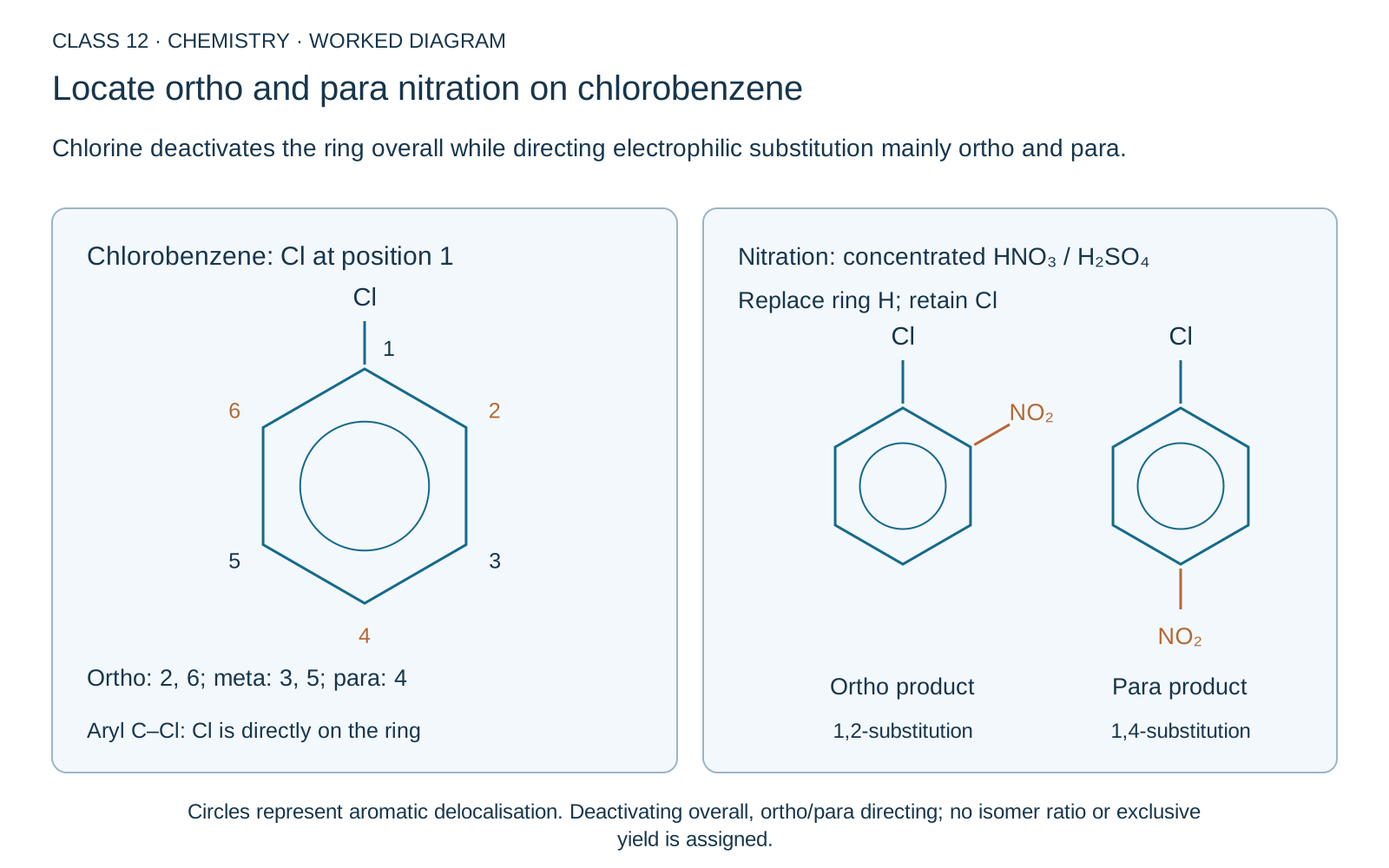
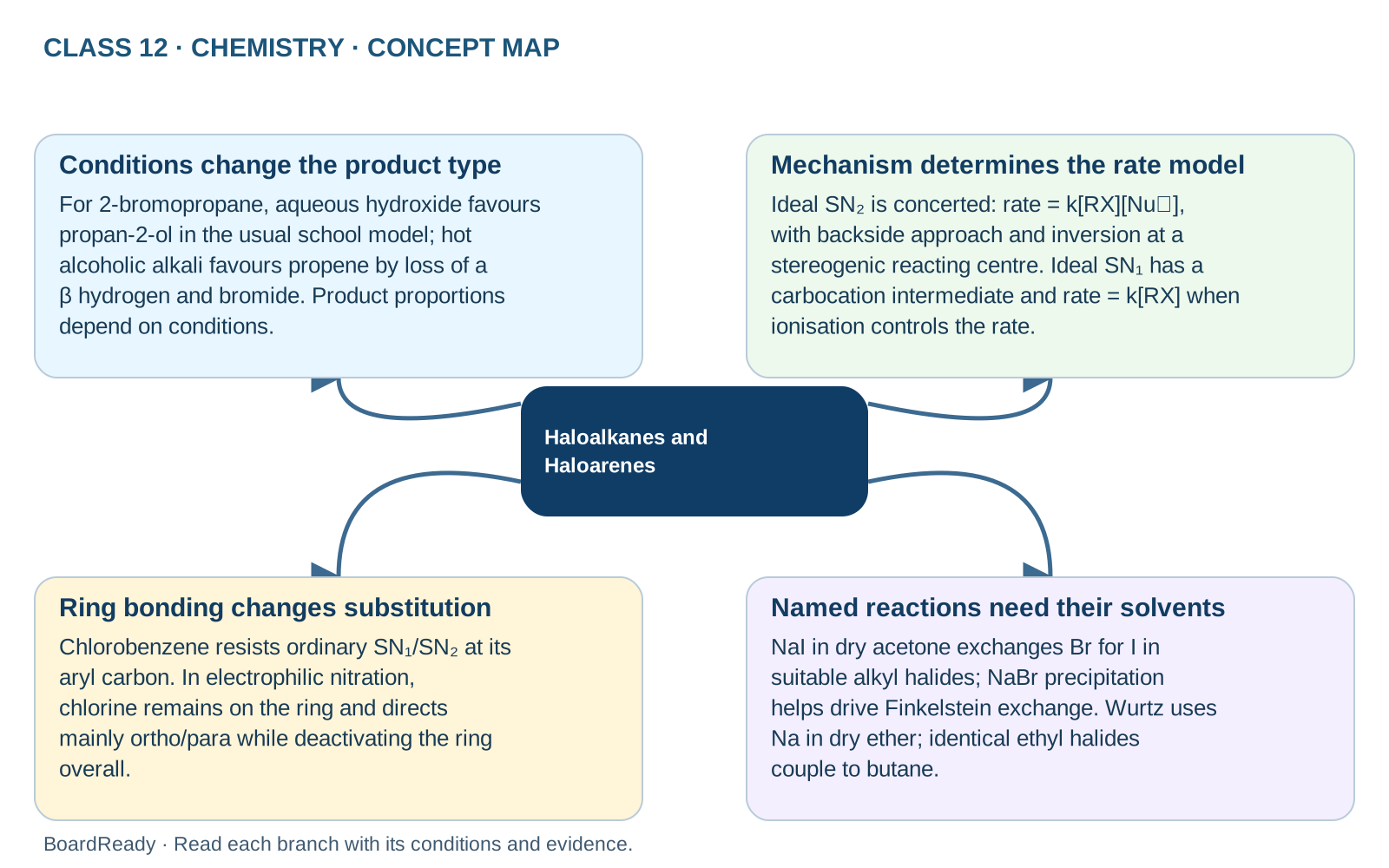
Use substrate structure, reaction conditions and electron-flow models to distinguish halo-compound reactions. Conditions change the product type: For 2-bromopropane, aqueous hydroxide favours propan-2-ol in the usual school model; hot alcoholic alkali favours propene by loss of a β hydrogen and bromide. Product proportions depend on conditions. Mechanism determines the rate model: Ideal SN₂ is concerted: rate = k[RX][Nu⁻], with backside approach and inversion at a stereogenic reacting centre. Ideal SN₁ has a carbocation intermediate and rate = k[RX] when ionisation controls the rate. Ring bonding changes substitution: Chlorobenzene resists ordinary SN₁/SN₂ at its aryl carbon. In electrophilic nitration, chlorine remains on the ring and directs mainly ortho/para while deactivating the ring overall. Named reactions need their solvents: NaI in dry acetone exchanges Br for I in suitable alkyl halides; NaBr precipitation helps drive Finkelstein exchange. Wurtz uses Na in dry ether; identical ethyl halides couple to butane.Conditions change the product type
For 2-bromopropane, aqueous hydroxide favours propan-2-ol in the usual school model; hot alcoholic alkali favours propene by loss of a β hydrogen and bromide. Product proportions depend on conditions.Mechanism determines the rate model
Ideal SN₂ is concerted: rate = k[RX][Nu⁻], with backside approach and inversion at a stereogenic reacting centre. Ideal SN₁ has a carbocation intermediate and rate = k[RX] when ionisation controls the rate.Check: Identify the carbon bearing halogen and state the reagents, solvent and temperature. Distinguish replacing halide, removing a β hydrogen, and replacing a ring hydrogen; an aryl halide does not follow every alkyl-halide rule.