CompareGeneral Principles of Isolation of Elements
General Principles of Isolation of Elements: relationships and examples
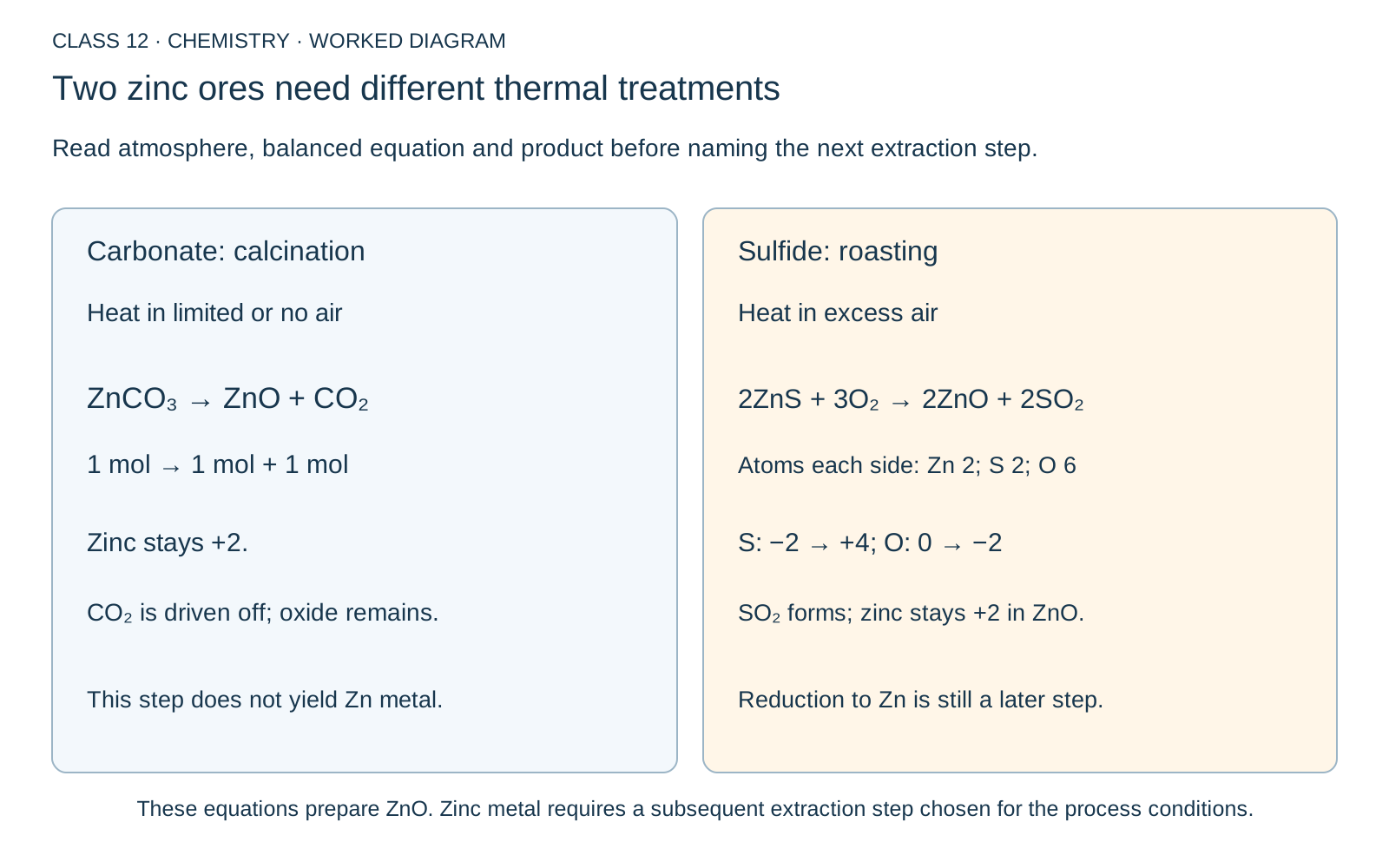
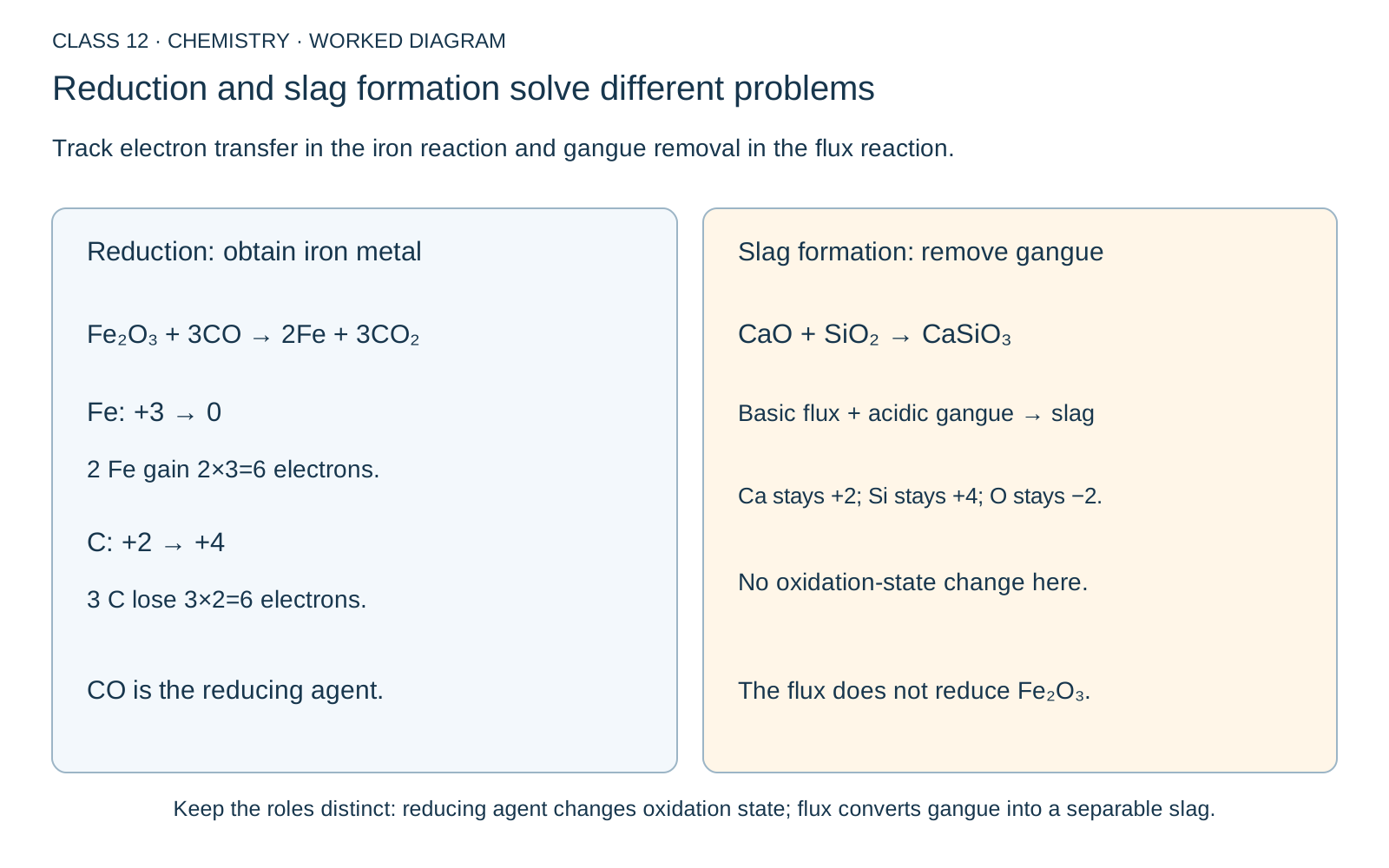
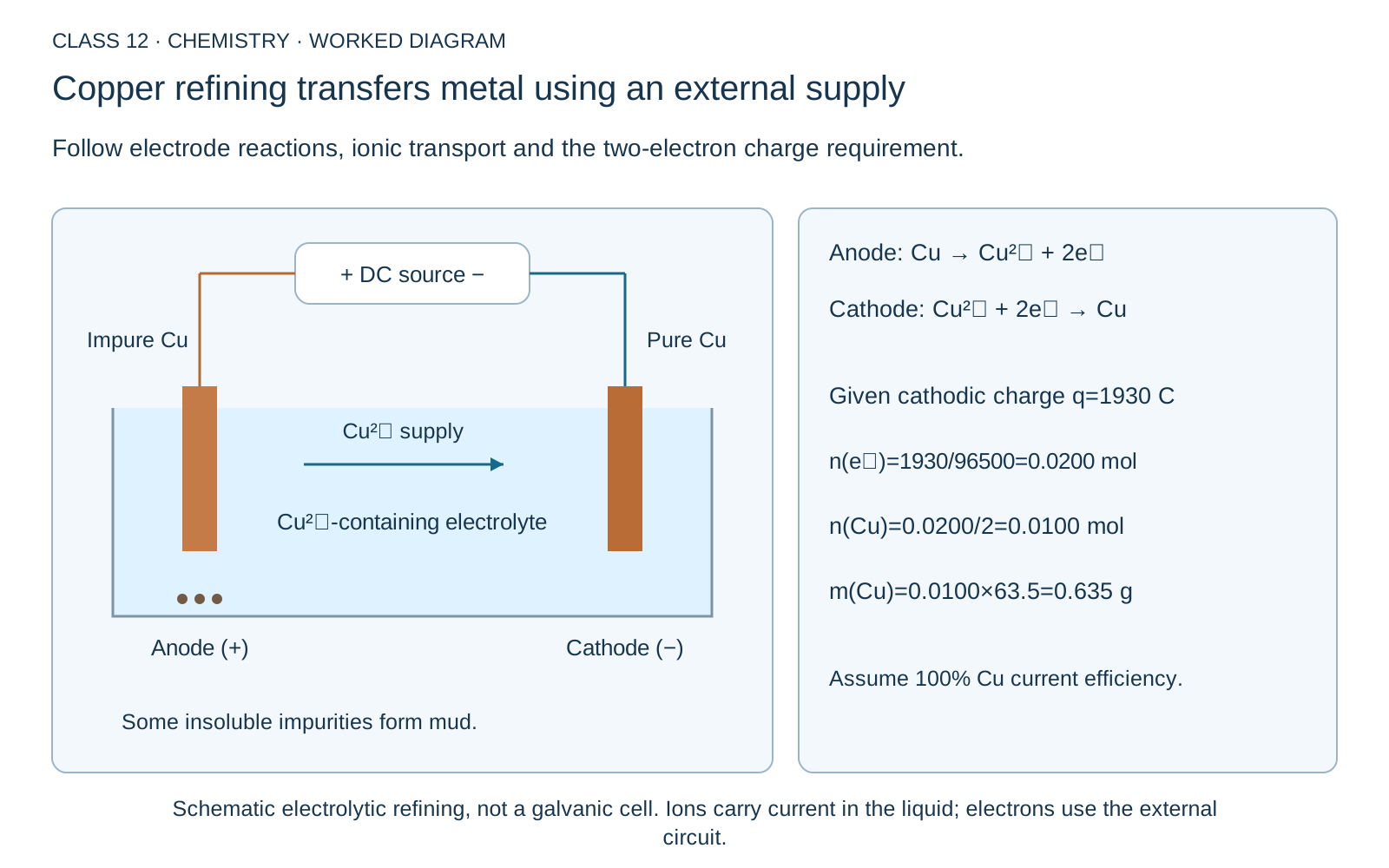
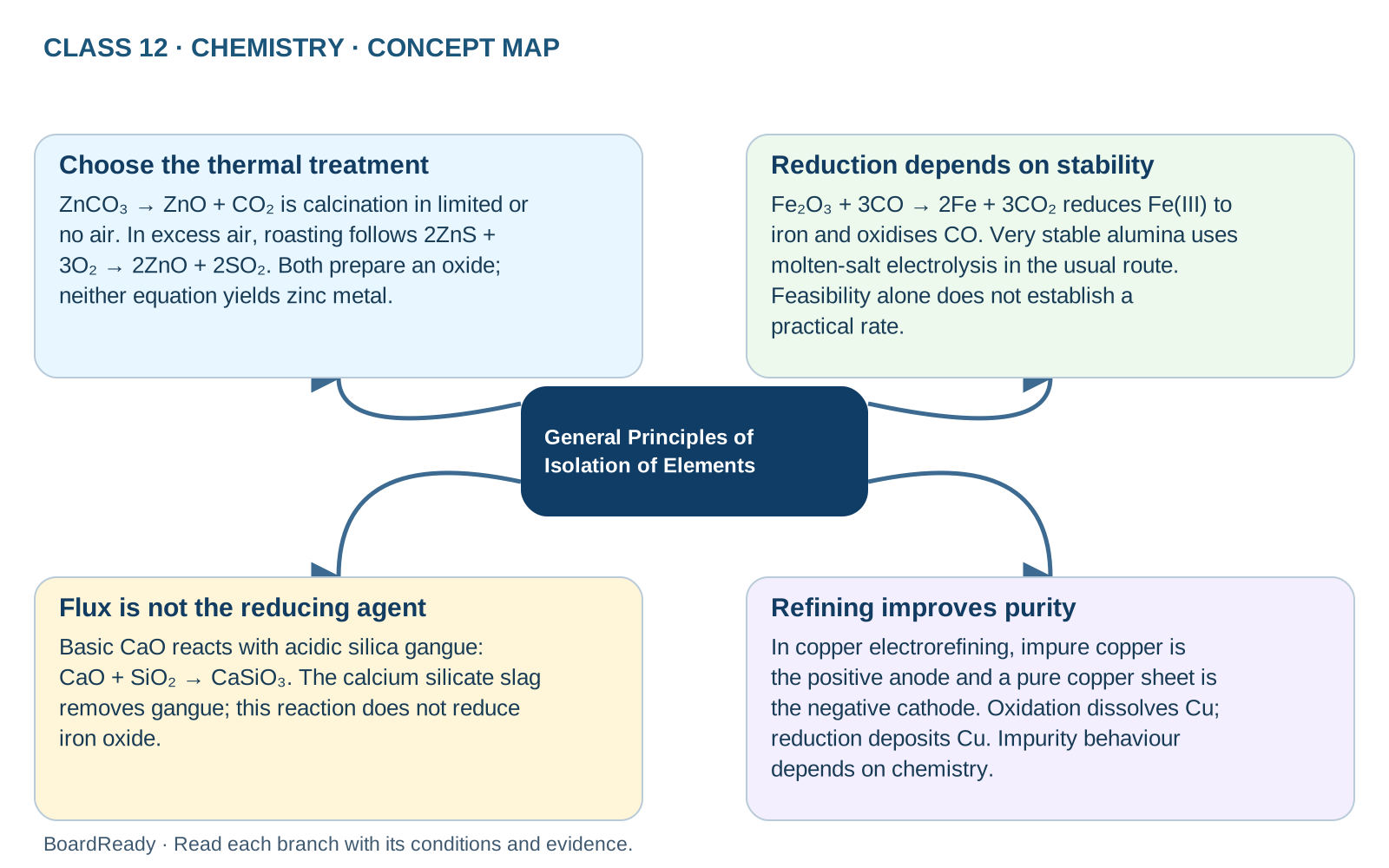
Distinguish ore preparation, reduction, gangue removal and refining by their chemical purpose. Choose the thermal treatment: ZnCO₃ → ZnO + CO₂ is calcination in limited or no air. In excess air, roasting follows 2ZnS + 3O₂ → 2ZnO + 2SO₂. Both prepare an oxide; neither equation yields zinc metal. Reduction depends on stability: Fe₂O₃ + 3CO → 2Fe + 3CO₂ reduces Fe(III) to iron and oxidises CO. Very stable alumina uses molten-salt electrolysis in the usual route. Feasibility alone does not establish a practical rate. Flux is not the reducing agent: Basic CaO reacts with acidic silica gangue: CaO + SiO₂ → CaSiO₃. The calcium silicate slag removes gangue; this reaction does not reduce iron oxide. Refining improves purity: In copper electrorefining, impure copper is the positive anode and a pure copper sheet is the negative cathode. Oxidation dissolves Cu; reduction deposits Cu. Impurity behaviour depends on chemistry.Choose the thermal treatment
ZnCO₃ → ZnO + CO₂ is calcination in limited or no air. In excess air, roasting follows 2ZnS + 3O₂ → 2ZnO + 2SO₂. Both prepare an oxide; neither equation yields zinc metal.Reduction depends on stability
Fe₂O₃ + 3CO → 2Fe + 3CO₂ reduces Fe(III) to iron and oxidises CO. Very stable alumina uses molten-salt electrolysis in the usual route. Feasibility alone does not establish a practical rate.Check: State what each operation achieves and balance its equation. Keep concentration separate from extraction, flux separate from reducing agent, and electrolytic refining separate from galvanic-cell signs.