CompareHuman Health and Disease
Human Health and Disease: relationships and examples
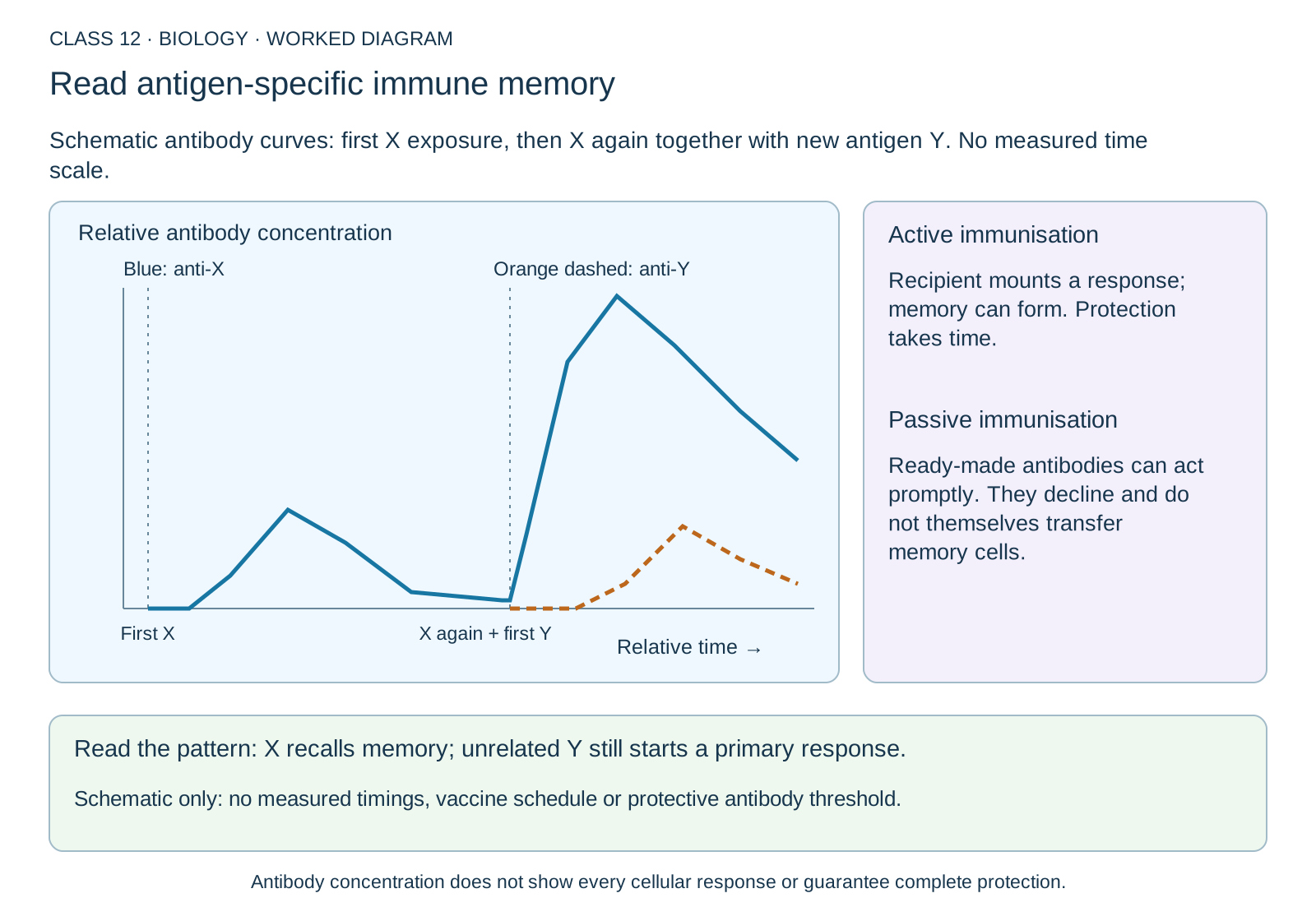
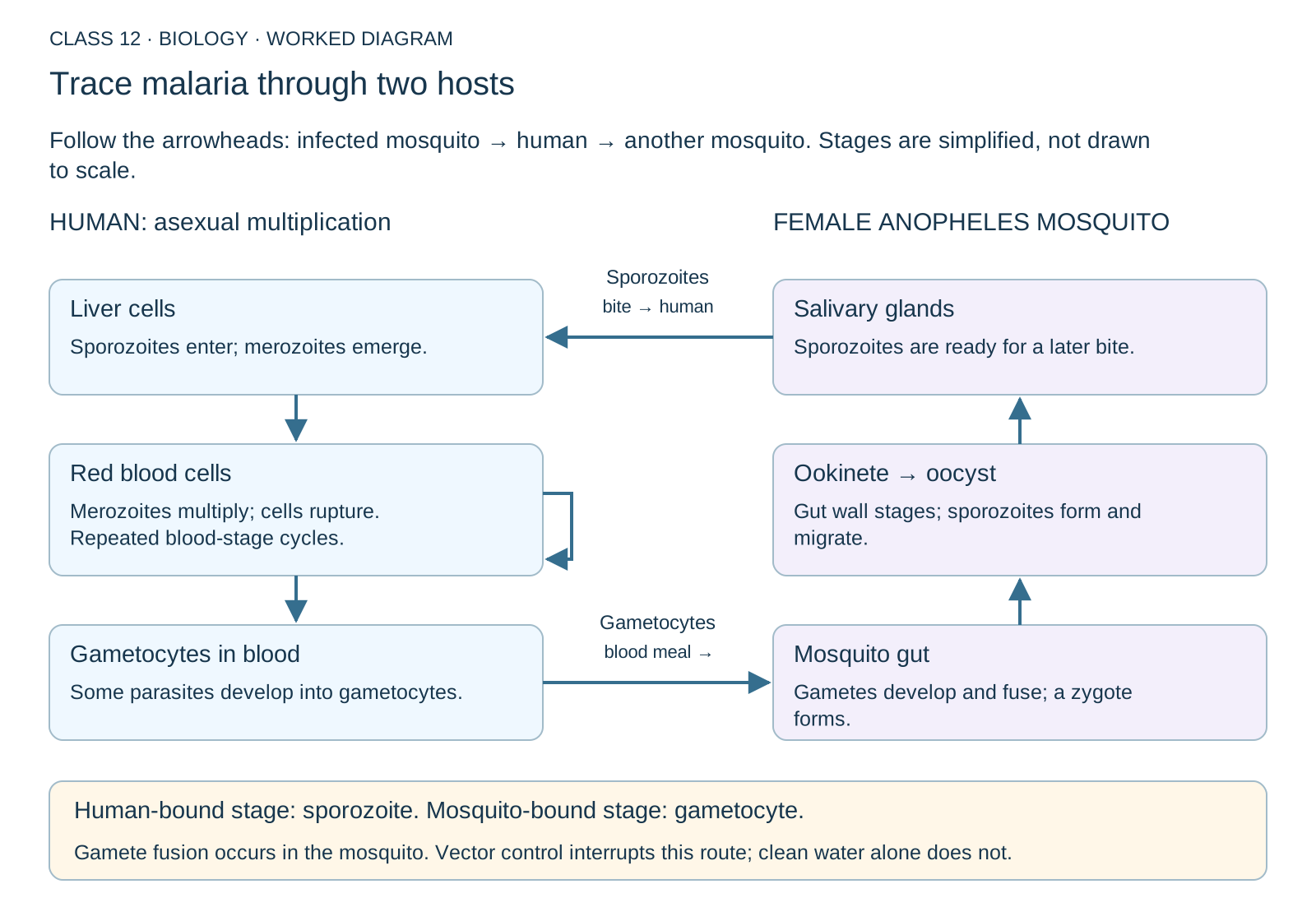
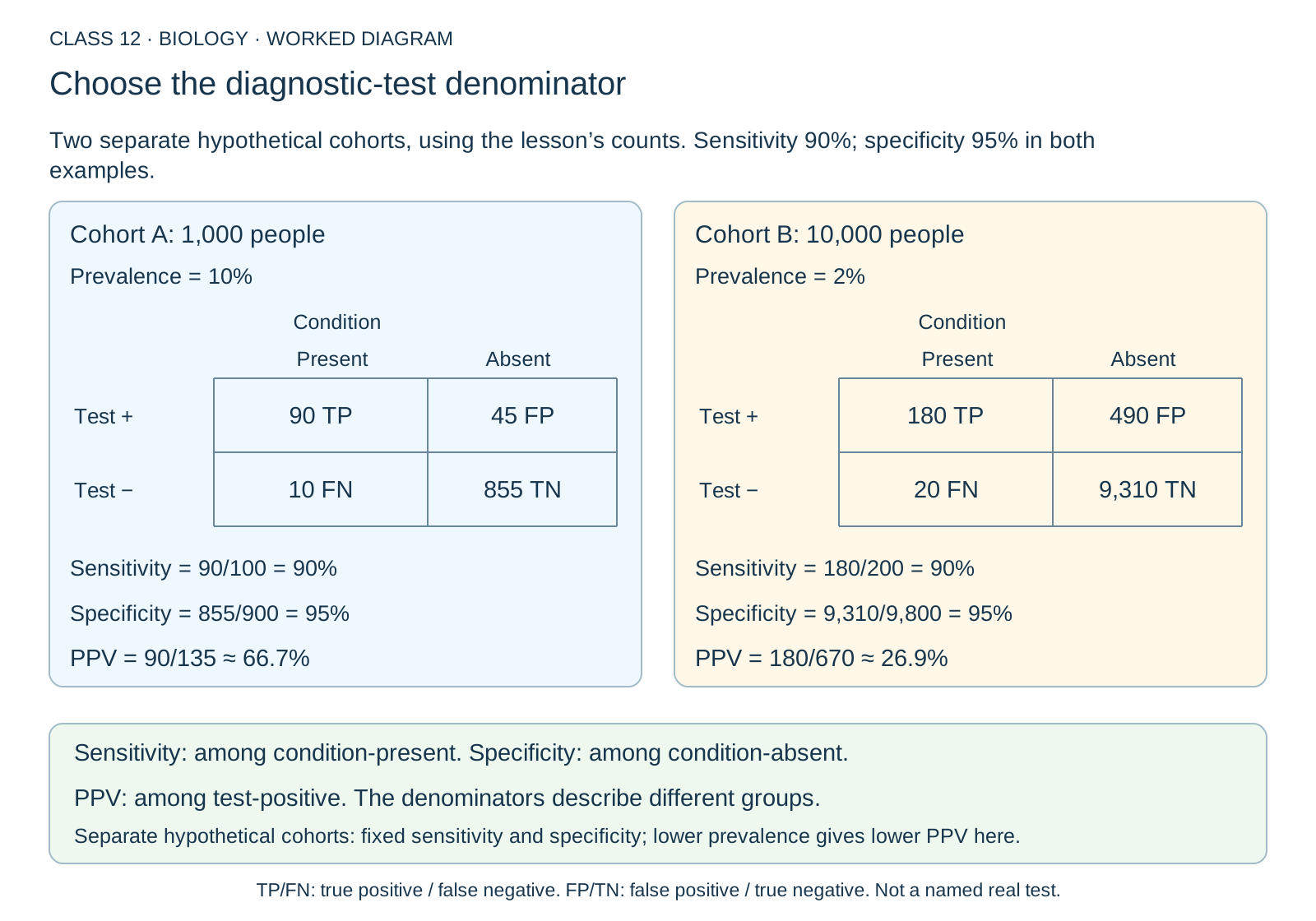
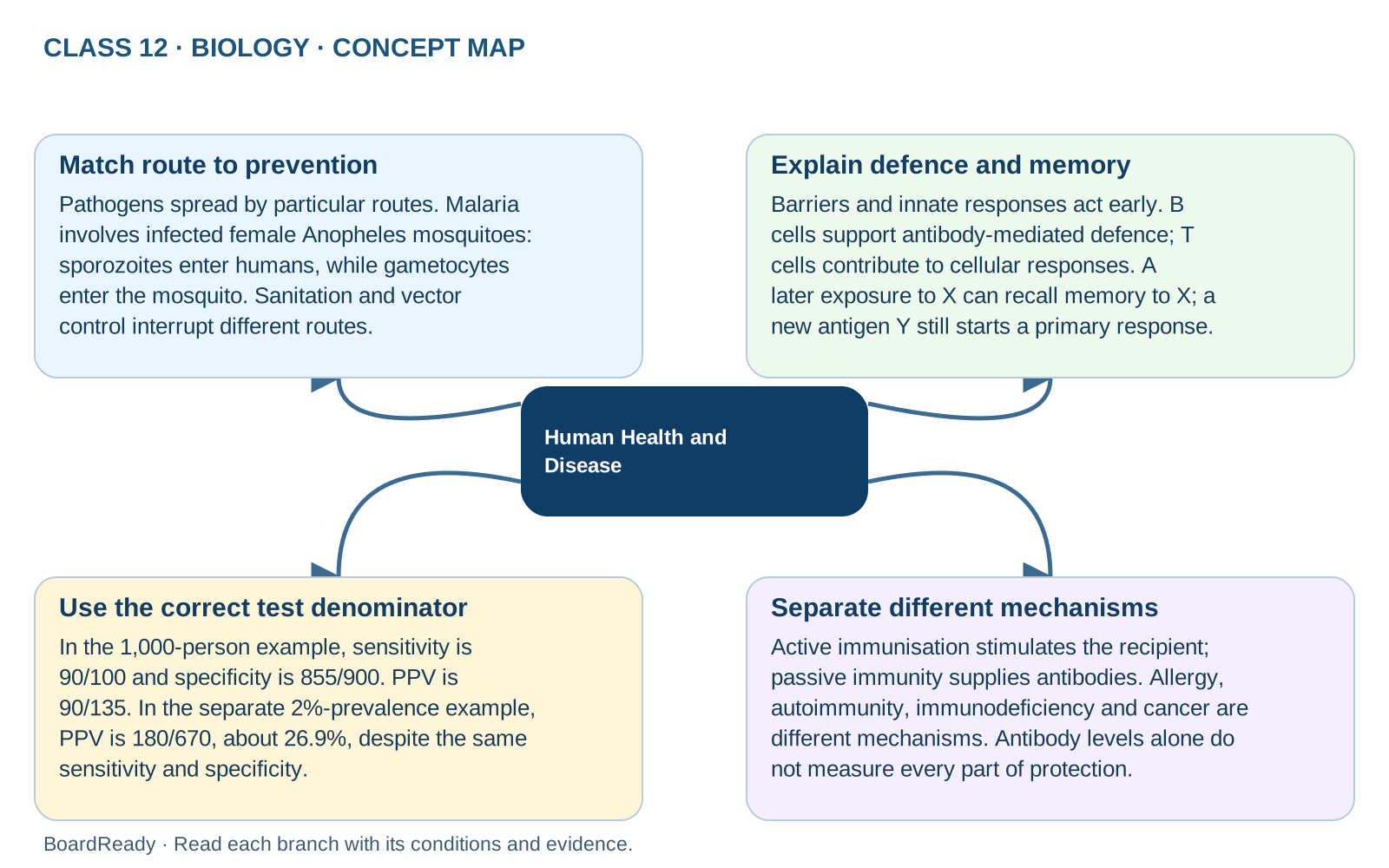
Connect the route of infection, the mechanism of defence and the evidence used to interpret a test. Worked examples distinguish antigen-specific memory, parasite stages and diagnostic denominators. Match route to prevention: Pathogens spread by particular routes. Malaria involves infected female Anopheles mosquitoes: sporozoites enter humans, while gametocytes enter the mosquito. Sanitation and vector control interrupt different routes. Explain defence and memory: Barriers and innate responses act early. B cells support antibody-mediated defence; T cells contribute to cellular responses. A later exposure to X can recall memory to X; a new antigen Y still starts a primary response. Use the correct test denominator: In the 1,000-person example, sensitivity is 90/100 and specificity is 855/900. PPV is 90/135. In the separate 2%-prevalence example, PPV is 180/670, about 26.9%, despite the same sensitivity and specificity. Separate different mechanisms: Active immunisation stimulates the recipient; passive immunity supplies antibodies. Allergy, autoimmunity, immunodeficiency and cancer are different mechanisms. Antibody levels alone do not measure every part of protection.Match route to prevention
Pathogens spread by particular routes. Malaria involves infected female Anopheles mosquitoes: sporozoites enter humans, while gametocytes enter the mosquito. Sanitation and vector control interrupt different routes.Explain defence and memory
Barriers and innate responses act early. B cells support antibody-mediated defence; T cells contribute to cellular responses. A later exposure to X can recall memory to X; a new antigen Y still starts a primary response.Check: State the agent or trigger, route, host response and evidence separately. Label whether a number is among people with the condition, people without it, or positive test results; a positive screening result alone is not a diagnosis.