CompareLiving World and Taxonomy
Living World and Taxonomy: relationships and examples
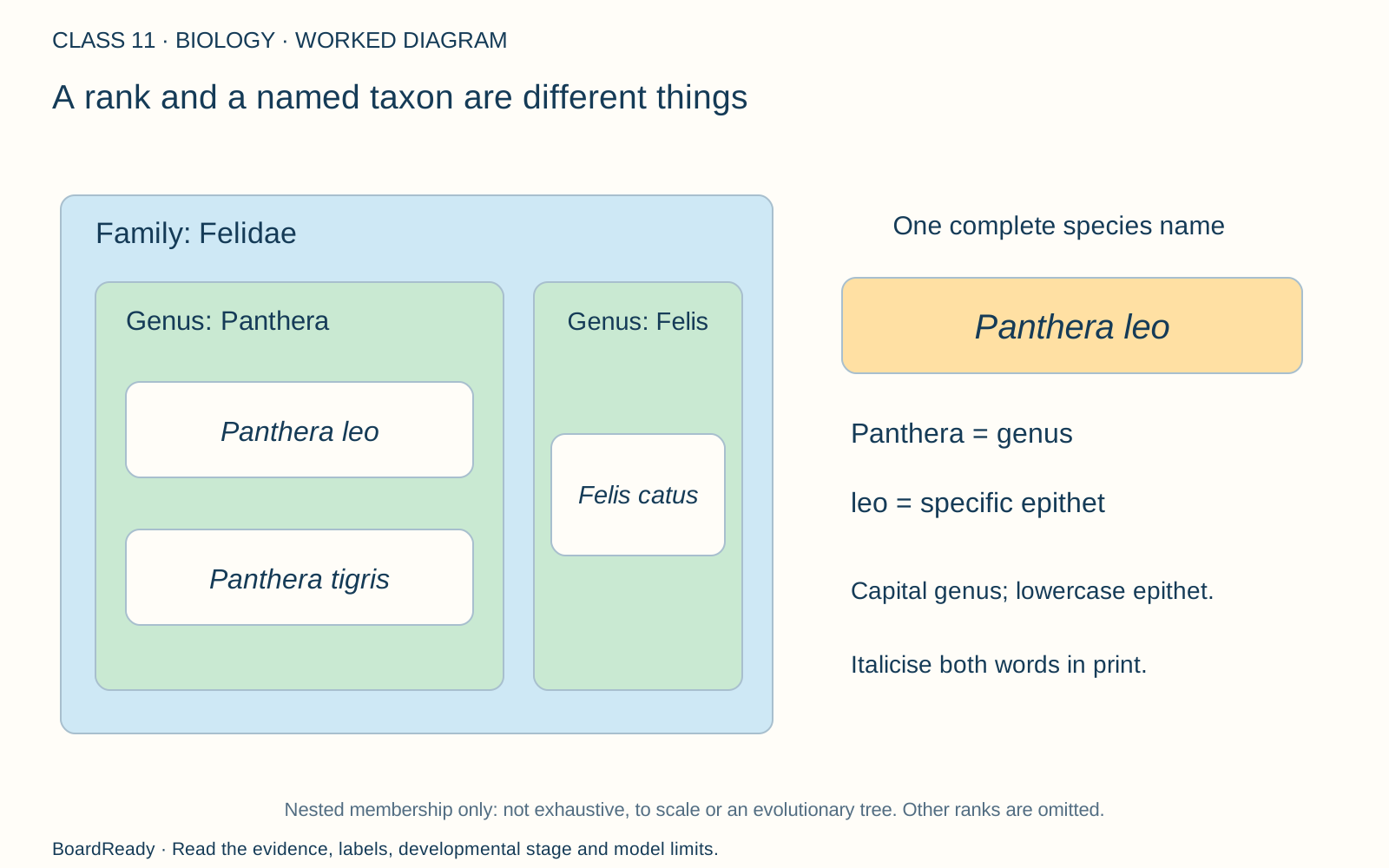
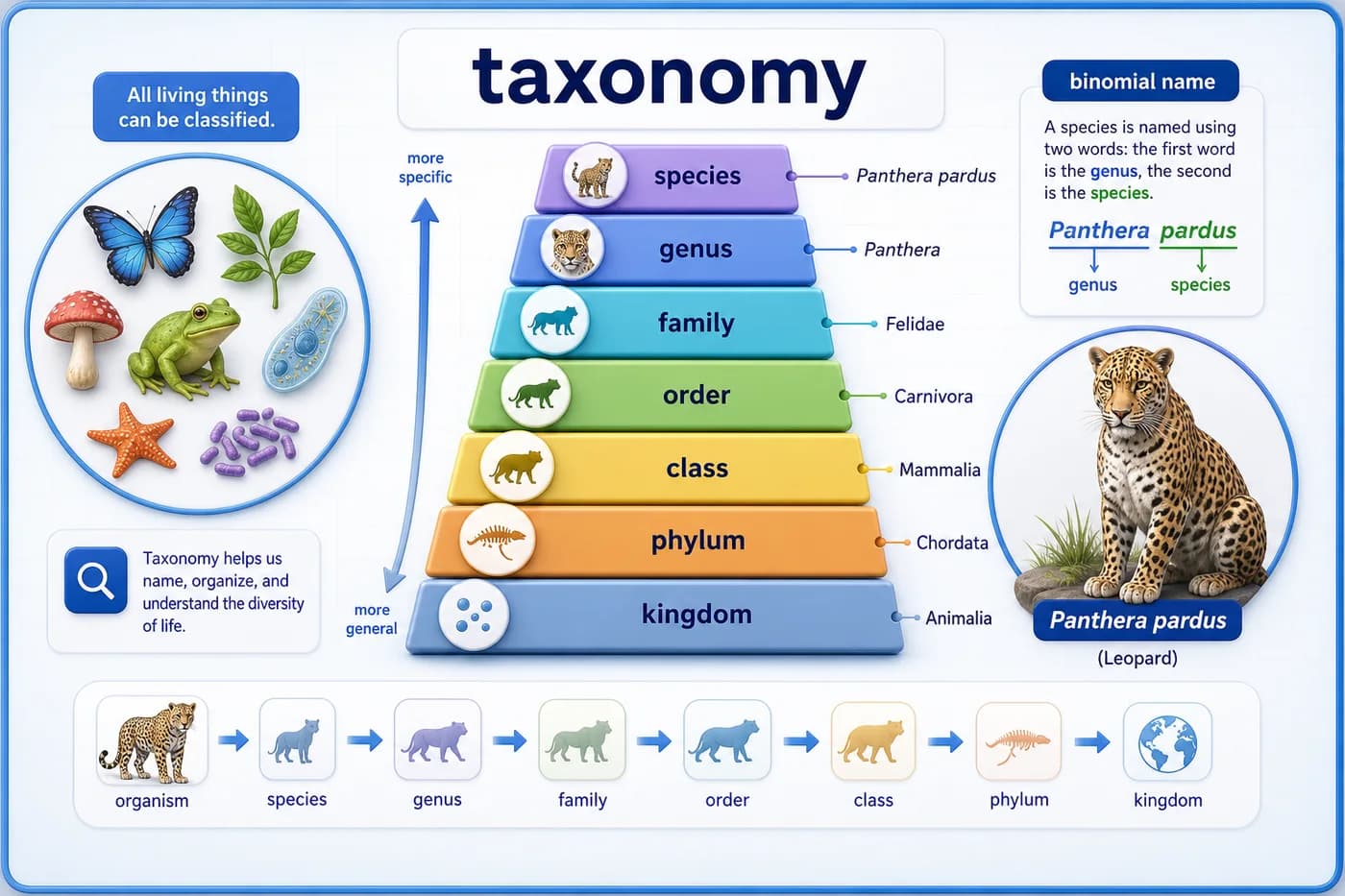
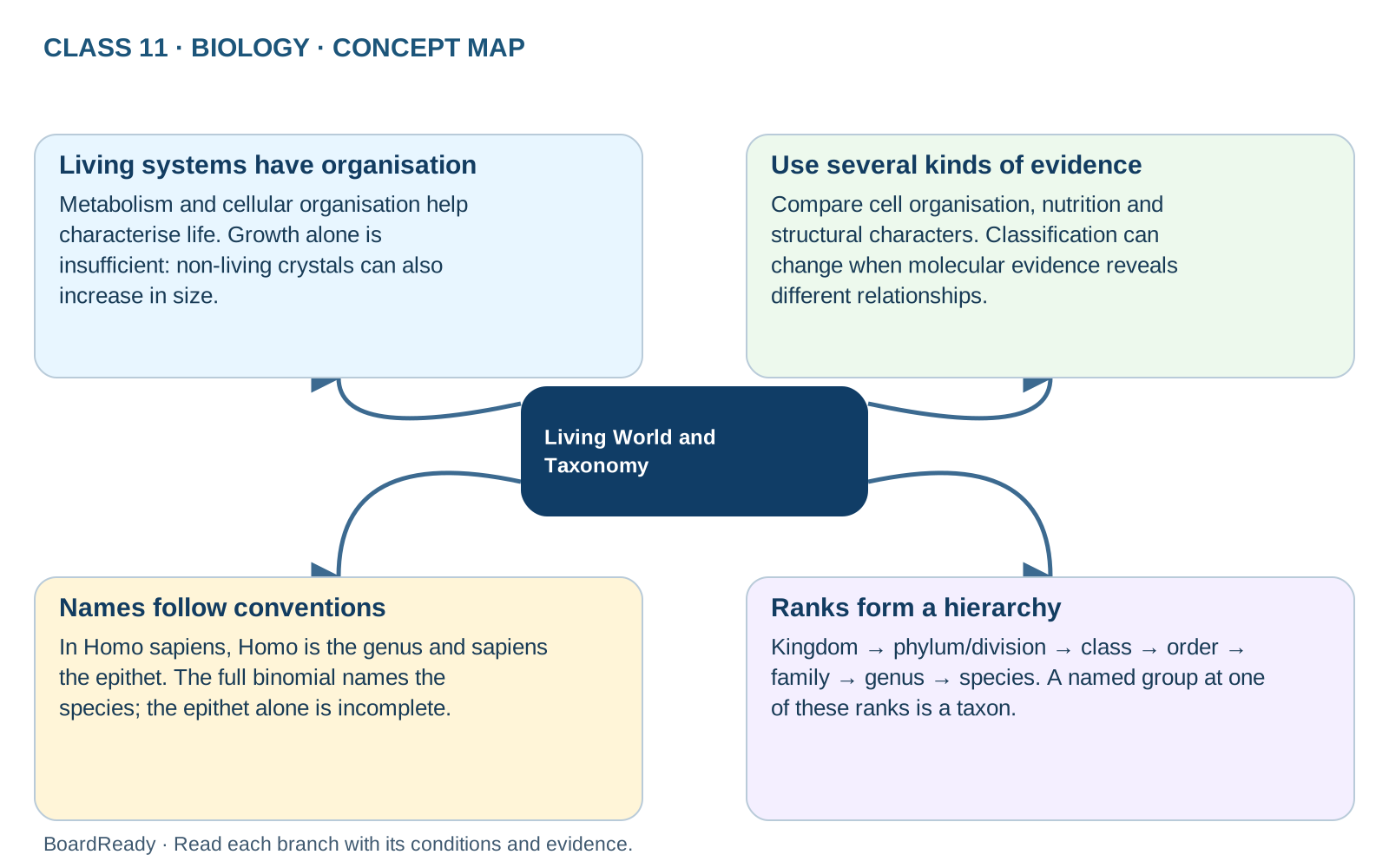
Connect the diversity of living systems to the evidence and conventions used to identify and classify organisms. Living systems have organisation: Metabolism and cellular organisation help characterise life. Growth alone is insufficient: non-living crystals can also increase in size. Use several kinds of evidence: Compare cell organisation, nutrition and structural characters. Classification can change when molecular evidence reveals different relationships. Names follow conventions: In Homo sapiens, Homo is the genus and sapiens the epithet. The full binomial names the species; the epithet alone is incomplete. Ranks form a hierarchy: Kingdom → phylum/division → class → order → family → genus → species. A named group at one of these ranks is a taxon.Living systems have organisation
Metabolism and cellular organisation help characterise life. Growth alone is insufficient: non-living crystals can also increase in size.Use several kinds of evidence
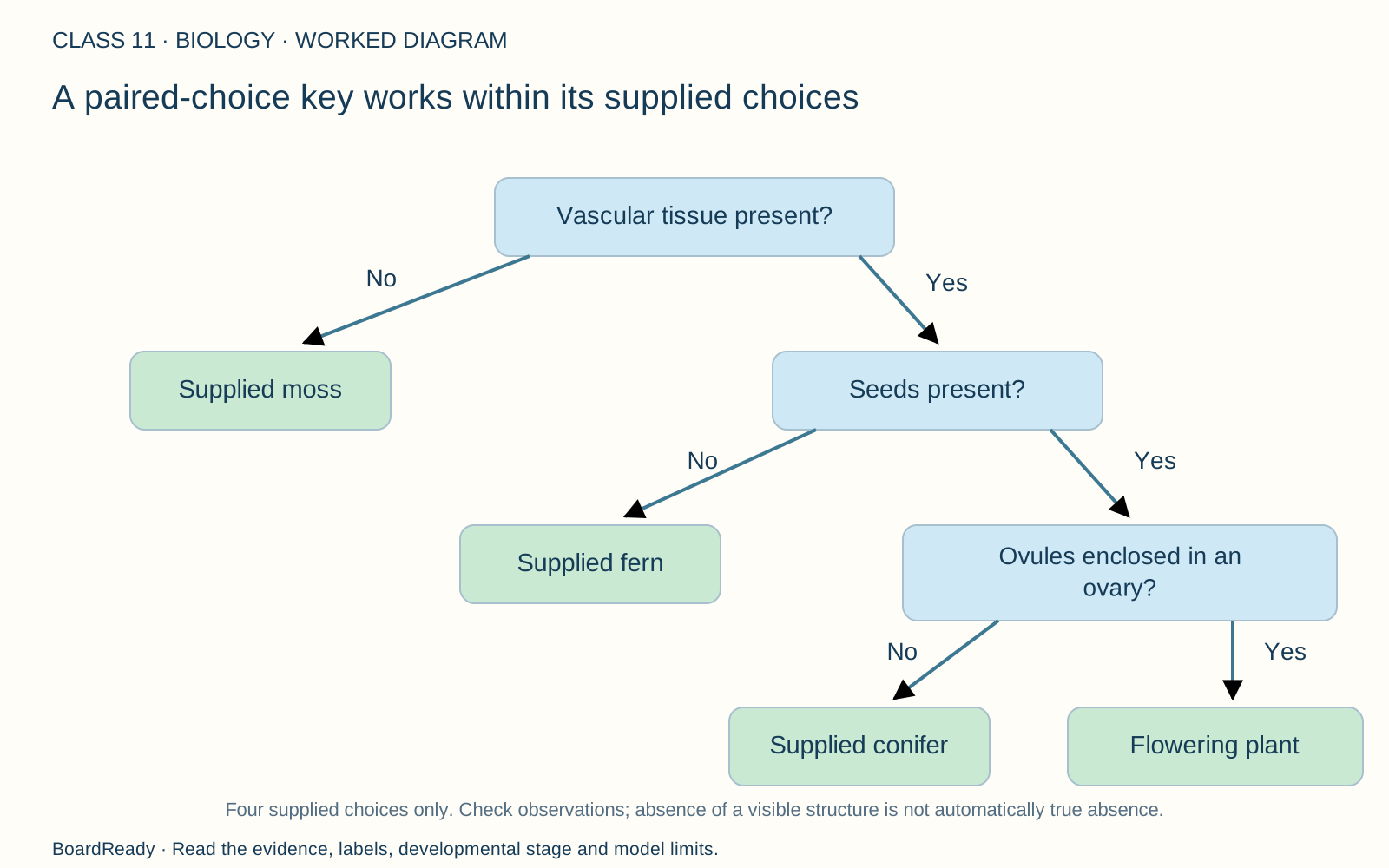
Compare cell organisation, nutrition and structural characters. Classification can change when molecular evidence reveals different relationships.Check: Explain why a character helps classification, and distinguish a taxonomic rank from a named group.