Comparison map
Taxonomy and Nomenclature: relationships and examples
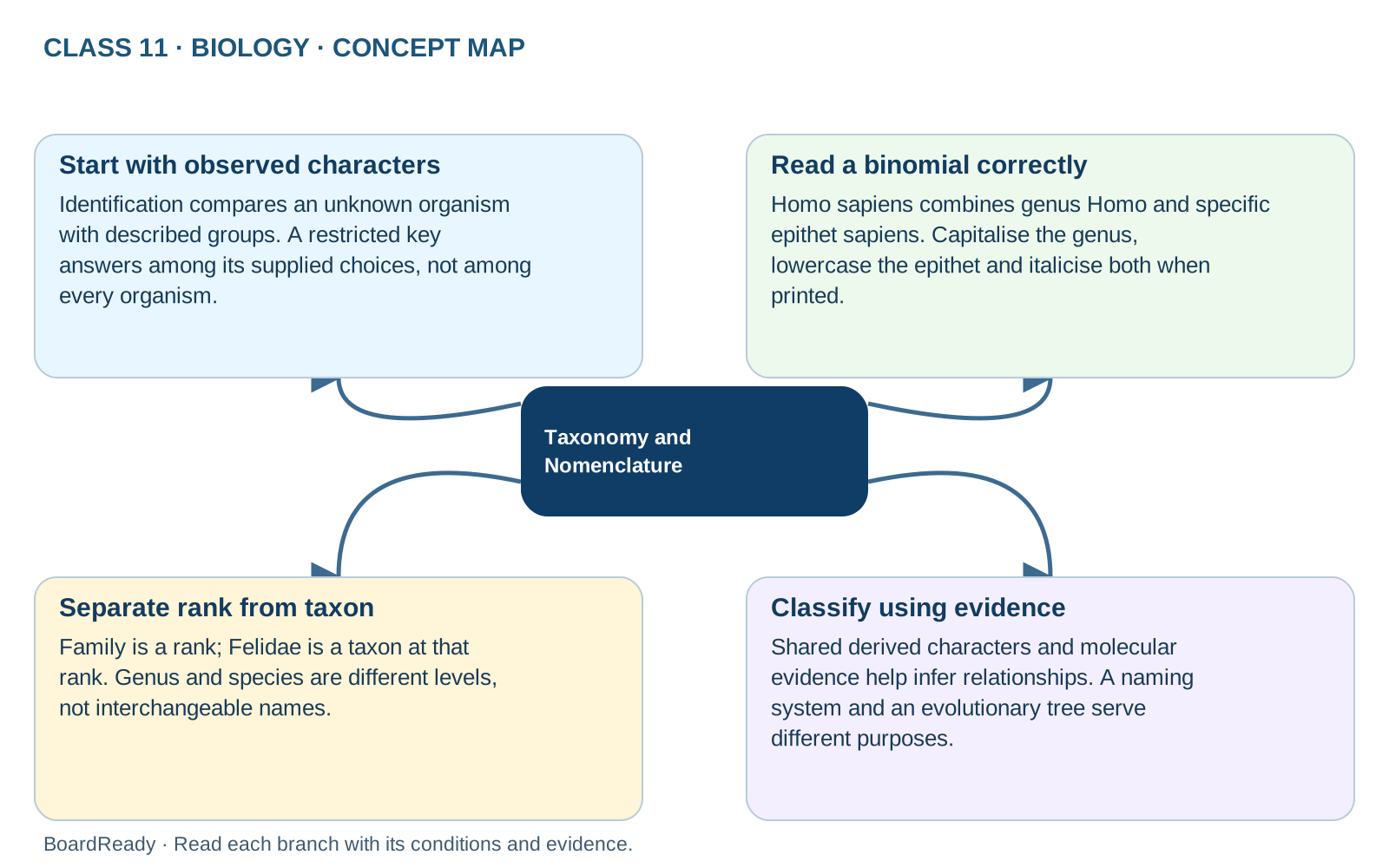
Connect identification, names and ranks without confusing a label with the evidence for relatedness. Start with observed characters: Identification compares an unknown organism with described groups. A restricted key answers among its supplied choices, not among every organism. Read a binomial correctly: Homo sapiens combines genus Homo and specific epithet sapiens. Capitalise the genus, lowercase the epithet and italicise both when printed. Separate rank from taxon: Family is a rank; Felidae is a taxon at that rank. Genus and species are different levels, not interchangeable names. Classify using evidence: Shared derived characters and molecular evidence help infer relationships. A naming system and an evolutionary tree serve different purposes.Exam cue: Give the complete species name and distinguish identification, nomenclature and classification.
- 1Taxonomy and Nomenclature -> Start with observed characters: Identification compares an unknown organism with described groups. A restricted key answers among its supplied choices, not among every organism.
- 2Taxonomy and Nomenclature -> Read a binomial correctly: Homo sapiens combines genus Homo and specific epithet sapiens. Capitalise the genus, lowercase the epithet and italicise both when printed.
- 3Taxonomy and Nomenclature -> Separate rank from taxon: Family is a rank; Felidae is a taxon at that rank. Genus and species are different levels, not interchangeable names.
- 4Taxonomy and Nomenclature -> Classify using evidence: Shared derived characters and molecular evidence help infer relationships. A naming system and an evolutionary tree serve different purposes.