Comparison map
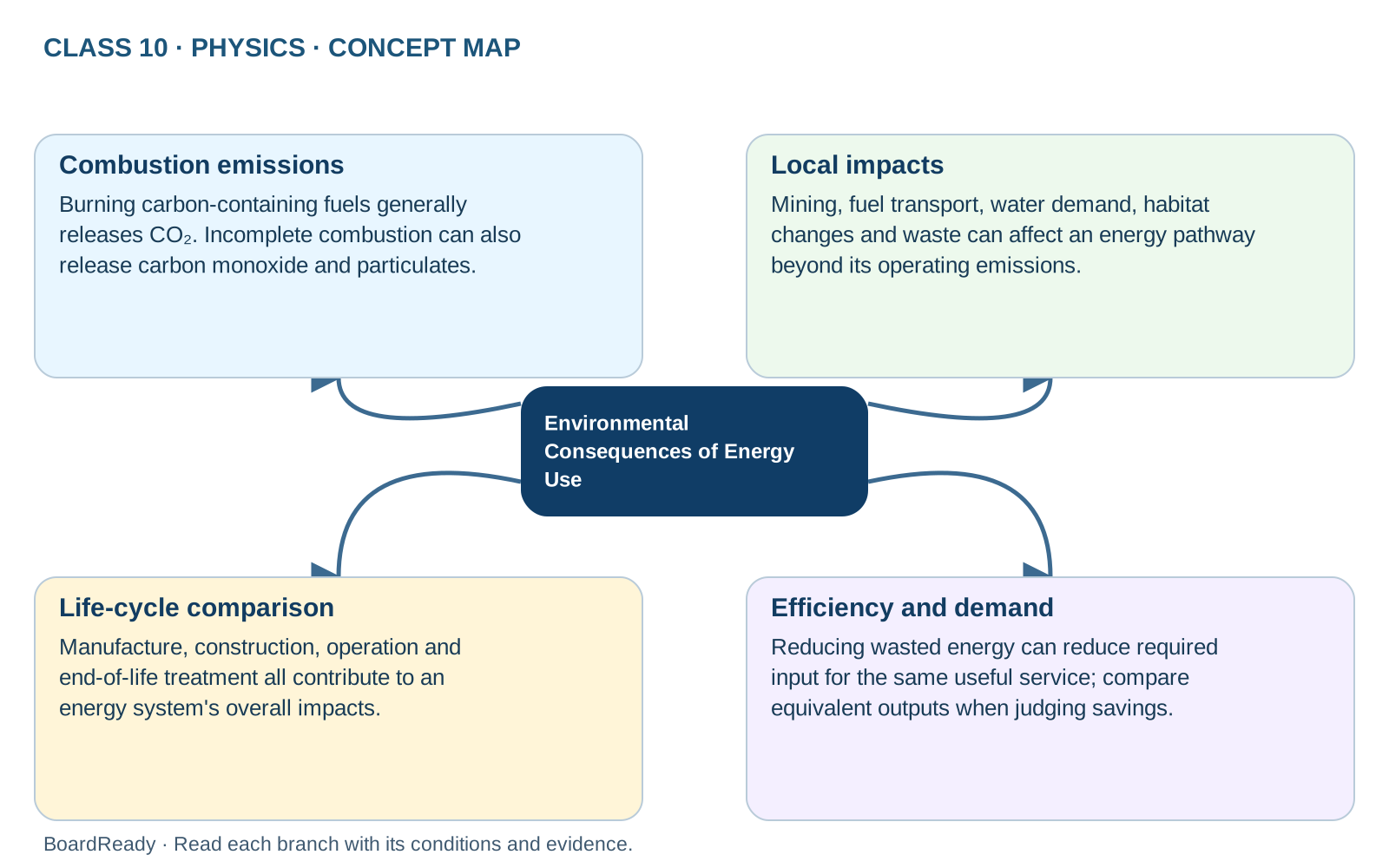
Environmental Consequences of Energy Use: relationships and examples
Compare energy choices over their full life cycle and per unit useful energy; a single emission or fuel label does not describe every impact.Exam cue: Efficiency measures useful energy output relative to input. It does not by itself measure emissions, resource extraction or disposal impacts.
- 1Environmental Consequences of Energy Use -> Combustion emissions: Burning carbon-containing fuels generally releases CO₂. Incomplete combustion can also release carbon monoxide and particulates.
- 2Environmental Consequences of Energy Use -> Local impacts: Mining, fuel transport, water demand, habitat changes and waste can affect an energy pathway beyond its operating emissions.
- 3Environmental Consequences of Energy Use -> Life-cycle comparison: Manufacture, construction, operation and end-of-life treatment all contribute to an energy system's overall impacts.
- 4Environmental Consequences of Energy Use -> Efficiency and demand: Reducing wasted energy can reduce required input for the same useful service; compare equivalent outputs when judging savings.