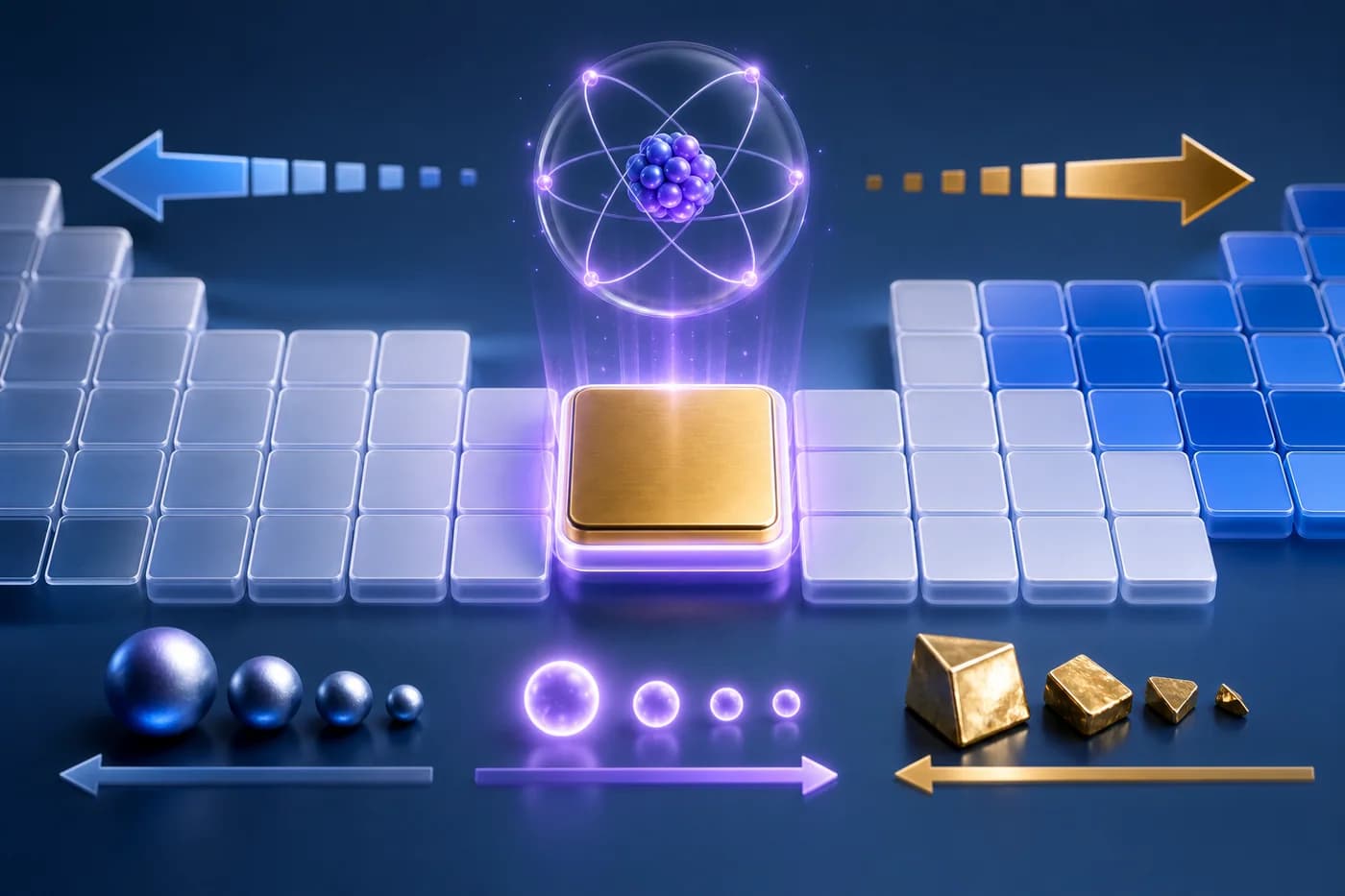
Predicting Properties from Position focuses on Predicting Properties from Position focuses on Predicting Properties from Position focuses on Use periodic position to predict valency, formulae, reactivity, and nature of oxides. Elements on the left side of the periodic table tend to be metals and form basic oxides, while those on the right are non-metals forming acidic oxides. Elements in the middle can form amphoteric oxides that react with both acids and bases. In exams, always consider the group number of an element to predict its valency and reactivity trends. For example, elements in Group 1 are highly reactive metals, while those in Group 17 are highly reactive non-metals. Valency is the combining power of an atom, which depends on its ability to gain, lose, or share electrons. An element's position helps predict valency, metallic character, and the kind of compounds it forms. Predicting Properties from Position focuses on Use periodic position to predict valency, formulae, reactivity, and nature of oxides. Elements on the left side of the periodic table tend to be metals and form basic oxides, while those on the right are non-metals forming acidic oxides. Elements in the middle can form amphoteric oxides that react with both acids and bases. In exams, always consider the group number of an element to predict its valency and reactivity trends. For example, elements in Group 1 are highly reactive metals, while those in Group 17 are highly reactive non-metals. Valency is the combining power of an atom, which depends on its ability to gain, lose, or share electrons. Elements on the left side of the periodic table tend to be metals and form basic oxides, while those on the right are non-metals forming acidic oxides. Elements in the middle can form amphoteric oxides that react with both acids and bases. Predicting Properties from Position must be answered with exact chemistry vocabulary, not only general description. An element's position helps predict valency, metallic character, and the kind of compounds it forms. Predicting Properties from Position focuses on Predicting Properties from Position focuses on Use periodic position to predict valency, formulae, reactivity, and nature of oxides. Elements on the left side of the periodic table tend to be metals and form basic oxides, while those on the right are non-metals forming acidic oxides. Elements in the middle can form amphoteric oxides that react with both acids and bases. In exams, always consider the group number of an element to predict its valency and reactivity trends. For example, elements in Group 1 are highly reactive metals, while those in Group 17 are highly reactive non-metals. Valency is the combining power of an atom, which depends on its ability to gain, lose, or share electrons. An element's position helps predict valency, metallic character, and the kind of compounds it forms. Predicting Properties from Position focuses on Use periodic position to predict valency, formulae, reactivity, and nature of oxides. Elements on the left side of the periodic table tend to be metals and form basic oxides, while those on the right are non-metals forming acidic oxides. Elements in the middle can form amphoteric oxides that react with both acids and bases. In exams, always consider the group number of an element to predict its valency and reactivity trends. For example, elements in Group 1 are highly reactive metals, while those in Group 17 are highly reactive non-metals. Valency is the combining power of an atom, which depends on its ability to gain, lose, or share electrons. Elements on the left side of the periodic table tend to be metals and form basic oxides, while those on the right are non-metals forming acidic oxides. Elements in the middle can form amphoteric oxides that react with both acids and bases. Predicting Properties from Position must be answered with exact chemistry vocabulary, not only general description. An element's position helps predict valency, metallic character, and the kind of compounds it forms. Predicting Properties from Position must be answered with exact chemistry vocabulary, not only general description.