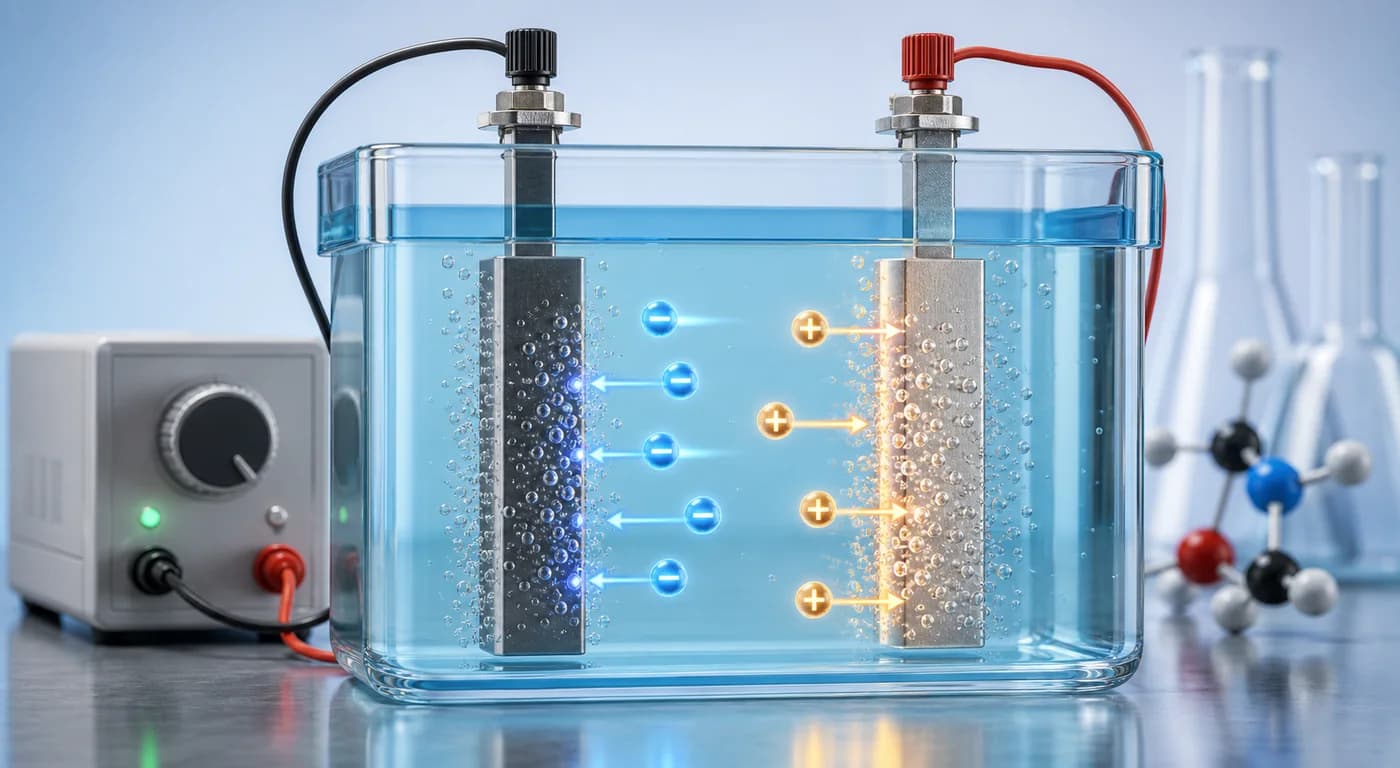
Mechanism of Electrolysis focuses on Mechanism of Electrolysis focuses on Mechanism of Electrolysis focuses on Understand electrodes, anions, cations, discharge, oxidation, reduction, and electrode reactions. In electrolysis, cations are positively charged ions that move towards the negatively charged cathode where they gain electrons and get reduced. Anions, being negatively charged, migrate to the positively charged anode where they lose electrons and undergo oxidation. When answering questions on electrolysis, always specify which electrode (anode or cathode) a reaction occurs at. Also, remember that the products formed depend on whether you are dealing with molten compounds or aqueous solutions. The anode is the electrode where oxidation occurs, and it attracts negatively charged ions (anions). Electrolysis is explained by ion movement, discharge at electrodes, and the preference shown by different ions. Mechanism of Electrolysis focuses on Understand electrodes, anions, cations, discharge, oxidation, reduction, and electrode reactions. In electrolysis, cations are positively charged ions that move towards the negatively charged cathode where they gain electrons and get reduced. Anions, being negatively charged, migrate to the positively charged anode where they lose electrons and undergo oxidation. When answering questions on electrolysis, always specify which electrode (anode or cathode) a reaction occurs at. Also, remember that the products formed depend on whether you are dealing with molten compounds or aqueous solutions. The anode is the electrode where oxidation occurs, and it attracts negatively charged ions (anions). In electrolysis, cations are positively charged ions that move towards the negatively charged cathode where they gain electrons and get reduced. Anions, being negatively charged, migrate to the positively charged anode where they lose electrons and undergo oxidation. Mechanism of Electrolysis must be answered with exact chemistry vocabulary, not only general description. Electrolysis is explained by ion movement, discharge at electrodes, and the preference shown by different ions. Mechanism of Electrolysis focuses on Mechanism of Electrolysis focuses on Understand electrodes, anions, cations, discharge, oxidation, reduction, and electrode reactions. In electrolysis, cations are positively charged ions that move towards the negatively charged cathode where they gain electrons and get reduced. Anions, being negatively charged, migrate to the positively charged anode where they lose electrons and undergo oxidation. When answering questions on electrolysis, always specify which electrode (anode or cathode) a reaction occurs at. Also, remember that the products formed depend on whether you are dealing with molten compounds or aqueous solutions. The anode is the electrode where oxidation occurs, and it attracts negatively charged ions (anions). Electrolysis is explained by ion movement, discharge at electrodes, and the preference shown by different ions. Mechanism of Electrolysis focuses on Understand electrodes, anions, cations, discharge, oxidation, reduction, and electrode reactions. In electrolysis, cations are positively charged ions that move towards the negatively charged cathode where they gain electrons and get reduced. Anions, being negatively charged, migrate to the positively charged anode where they lose electrons and undergo oxidation. When answering questions on electrolysis, always specify which electrode (anode or cathode) a reaction occurs at. Also, remember that the products formed depend on whether you are dealing with molten compounds or aqueous solutions. The anode is the electrode where oxidation occurs, and it attracts negatively charged ions (anions). In electrolysis, cations are positively charged ions that move towards the negatively charged cathode where they gain electrons and get reduced. Anions, being negatively charged, migrate to the positively charged anode where they lose electrons and undergo oxidation. Mechanism of Electrolysis must be answered with exact chemistry vocabulary, not only general description. Electrolysis is explained by ion movement, discharge at electrodes, and the preference shown by different ions. Mechanism of Electrolysis must be answered with exact chemistry vocabulary, not only general description.