CompareProperties of Materials
Properties of Materials: relationships and examples
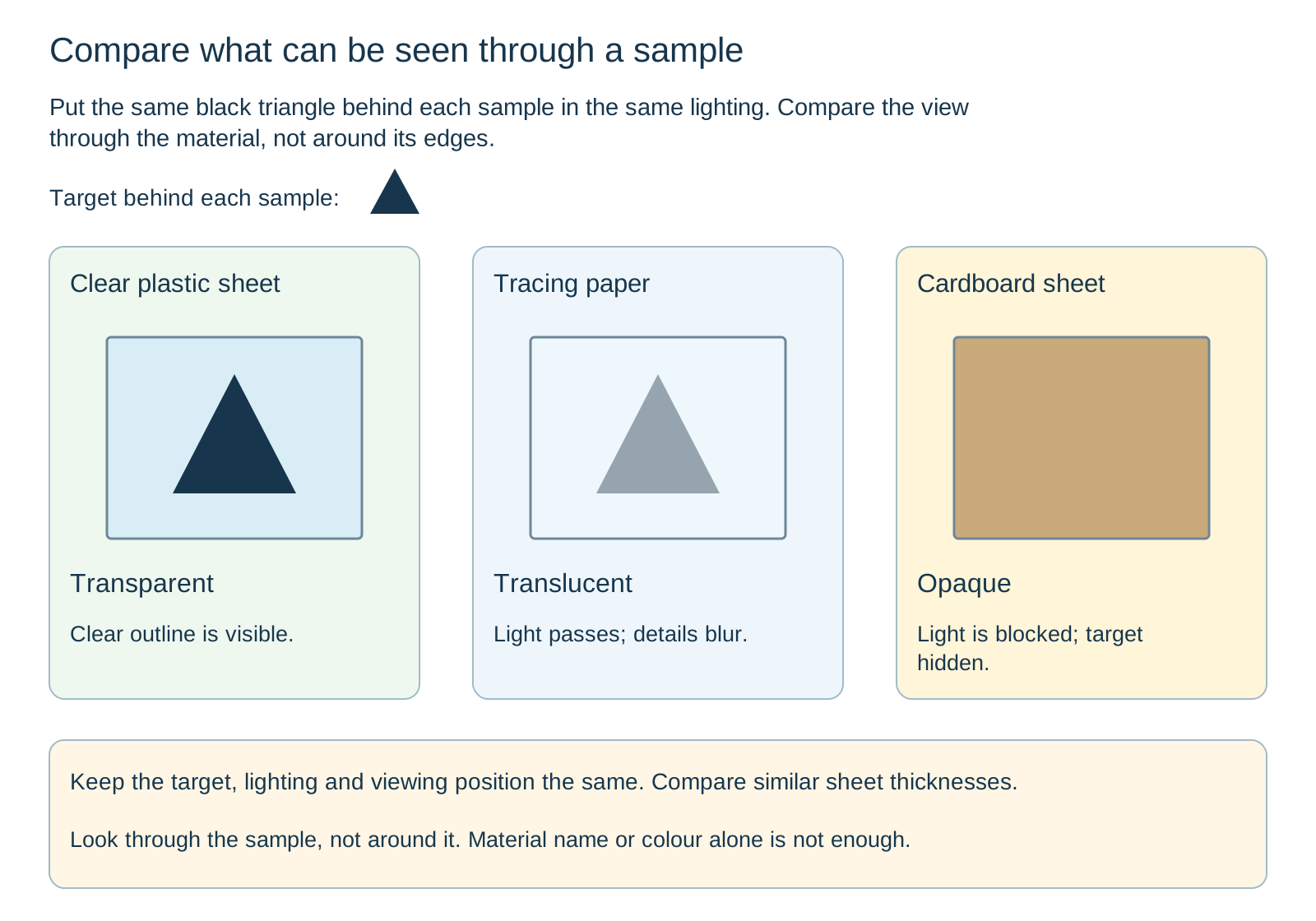
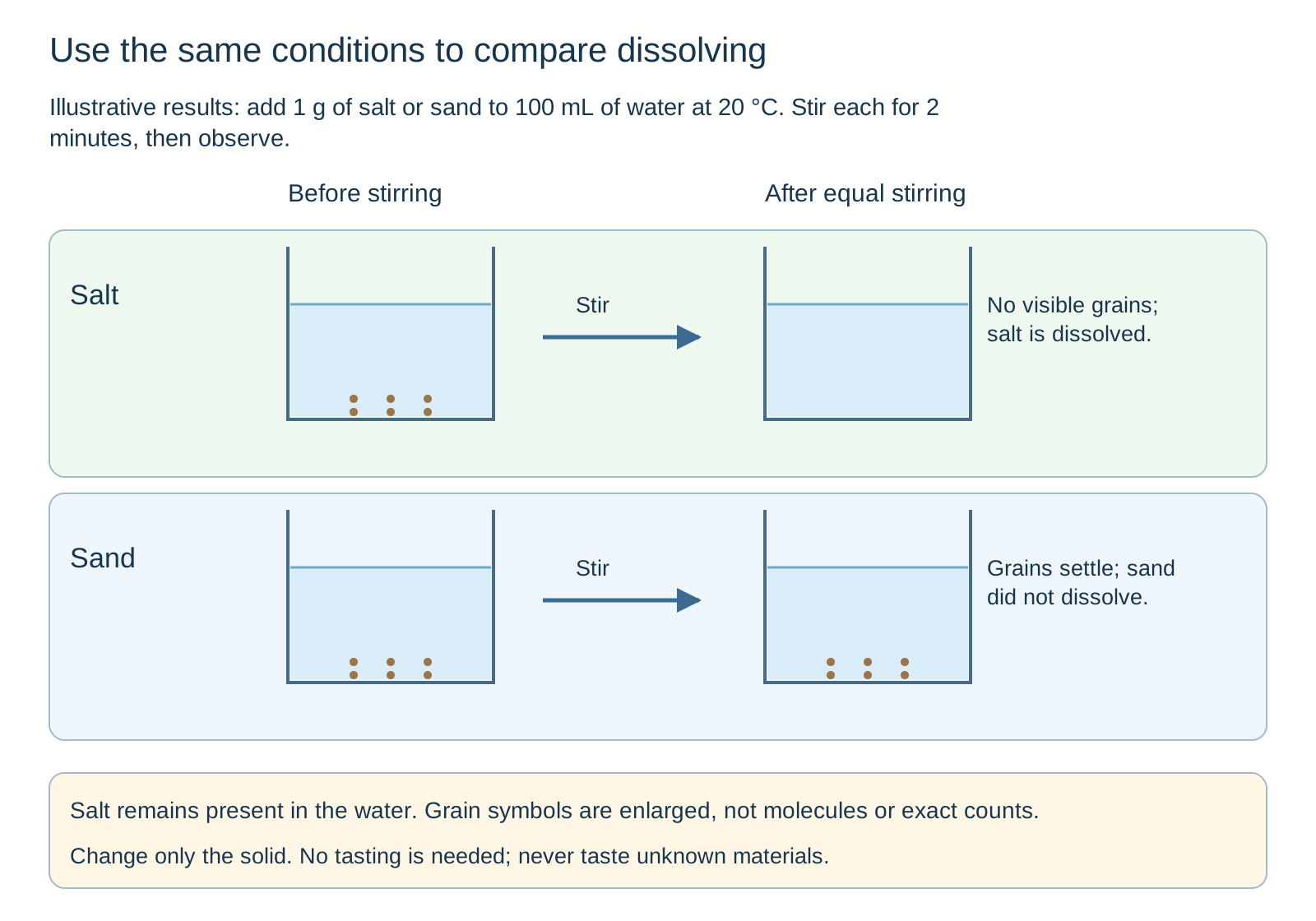
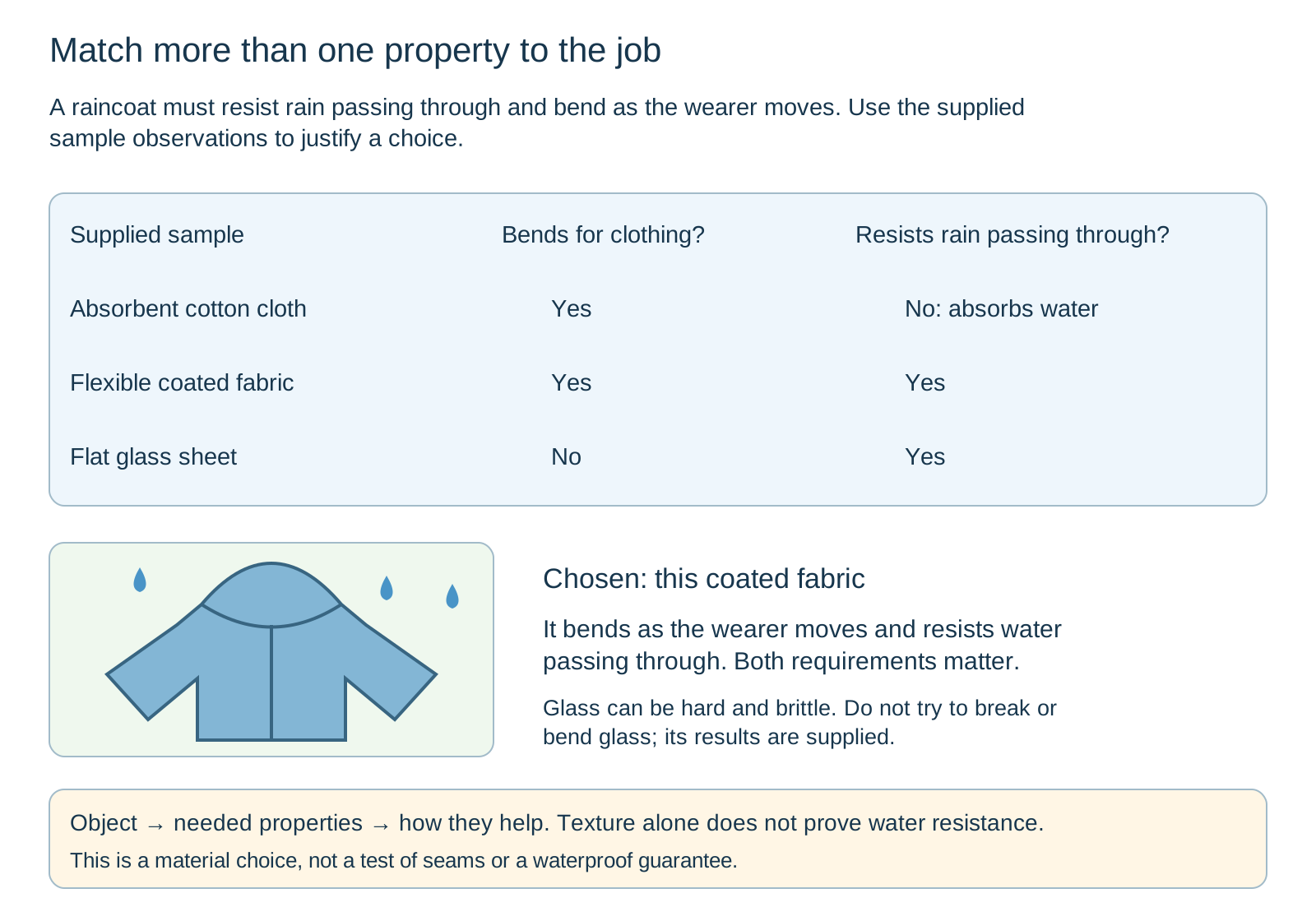
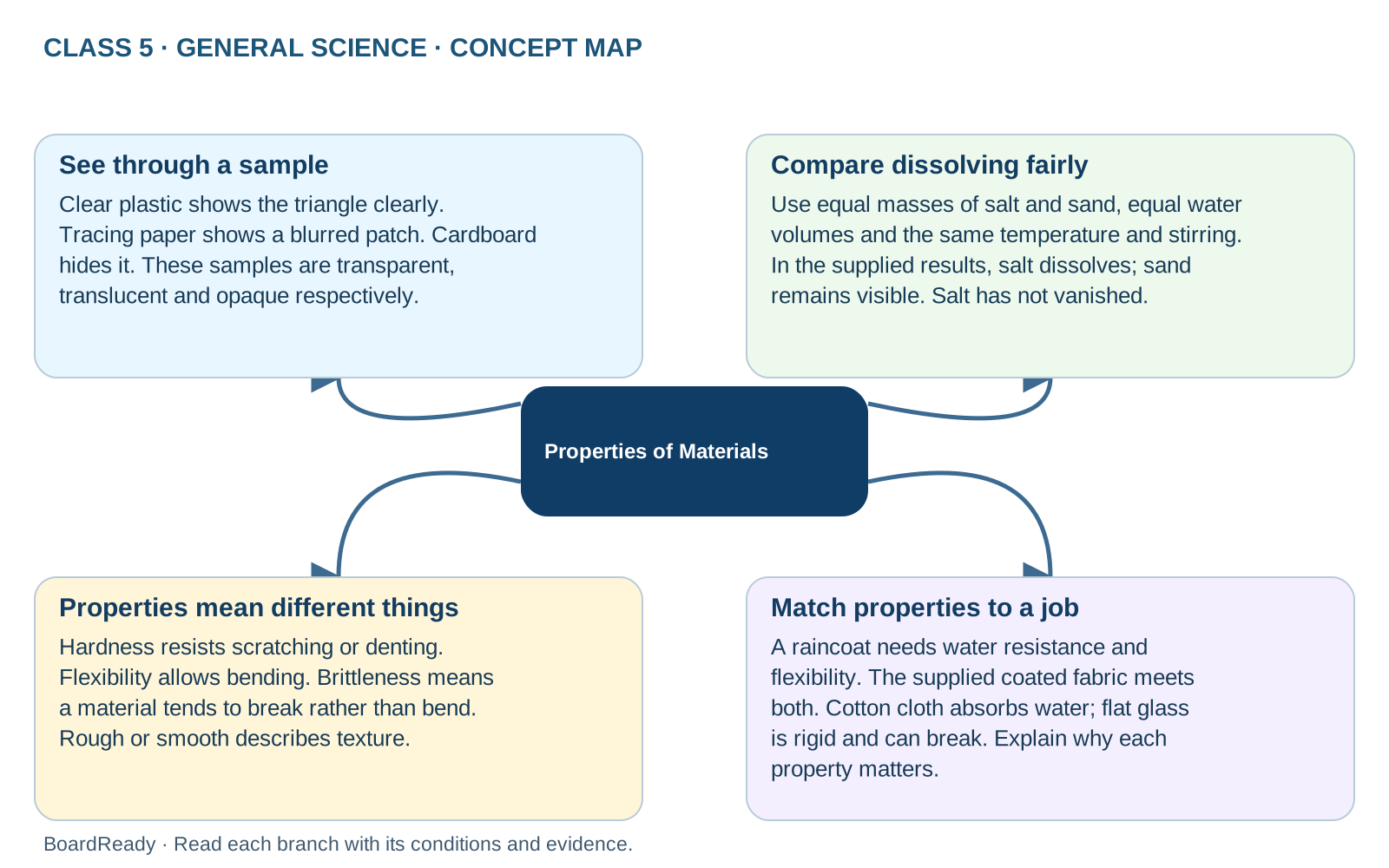
Describe a property with evidence, compare samples fairly and connect a material choice to its job. See through a sample: Clear plastic shows the triangle clearly. Tracing paper shows a blurred patch. Cardboard hides it. These samples are transparent, translucent and opaque respectively. Compare dissolving fairly: Use equal masses of salt and sand, equal water volumes and the same temperature and stirring. In the supplied results, salt dissolves; sand remains visible. Salt has not vanished. Properties mean different things: Hardness resists scratching or denting. Flexibility allows bending. Brittleness means a material tends to break rather than bend. Rough or smooth describes texture. Match properties to a job: A raincoat needs water resistance and flexibility. The supplied coated fabric meets both. Cotton cloth absorbs water; flat glass is rigid and can break. Explain why each property matters.See through a sample
Clear plastic shows the triangle clearly. Tracing paper shows a blurred patch. Cardboard hides it. These samples are transparent, translucent and opaque respectively.Compare dissolving fairly
Use equal masses of salt and sand, equal water volumes and the same temperature and stirring. In the supplied results, salt dissolves; sand remains visible. Salt has not vanished.Check: Observation → property → reason for the choice. One useful property does not guarantee that a material meets every requirement.