CompareMoving Charges and Magnetism
Moving Charges and Magnetism: relationships and examples
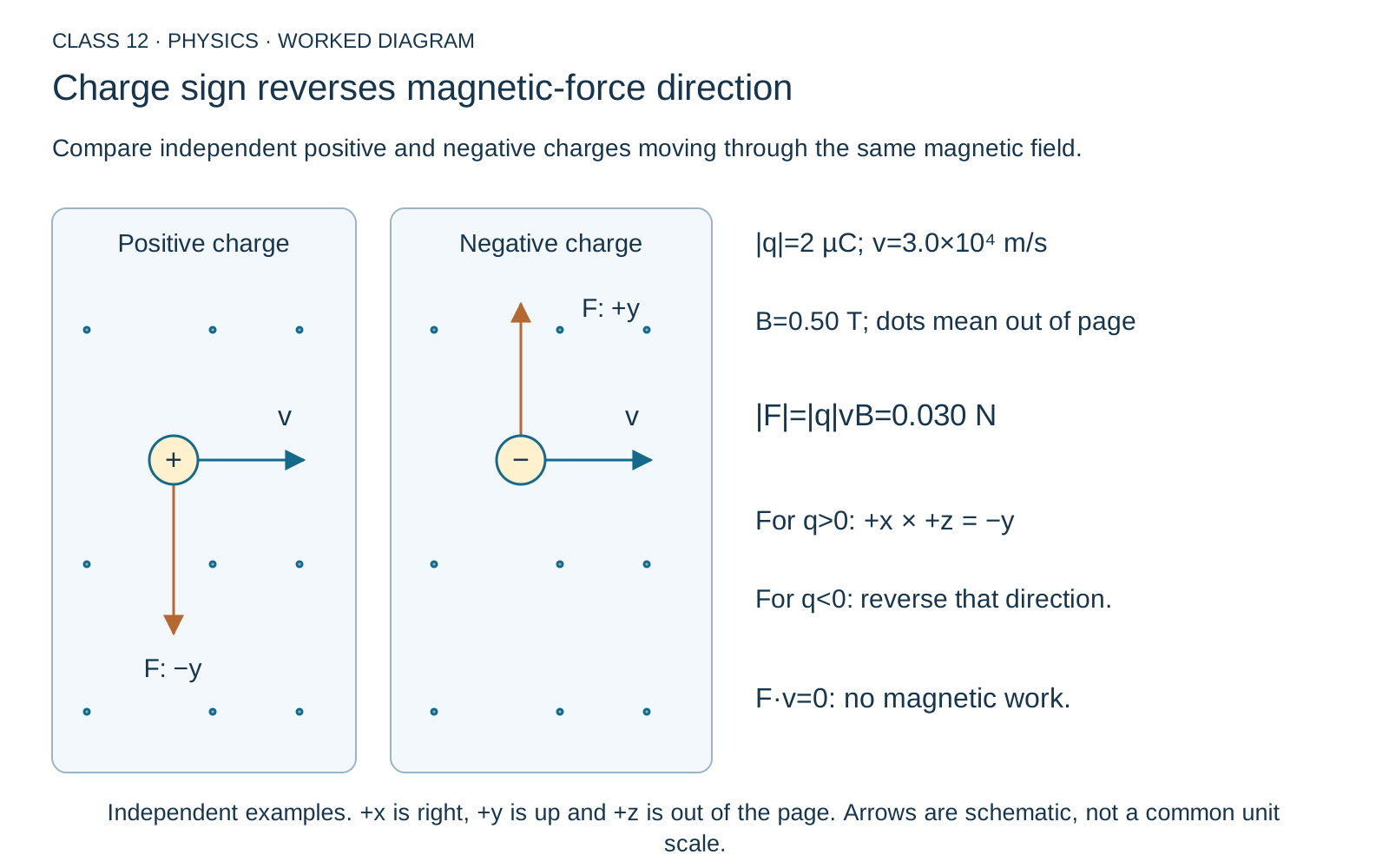
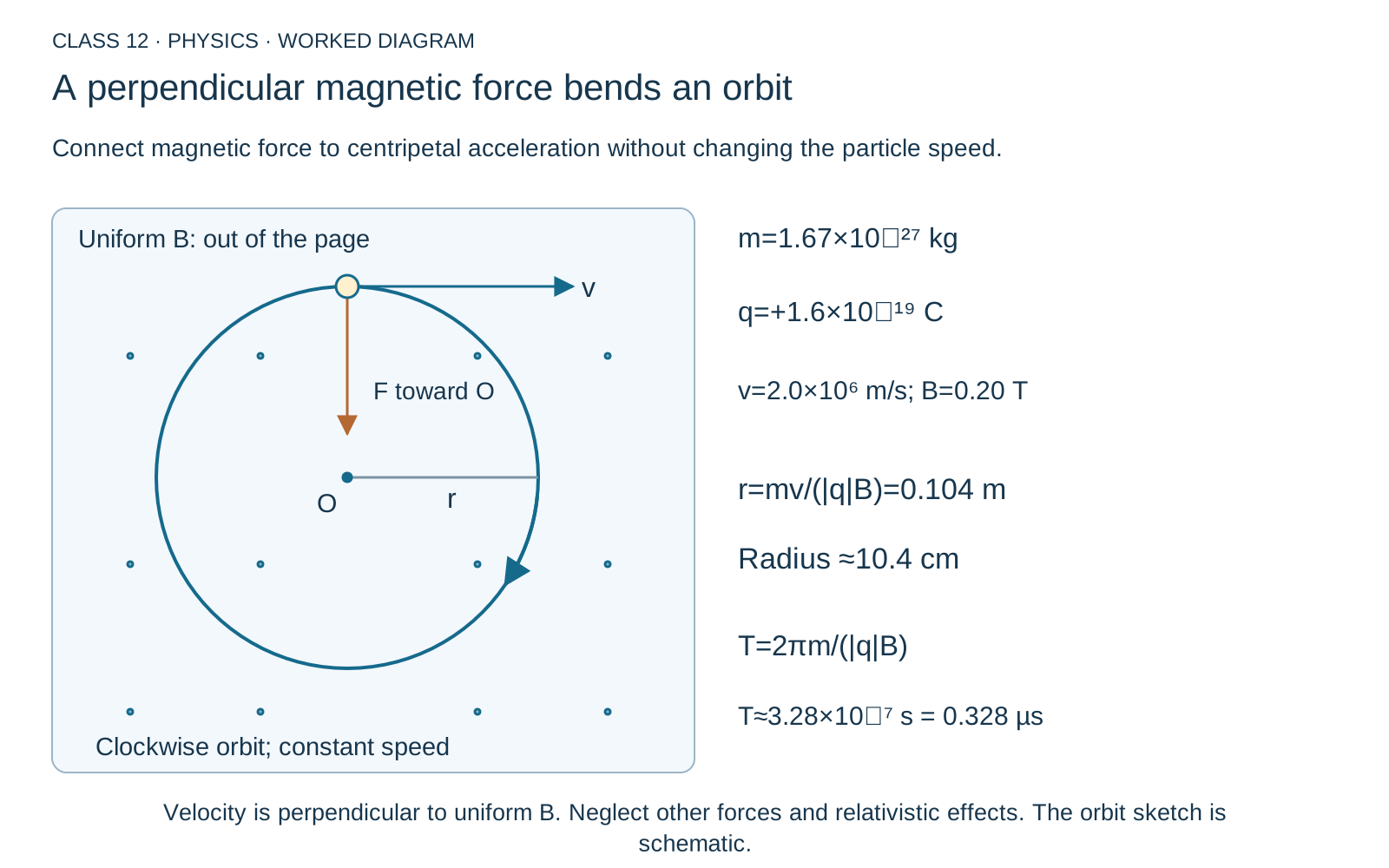
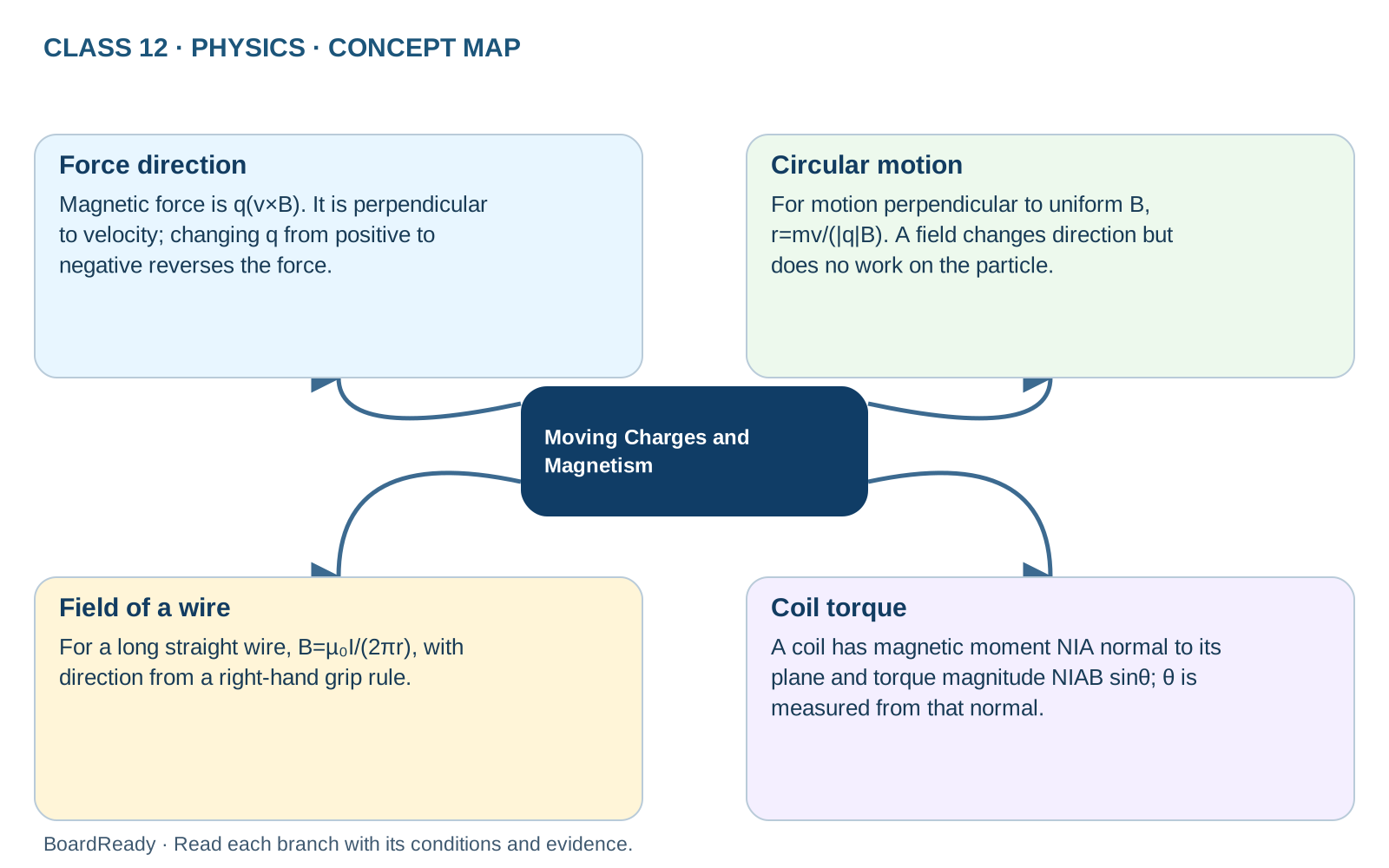
Use vector force direction, circular dynamics and magnetic sources. Force direction: Magnetic force is q(v×B). It is perpendicular to velocity; changing q from positive to negative reverses the force. Circular motion: For motion perpendicular to uniform B, r=mv/(|q|B). A field changes direction but does no work on the particle. Field of a wire: For a long straight wire, B=µ₀I/(2πr), with direction from a right-hand grip rule. Coil torque: A coil has magnetic moment NIA normal to its plane and torque magnitude NIAB sinθ; θ is measured from that normal.Force direction
Magnetic force is q(v×B). It is perpendicular to velocity; changing q from positive to negative reverses the force.Circular motion
For motion perpendicular to uniform B, r=mv/(|q|B). A field changes direction but does no work on the particle.Check: Keep the sign of charge in direction reasoning; use its magnitude in the positive radius.