CompareWhat Is Matter
What Is Matter: relationships and examples
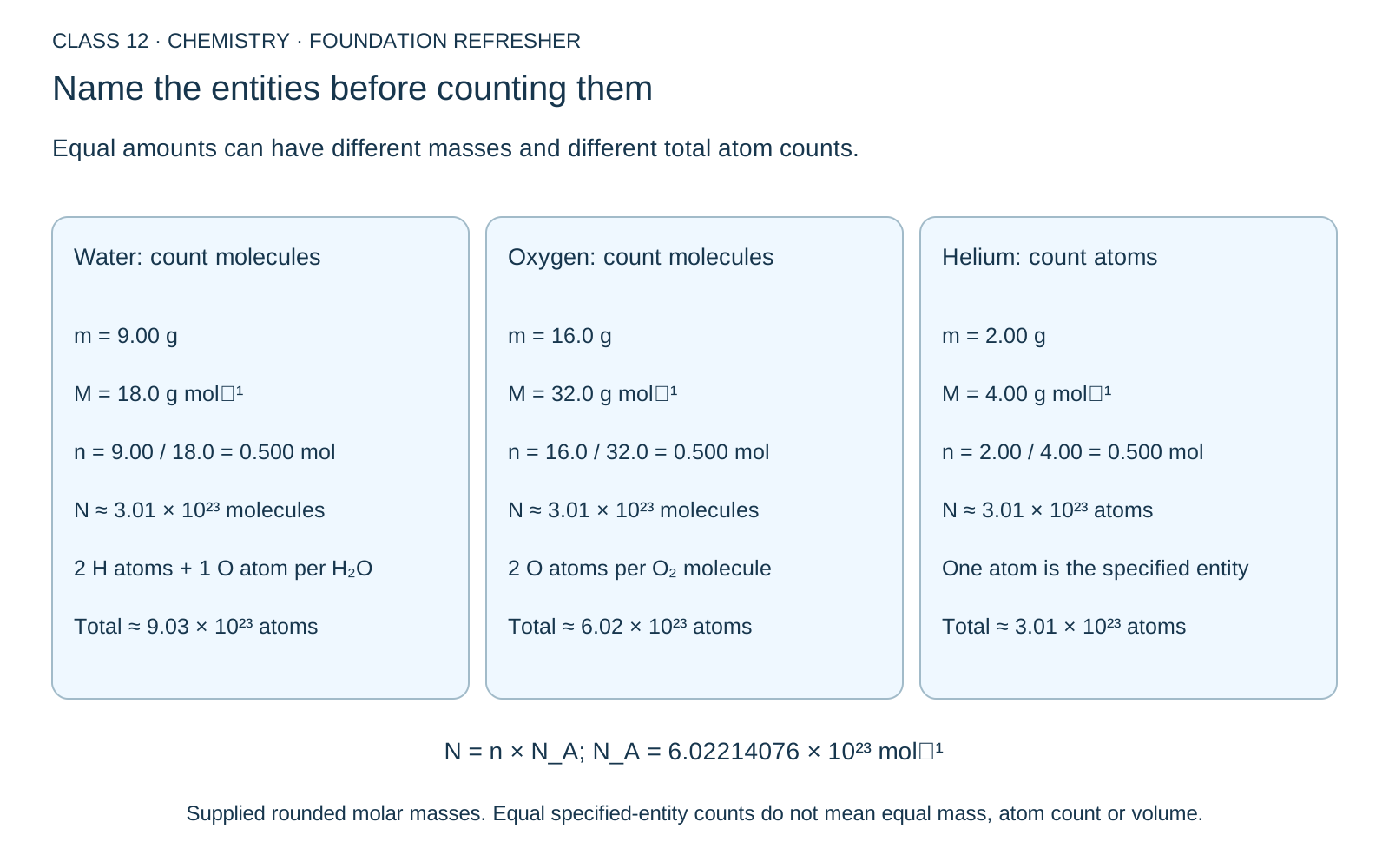
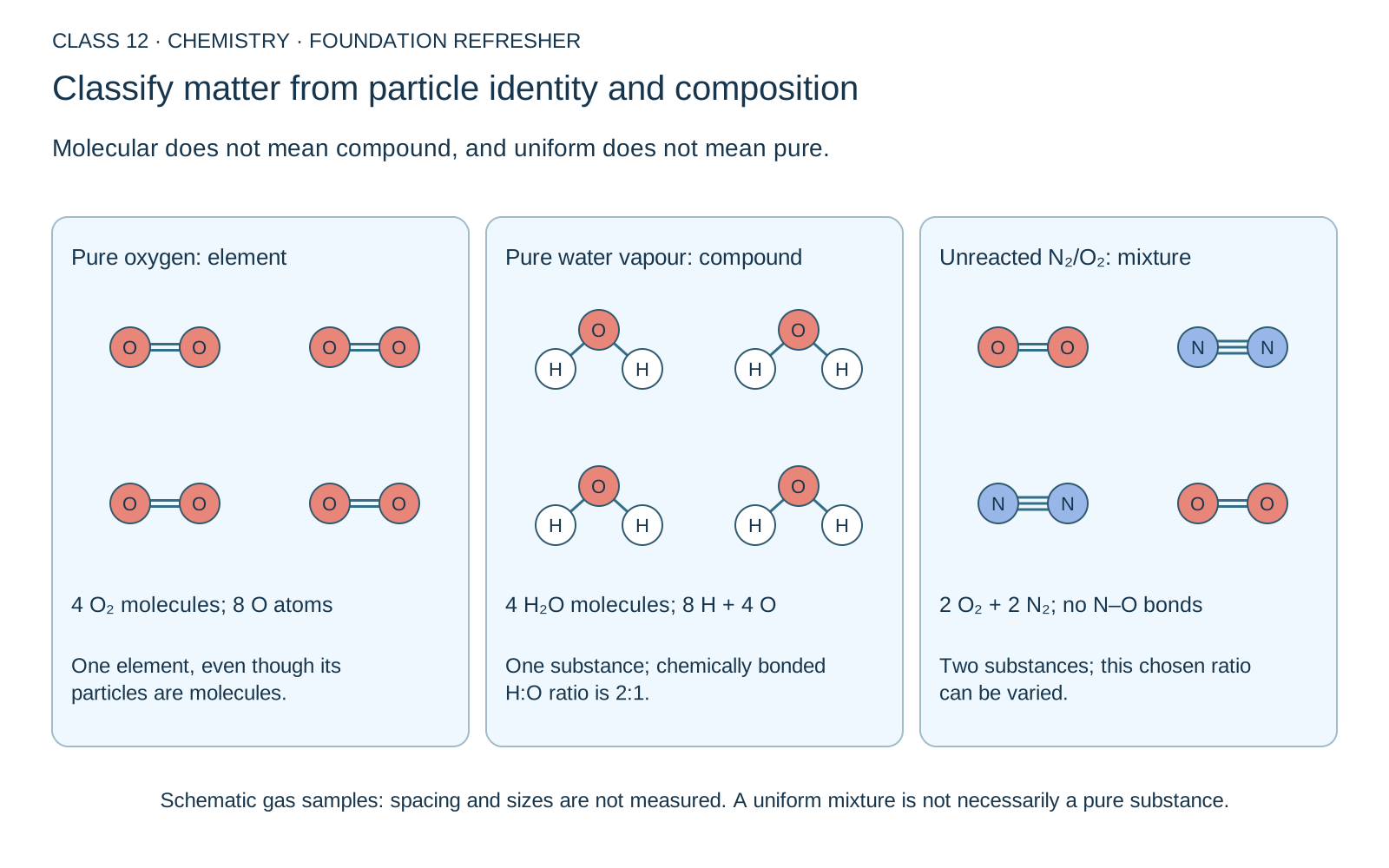
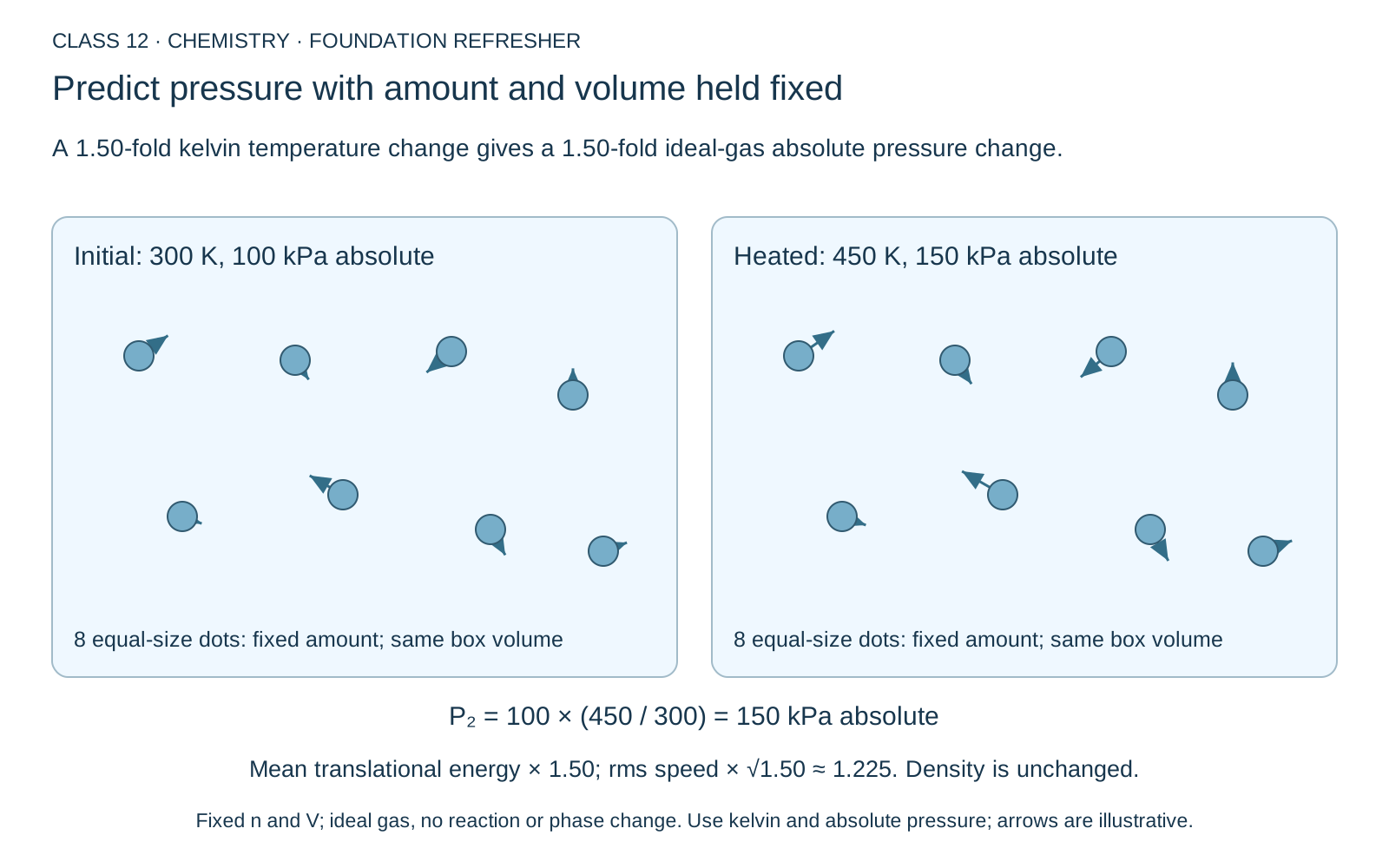
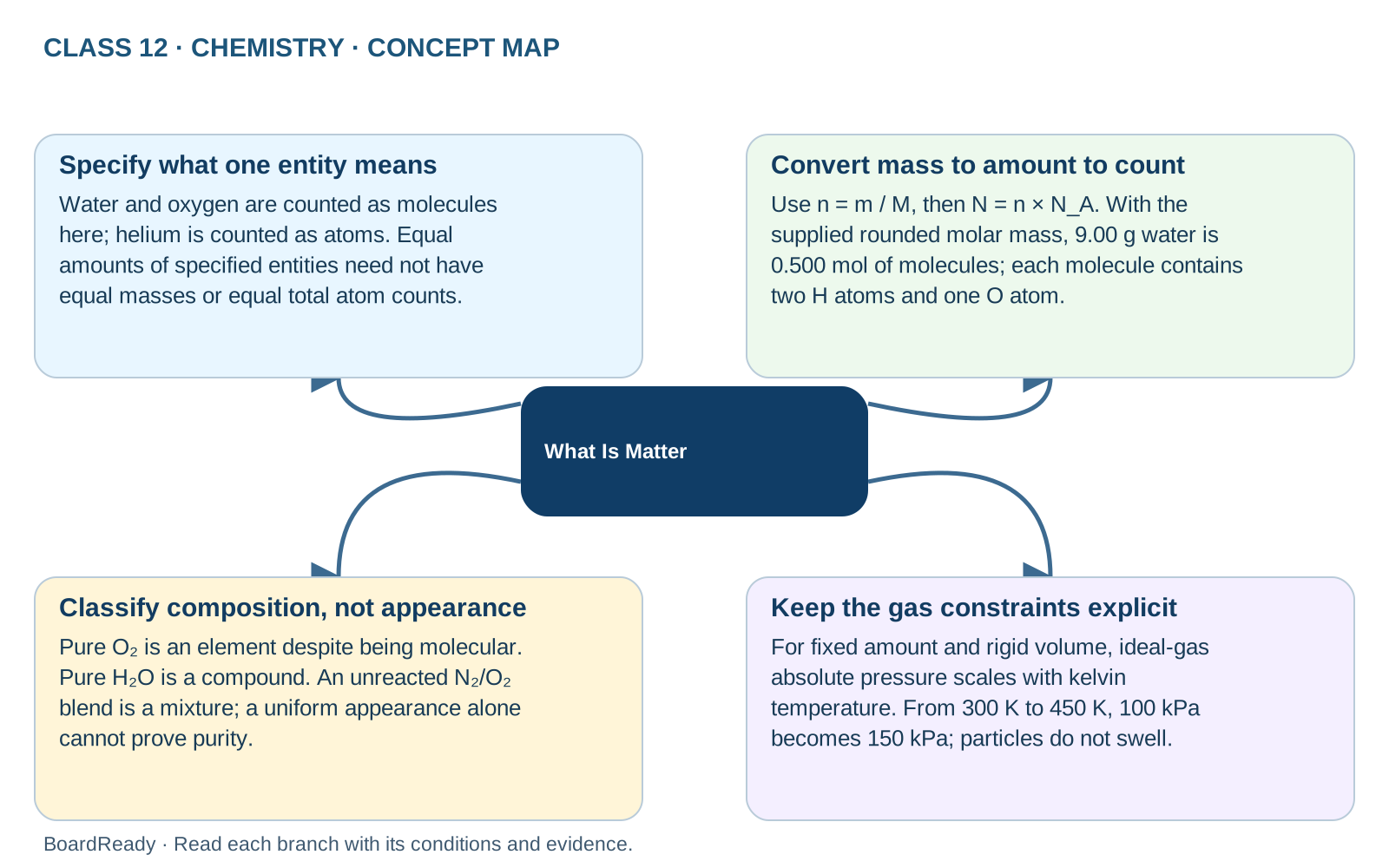
Foundation refresher: connect measurable mass, specified particles, composition and a conditional ideal-gas prediction. Specify what one entity means: Water and oxygen are counted as molecules here; helium is counted as atoms. Equal amounts of specified entities need not have equal masses or equal total atom counts. Convert mass to amount to count: Use n = m / M, then N = n × N_A. With the supplied rounded molar mass, 9.00 g water is 0.500 mol of molecules; each molecule contains two H atoms and one O atom. Classify composition, not appearance: Pure O₂ is an element despite being molecular. Pure H₂O is a compound. An unreacted N₂/O₂ blend is a mixture; a uniform appearance alone cannot prove purity. Keep the gas constraints explicit: For fixed amount and rigid volume, ideal-gas absolute pressure scales with kelvin temperature. From 300 K to 450 K, 100 kPa becomes 150 kPa; particles do not swell.Specify what one entity means
Water and oxygen are counted as molecules here; helium is counted as atoms. Equal amounts of specified entities need not have equal masses or equal total atom counts.Convert mass to amount to count
Use n = m / M, then N = n × N_A. With the supplied rounded molar mass, 9.00 g water is 0.500 mol of molecules; each molecule contains two H atoms and one O atom.Check: Name atoms, molecules or formula units before counting. Carry units through n = m / M and N = n × N_A. For a gas prediction state the fixed quantities, absolute pressure, kelvin temperature and ideal-model limits.