CompareReproduction in Organisms and Plants
Reproduction in Organisms and Plants: relationships and examples
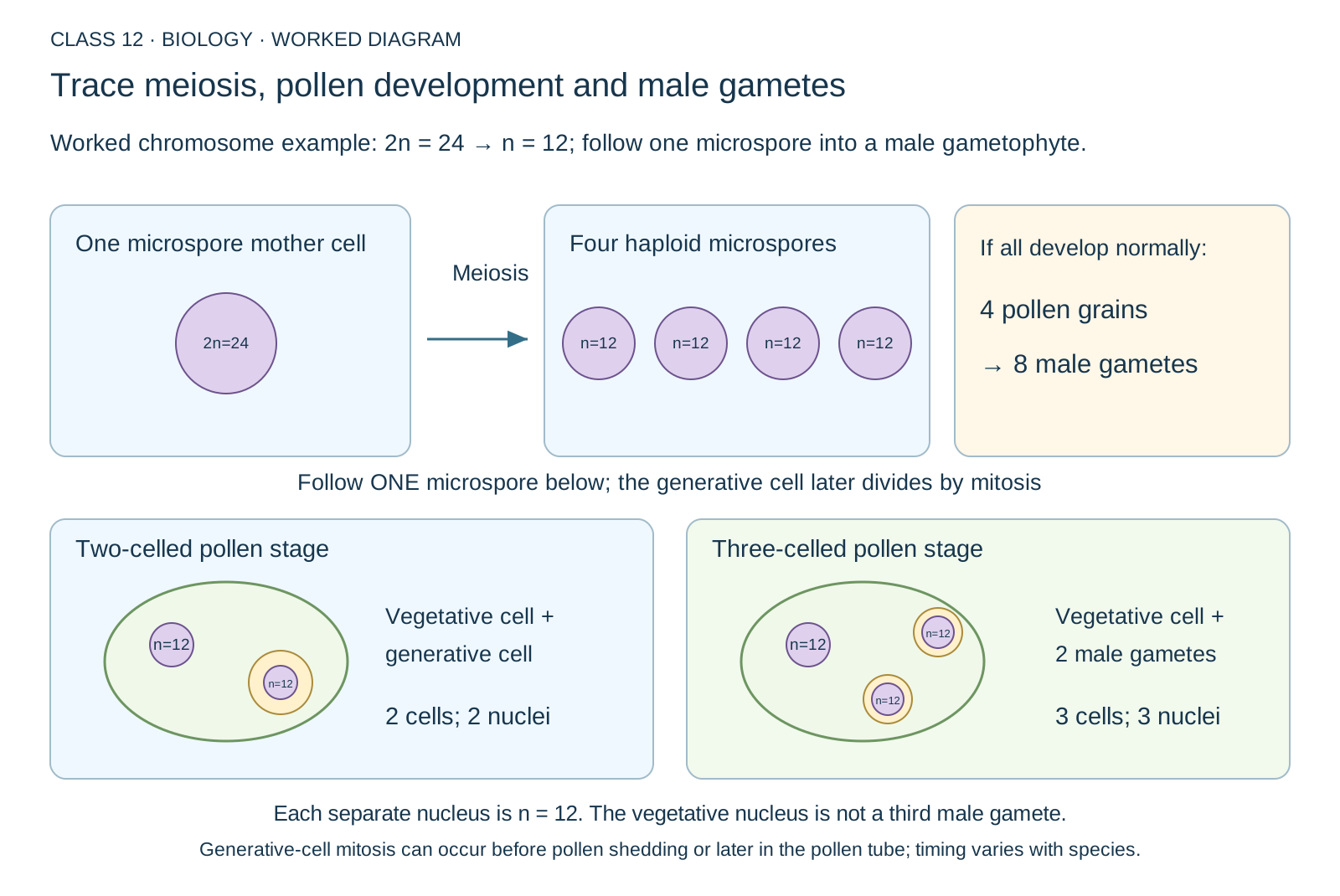
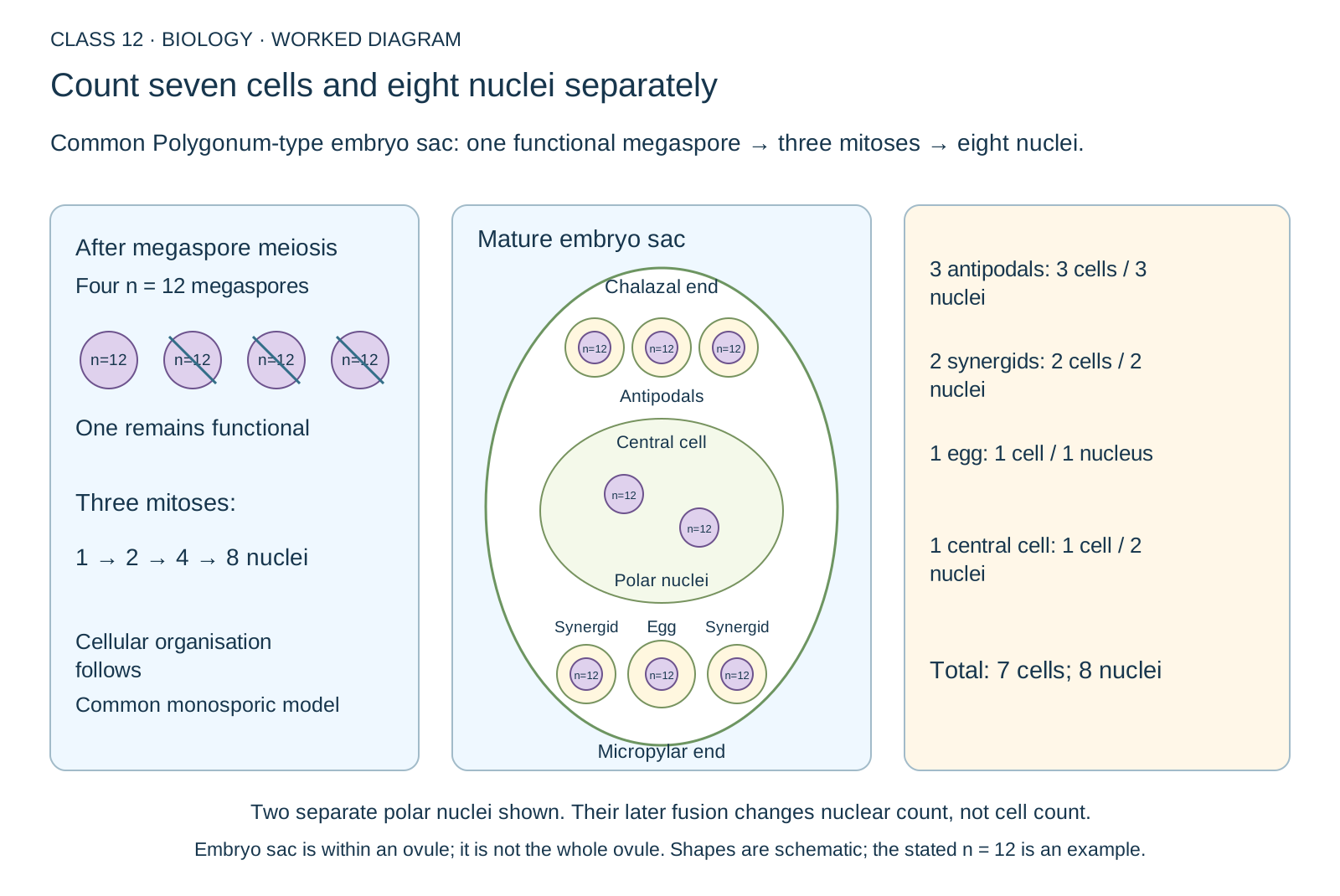
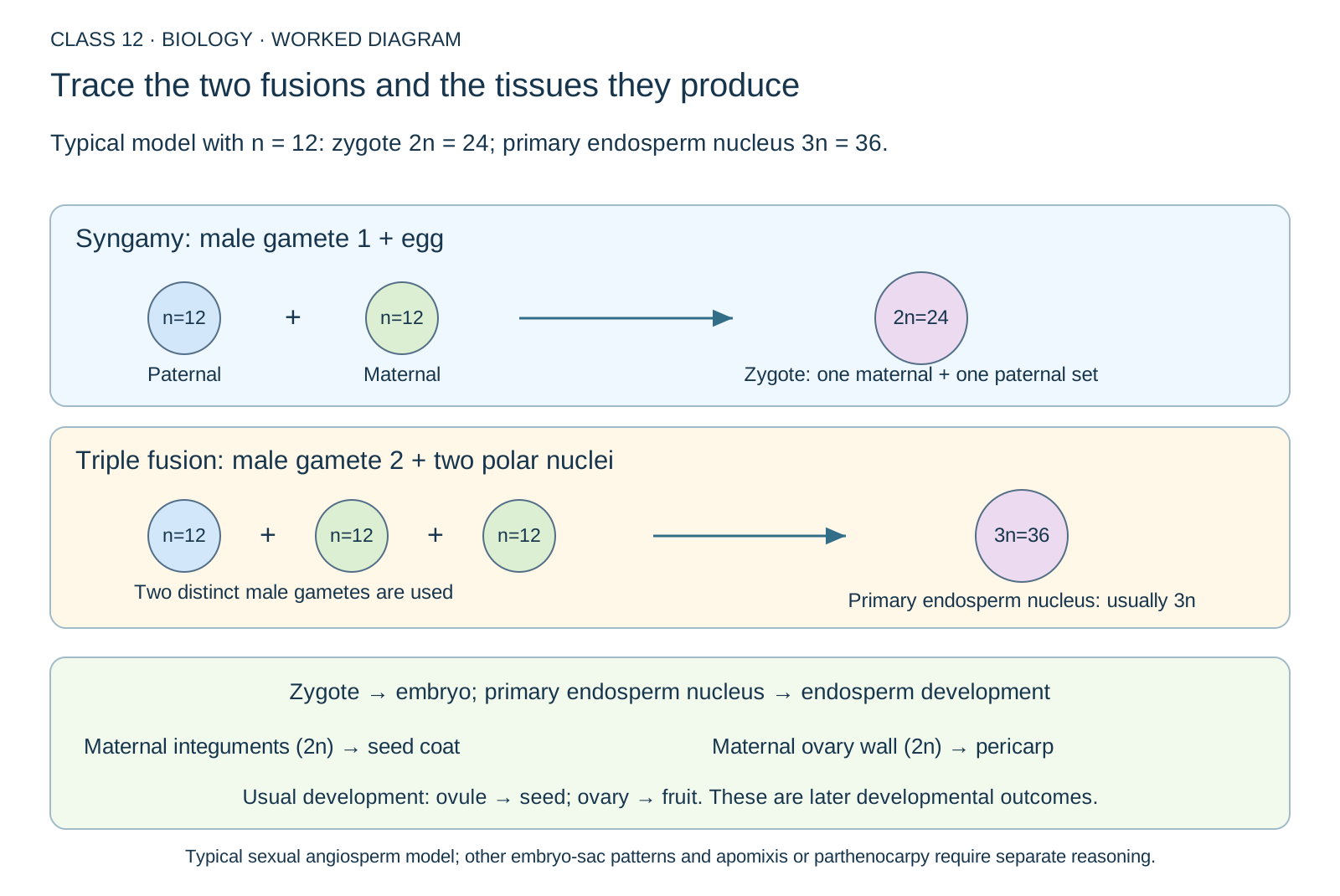
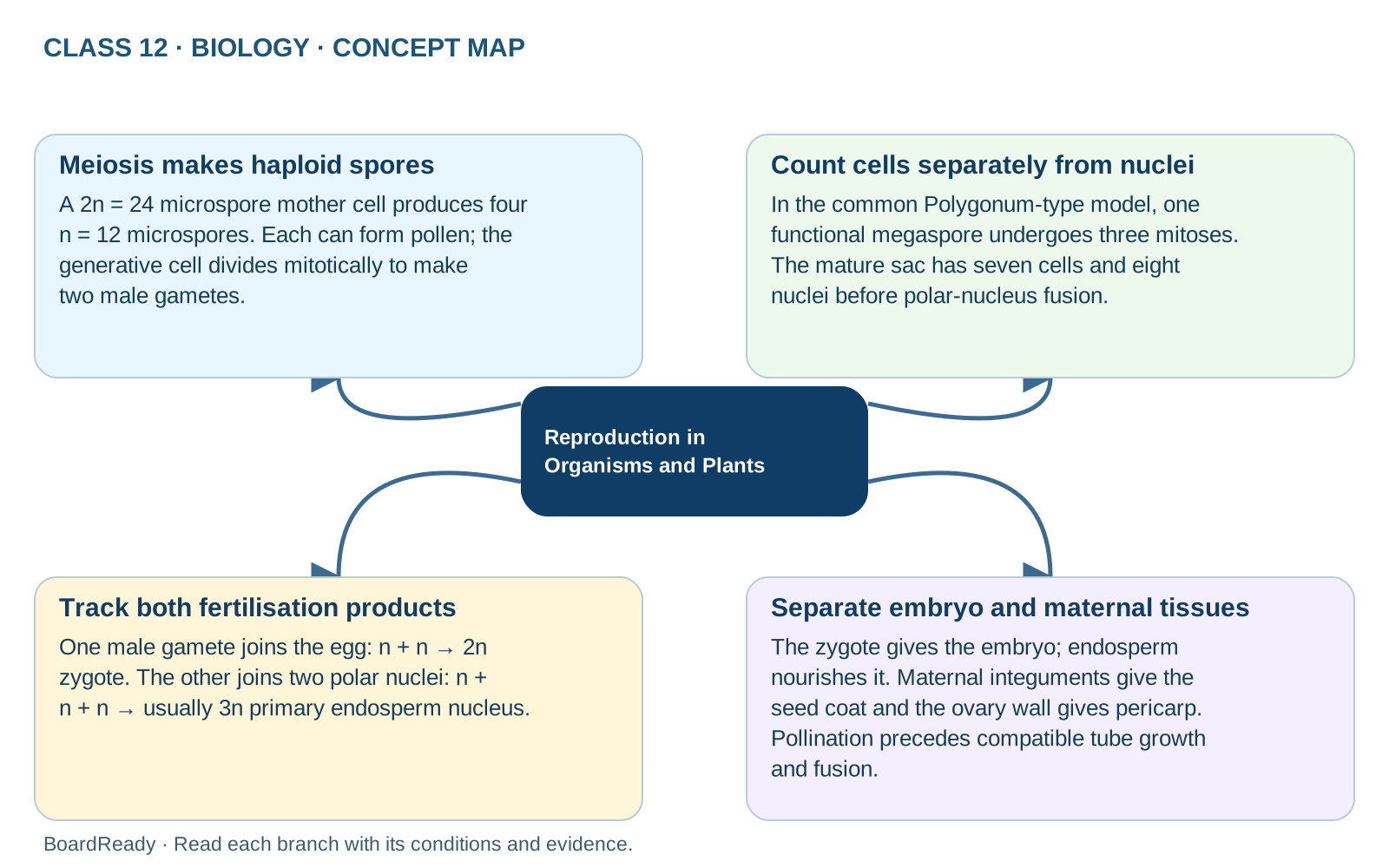
Connect spore formation, gametophyte organisation, two fusion events and the origins of seed tissues. Meiosis makes haploid spores: A 2n = 24 microspore mother cell produces four n = 12 microspores. Each can form pollen; the generative cell divides mitotically to make two male gametes. Count cells separately from nuclei: In the common Polygonum-type model, one functional megaspore undergoes three mitoses. The mature sac has seven cells and eight nuclei before polar-nucleus fusion. Track both fertilisation products: One male gamete joins the egg: n + n → 2n zygote. The other joins two polar nuclei: n + n + n → usually 3n primary endosperm nucleus. Separate embryo and maternal tissues: The zygote gives the embryo; endosperm nourishes it. Maternal integuments give the seed coat and the ovary wall gives pericarp. Pollination precedes compatible tube growth and fusion.Meiosis makes haploid spores
A 2n = 24 microspore mother cell produces four n = 12 microspores. Each can form pollen; the generative cell divides mitotically to make two male gametes.Count cells separately from nuclei
In the common Polygonum-type model, one functional megaspore undergoes three mitoses. The mature sac has seven cells and eight nuclei before polar-nucleus fusion.Check: State the life-cycle stage and whether you are counting cells, nuclei or chromosome sets. Pollination is pollen transfer, not gamete fusion. Use the typical embryo-sac assumptions before predicting 2n and 3n outcomes; apomixis and parthenocarpy are distinct exceptions.