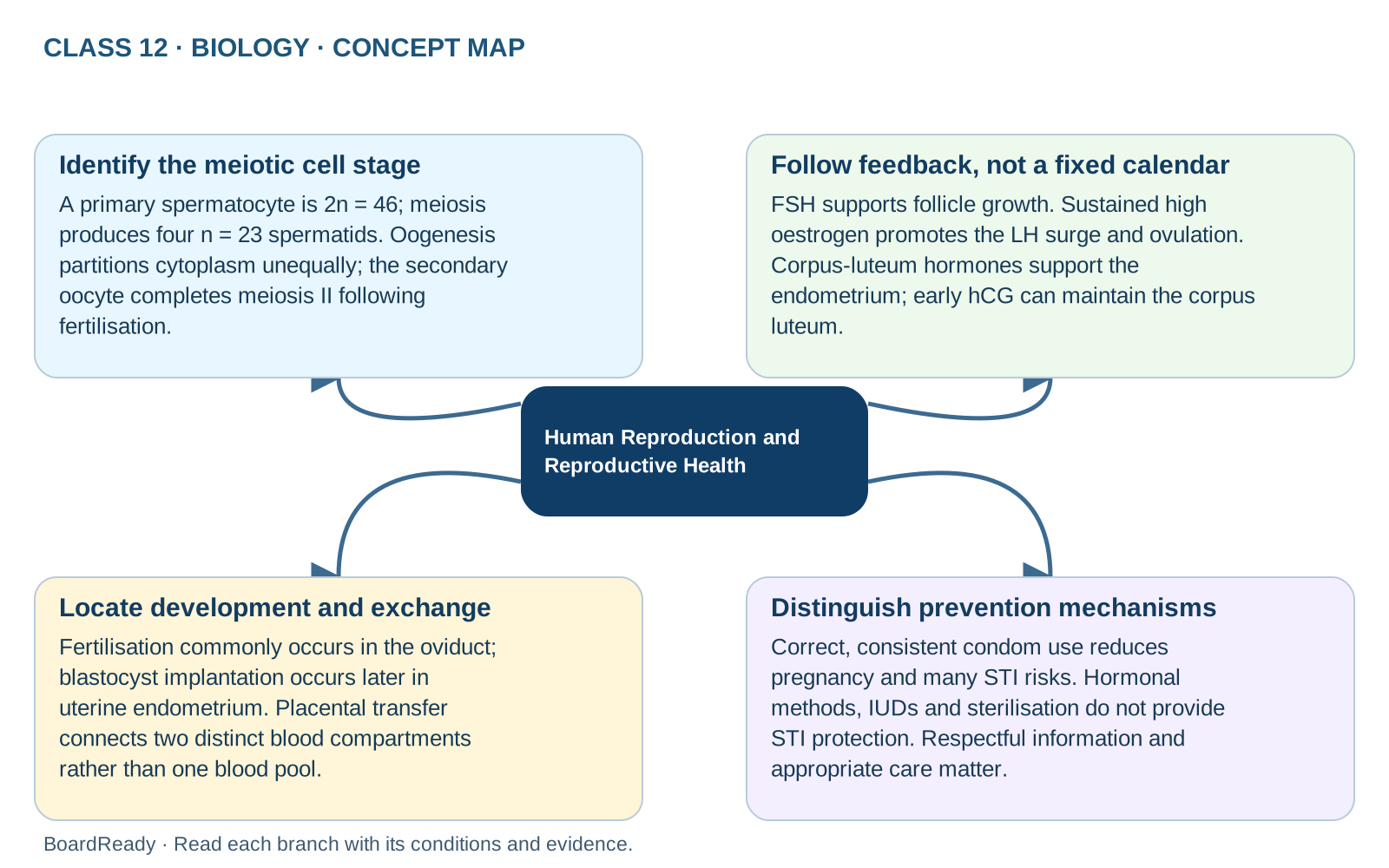
Comparison map
Human Reproduction and Reproductive Health: relationships and examples
Connect gamete formation, ovarian feedback, developmental locations and reproductive-health distinctions. Identify the meiotic cell stage: A primary spermatocyte is 2n = 46; meiosis produces four n = 23 spermatids. Oogenesis partitions cytoplasm unequally; the secondary oocyte completes meiosis II following fertilisation. Follow feedback, not a fixed calendar: FSH supports follicle growth. Sustained high oestrogen promotes the LH surge and ovulation. Corpus-luteum hormones support the endometrium; early hCG can maintain the corpus luteum. Locate development and exchange: Fertilisation commonly occurs in the oviduct; blastocyst implantation occurs later in uterine endometrium. Placental transfer connects two distinct blood compartments rather than one blood pool. Distinguish prevention mechanisms: Correct, consistent condom use reduces pregnancy and many STI risks. Hormonal methods, IUDs and sterilisation do not provide STI protection. Respectful information and appropriate care matter.Exam cue: Name the cell stage, hormone source, target, feedback sign and anatomical site. Fertilisation, implantation and hCG detection are different events. Cycle timing varies; the classroom model is not an individual fertility or contraceptive prediction.
- 1Human Reproduction and Reproductive Health -> Identify the meiotic cell stage: A primary spermatocyte is 2n = 46; meiosis produces four n = 23 spermatids. Oogenesis partitions cytoplasm unequally; the secondary oocyte completes meiosis II following fertilisation.
- 2Human Reproduction and Reproductive Health -> Follow feedback, not a fixed calendar: FSH supports follicle growth. Sustained high oestrogen promotes the LH surge and ovulation. Corpus-luteum hormones support the endometrium; early hCG can maintain the corpus luteum.
- 3Human Reproduction and Reproductive Health -> Locate development and exchange: Fertilisation commonly occurs in the oviduct; blastocyst implantation occurs later in uterine endometrium. Placental transfer connects two distinct blood compartments rather than one blood pool.
- 4Human Reproduction and Reproductive Health -> Distinguish prevention mechanisms: Correct, consistent condom use reduces pregnancy and many STI risks. Hormonal methods, IUDs and sterilisation do not provide STI protection. Respectful information and appropriate care matter.