CompareDigestive System
Digestive System: relationships and examples
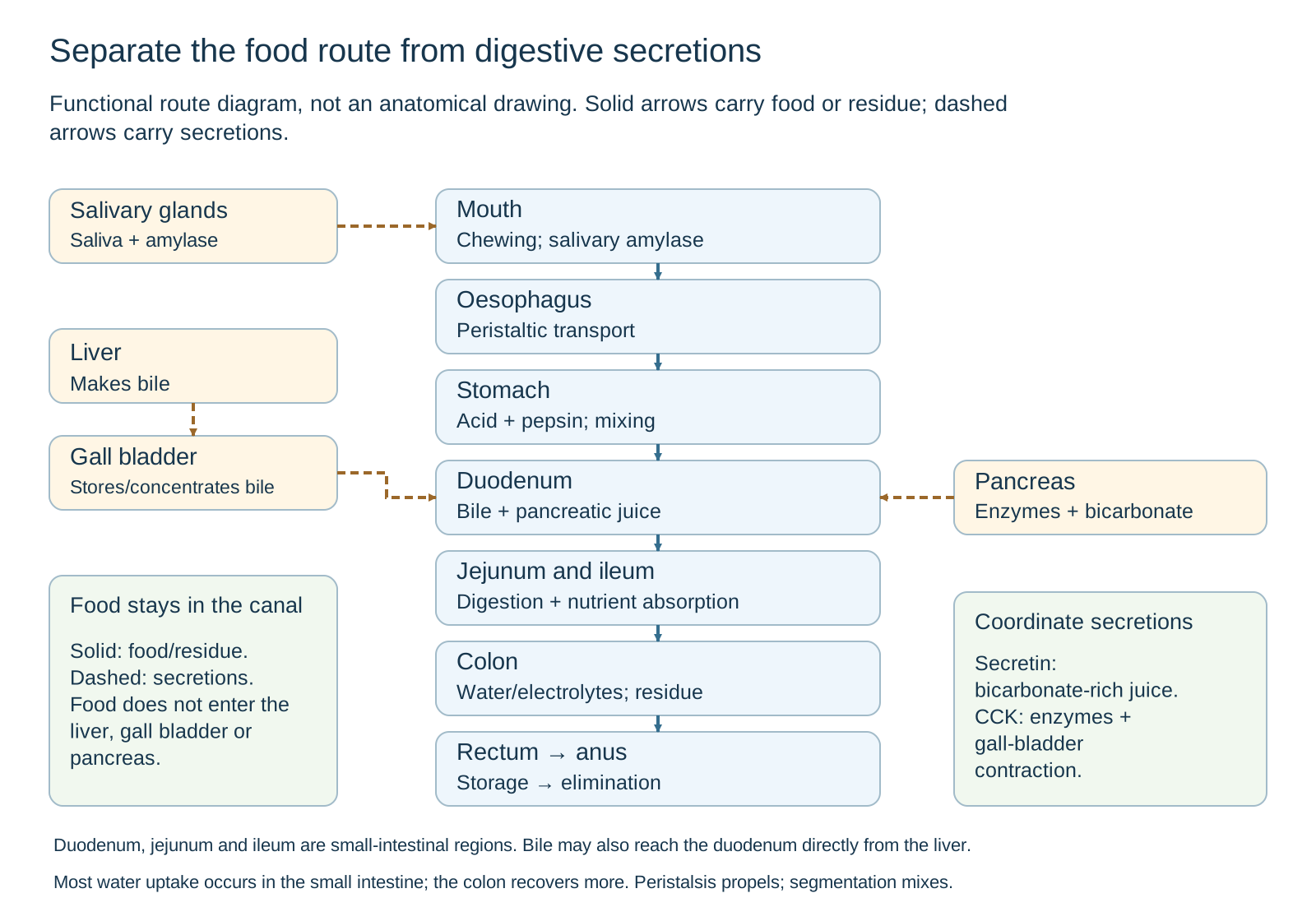
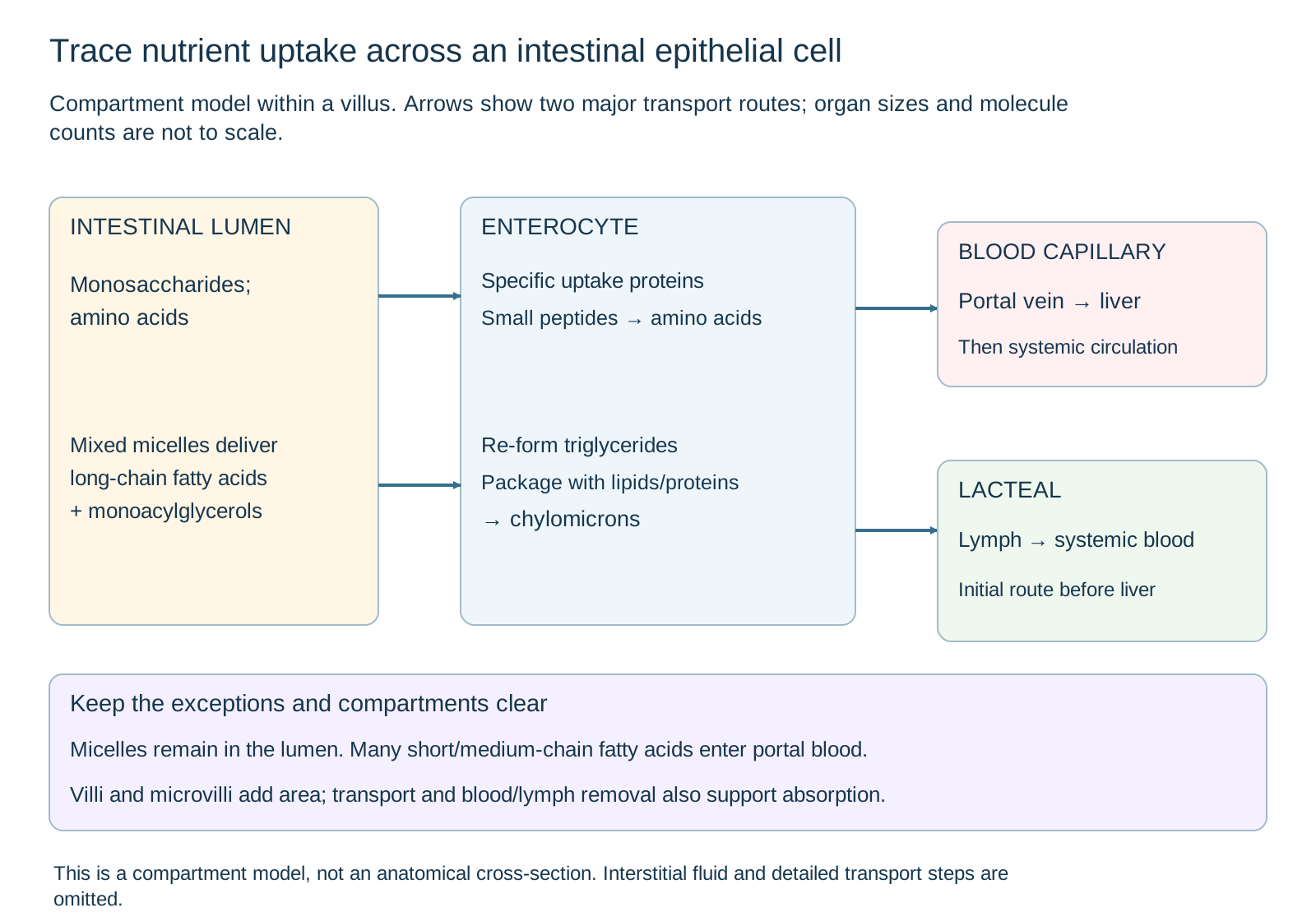
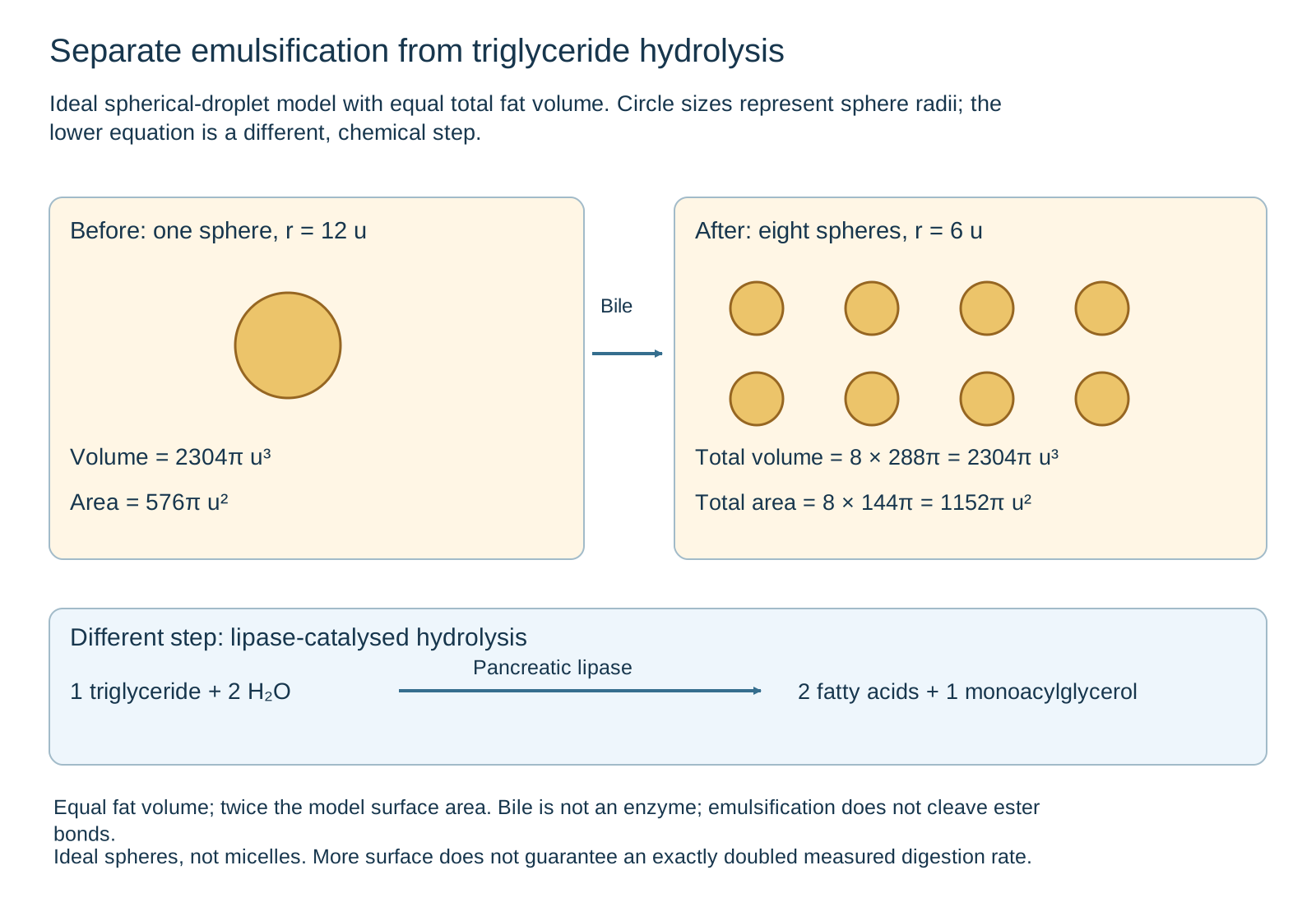
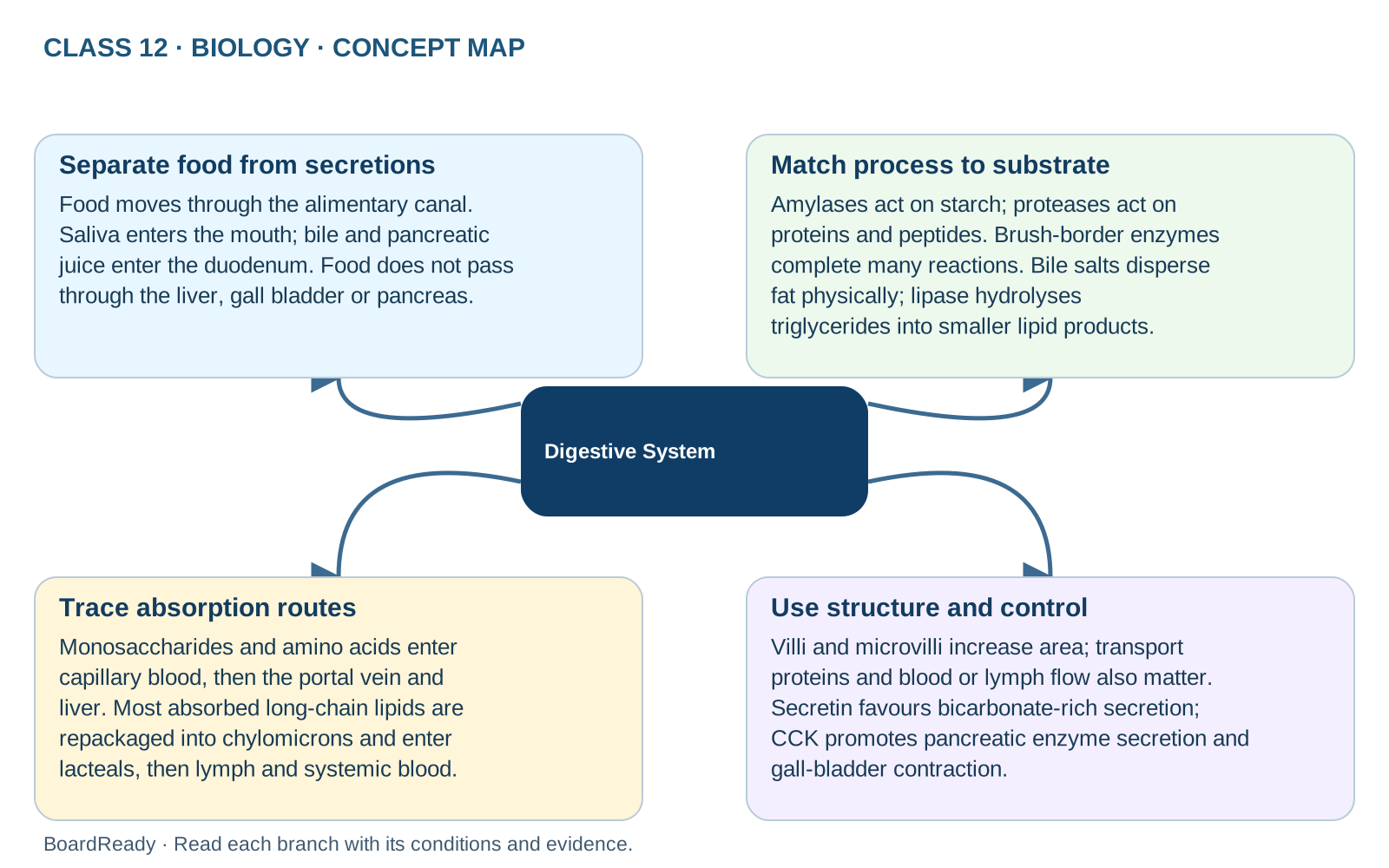
Follow the food route, locate digestive secretions and trace the different destinations of absorbed nutrients. Separate food from secretions: Food moves through the alimentary canal. Saliva enters the mouth; bile and pancreatic juice enter the duodenum. Food does not pass through the liver, gall bladder or pancreas. Match process to substrate: Amylases act on starch; proteases act on proteins and peptides. Brush-border enzymes complete many reactions. Bile salts disperse fat physically; lipase hydrolyses triglycerides into smaller lipid products. Trace absorption routes: Monosaccharides and amino acids enter capillary blood, then the portal vein and liver. Most absorbed long-chain lipids are repackaged into chylomicrons and enter lacteals, then lymph and systemic blood. Use structure and control: Villi and microvilli increase area; transport proteins and blood or lymph flow also matter. Secretin favours bicarbonate-rich secretion; CCK promotes pancreatic enzyme secretion and gall-bladder contraction.Separate food from secretions
Food moves through the alimentary canal. Saliva enters the mouth; bile and pancreatic juice enter the duodenum. Food does not pass through the liver, gall bladder or pancreas.Match process to substrate
Amylases act on starch; proteases act on proteins and peptides. Brush-border enzymes complete many reactions. Bile salts disperse fat physically; lipase hydrolyses triglycerides into smaller lipid products.Check: Name the site, substrate, action and product. Distinguish digestion, absorption and assimilation; keep emulsification separate from hydrolysis and lymph separate from the immediate portal-blood route.