Comparison map
Environment and Pollution: relationships and examples
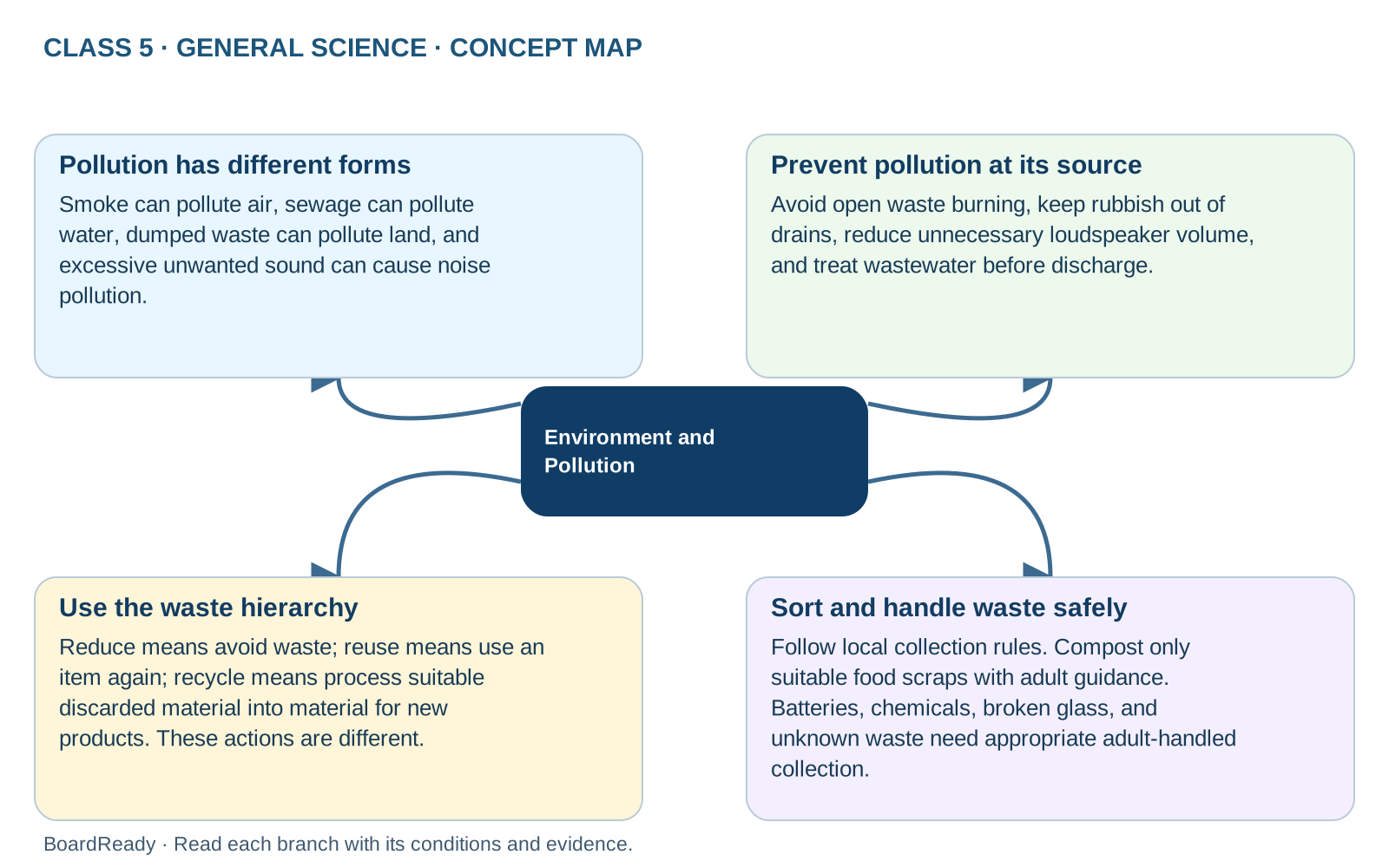
Trace pollution from a source to air, water, land, or sound surroundings, then choose practical prevention and waste actions. Pollution has different forms: Smoke can pollute air, sewage can pollute water, dumped waste can pollute land, and excessive unwanted sound can cause noise pollution. Prevent pollution at its source: Avoid open waste burning, keep rubbish out of drains, reduce unnecessary loudspeaker volume, and treat wastewater before discharge. Use the waste hierarchy: Reduce means avoid waste; reuse means use an item again; recycle means process suitable discarded material into material for new products. These actions are different. Sort and handle waste safely: Follow local collection rules. Compost only suitable food scraps with adult guidance. Batteries, chemicals, broken glass, and unknown waste need appropriate adult-handled collection.Exam cue: Name the pollution or waste type, identify a source, choose an appropriate action, and explain what harm it reduces. Follow local rules and adult guidance for special waste.
- 1Environment and Pollution -> Pollution has different forms: Smoke can pollute air, sewage can pollute water, dumped waste can pollute land, and excessive unwanted sound can cause noise pollution.
- 2Environment and Pollution -> Prevent pollution at its source: Avoid open waste burning, keep rubbish out of drains, reduce unnecessary loudspeaker volume, and treat wastewater before discharge.
- 3Environment and Pollution -> Use the waste hierarchy: Reduce means avoid waste; reuse means use an item again; recycle means process suitable discarded material into material for new products. These actions are different.
- 4Environment and Pollution -> Sort and handle waste safely: Follow local collection rules. Compost only suitable food scraps with adult guidance. Batteries, chemicals, broken glass, and unknown waste need appropriate adult-handled collection.