Comparison map
DC Motor: relationships and examples
A simple DC motor converts electrical energy into rotational mechanical energy through forces on a current-carrying coil.Exam cue: It switches the coil's electrical connections. Energy comes from the electrical supply and the magnetic field is supplied by magnets or field coils.
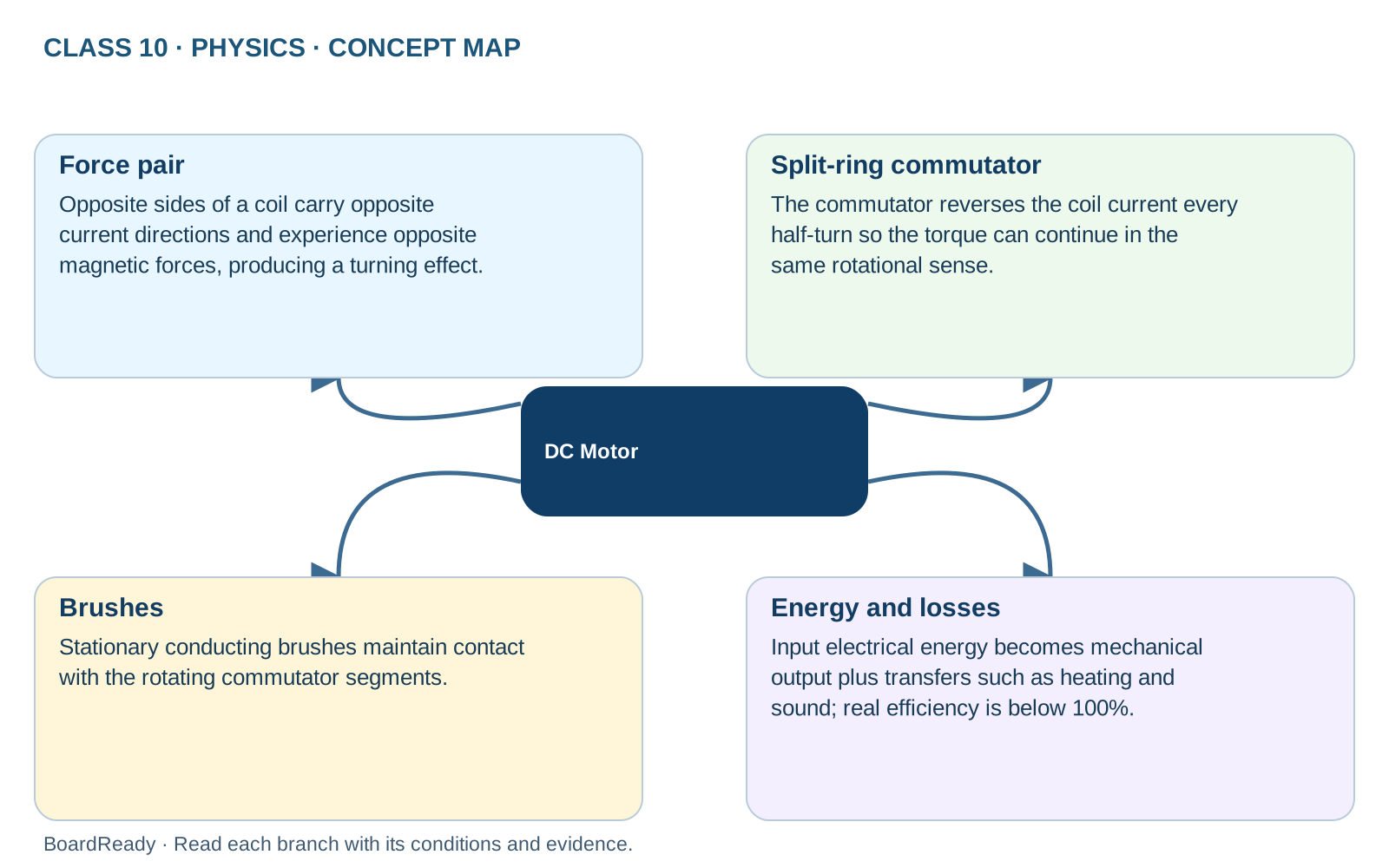
- 1DC Motor -> Force pair: Opposite sides of a coil carry opposite current directions and experience opposite magnetic forces, producing a turning effect.
- 2DC Motor -> Split-ring commutator: The commutator reverses the coil current every half-turn so the torque can continue in the same rotational sense.
- 3DC Motor -> Brushes: Stationary conducting brushes maintain contact with the rotating commutator segments.
- 4DC Motor -> Energy and losses: Input electrical energy becomes mechanical output plus transfers such as heating and sound; real efficiency is below 100%.