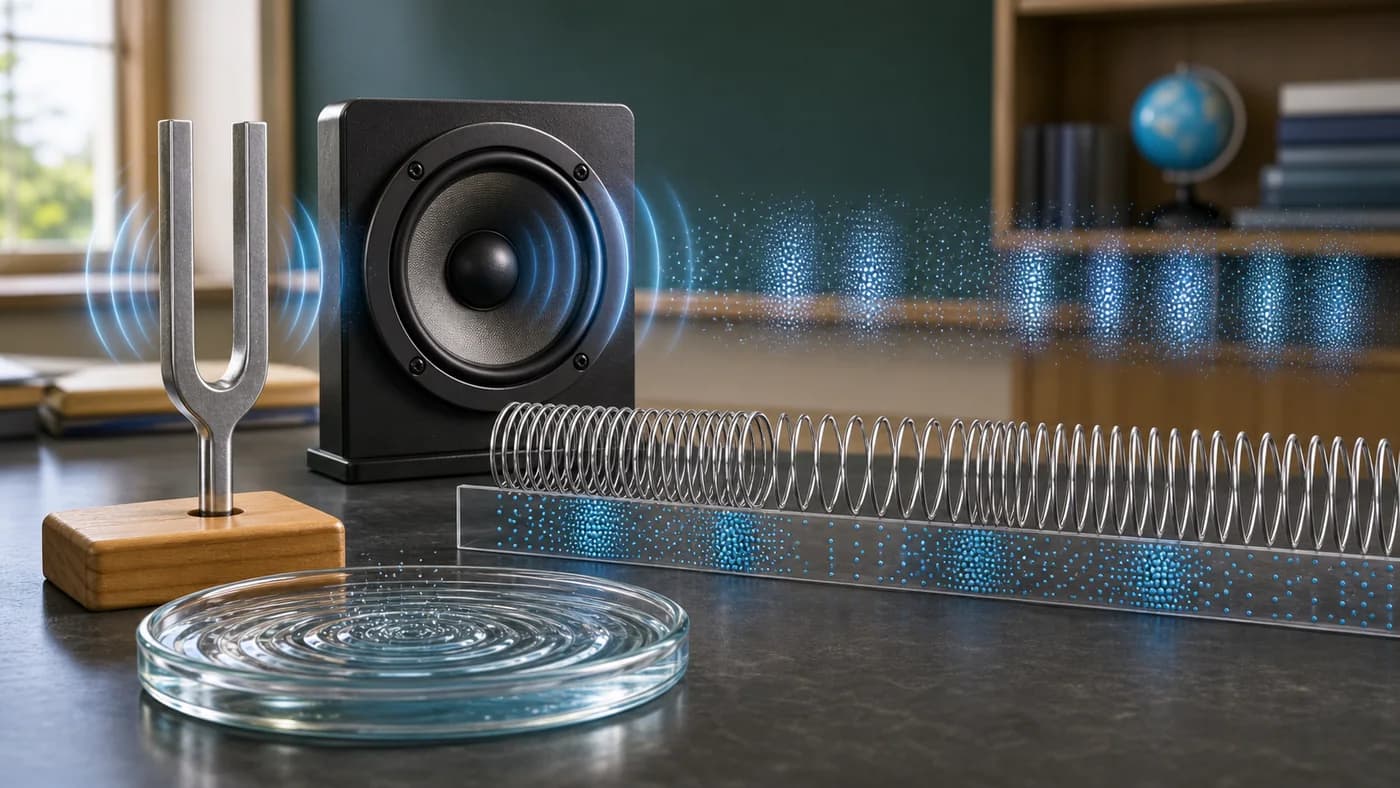
Longitudinal sound wave model
Use the labels to connect each part of longitudinal sound wave to the physics idea.Vibrating source
Starts the wave.Compression
Particles close together.Checking progress account…
Opening your study space…
Grade 7 revision
Rebuild the chapter shape, scan the key points, then open one focused practice step.
Revision workspace
Revision plan
Refresh the chapter structure first.
Check the core terms before writing.
Take one quick pass through formulas and reminders.
Finish with one focused chapter check.
Chapter revision sheet
Exam strategy
3 marks
Define the term, write the unit or formula, then add one relevant example.5 marks
Draw or state the setup, explain the principle, apply the formula/process, and finish with unit or conclusion.Diagram checks

Vibrating source
Starts the wave.Compression
Particles close together.
Amplitude
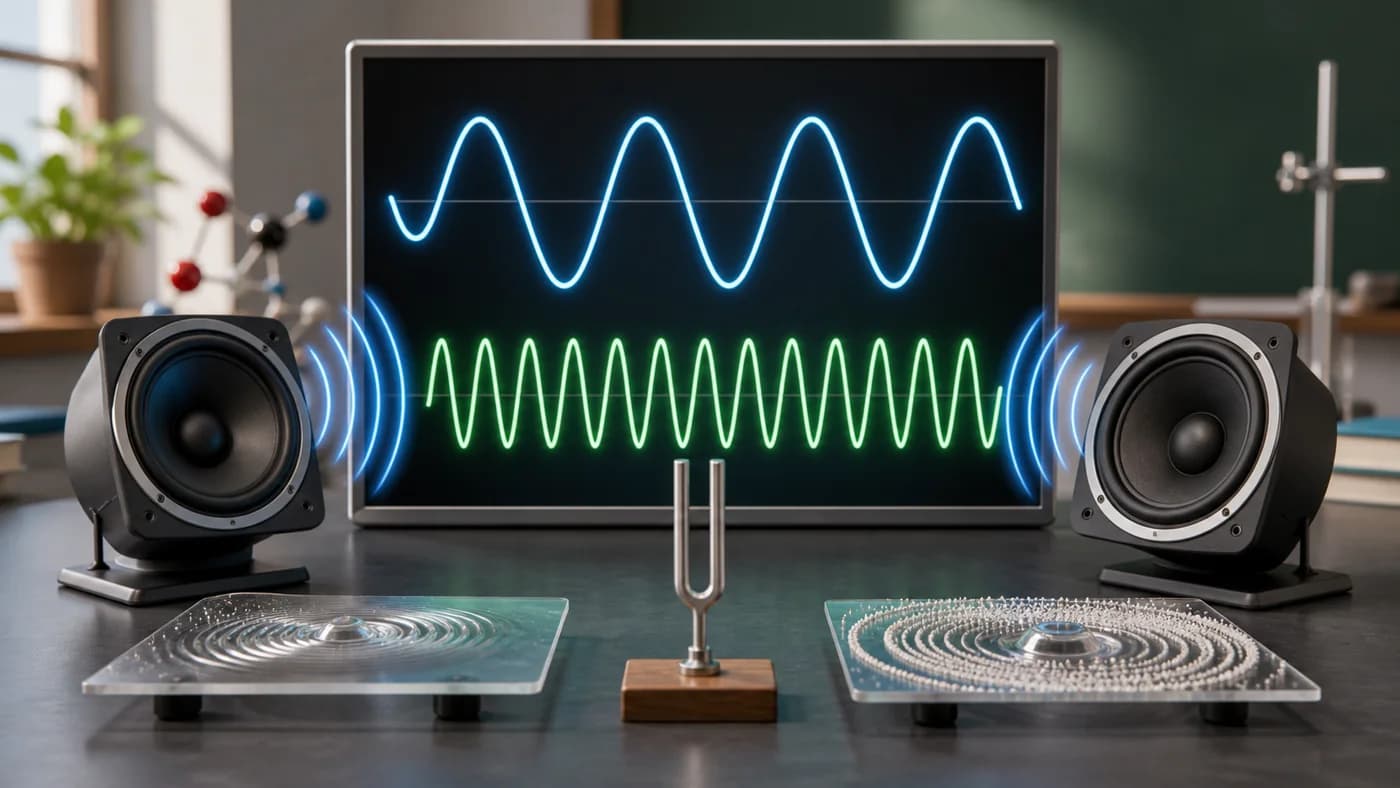
Height of vibration from middle position.Loudness
Increases with amplitude.
Source
Produces vibration.Medium
Carries sound through particles.Vibrate
Source moves to and fro.Disturb air
Air particles vibrate.Practice next
Focused practice
6562 MCQs and 3753 written prompts are ready for one focused chapter pass.
Chapter pack
Recall and reinforce
Review session
Run one focused recall pass, mark weak cards honestly, then switch to notes or practice while the idea is still fresh.
22
cards
19
notes
3
topics
Warm up
Flip cards
Repair weak
Practice
Switch formats when recall slows down, then test the same scope before leaving revision.
Study method
Use compact notes to search for one concept, filter by topic, then connect the point back to practice questions.
19
Notes
22
Cards
3
Topics
Look for a definition, formula, contrast, or common mistake.
Narrow to the exact topic before moving into broader chapter review.
After scanning notes, switch to flashcards or practice to retrieve it.
Flashcard review
0 reviewed cards. 0 known cards. 0 cards marked for review.
Topics
3
Recall
9
Cards
18
Topic 1
A sound source vibrates, making nearby particles move to and fro.
Topic 2
A larger amplitude gives a louder sound; a higher frequency gives a higher-pitched sound.
Topic 3
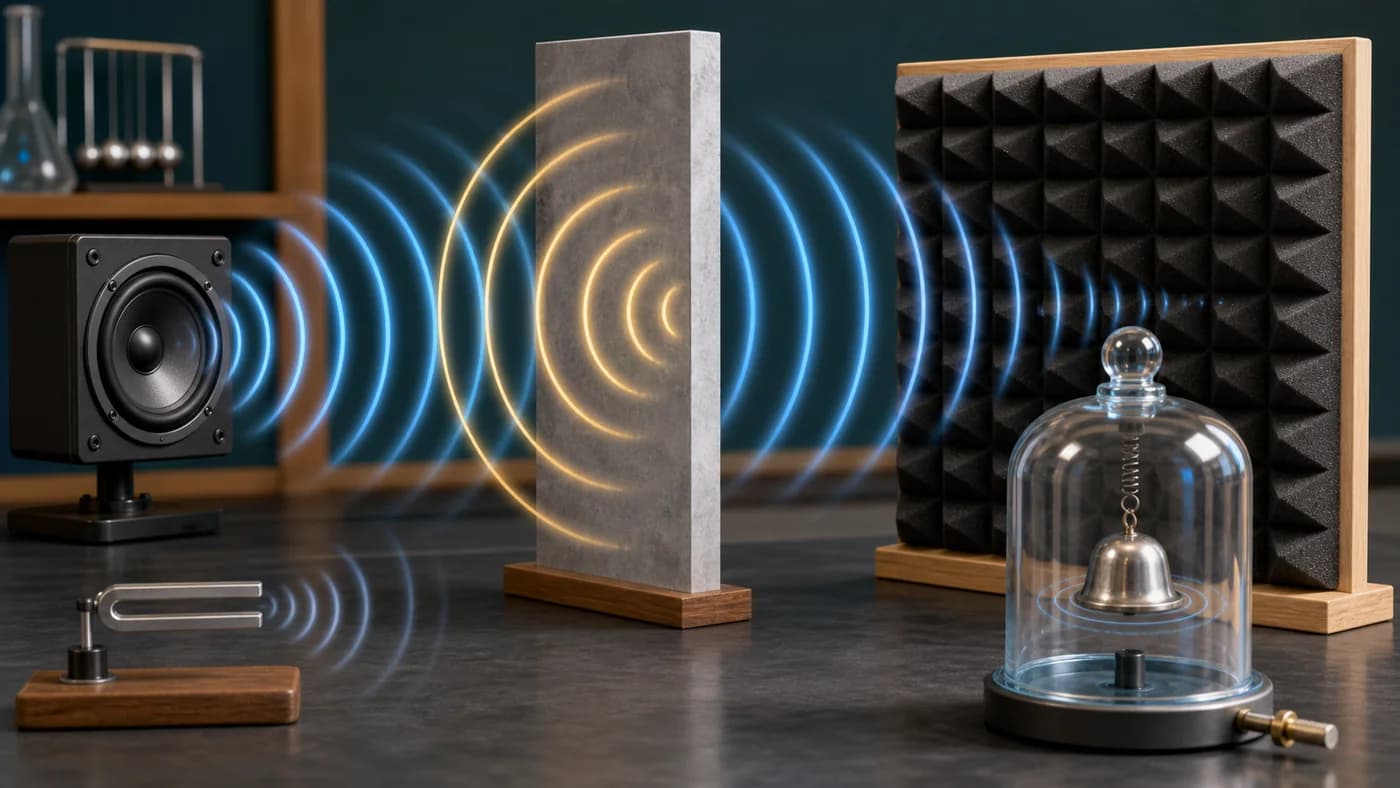
Sound travels through solids, liquids, and gases, but not through vacuum.