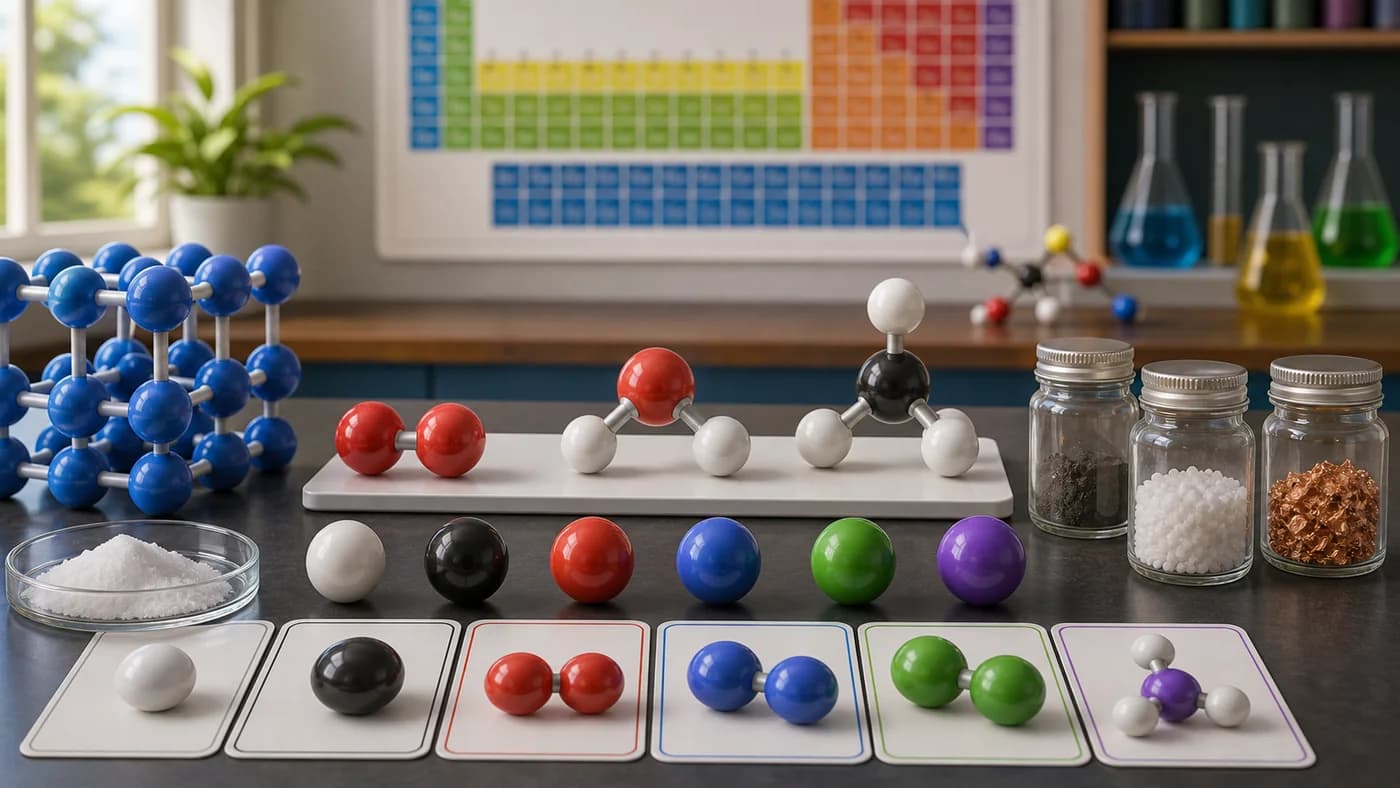
Reading formulae explain card
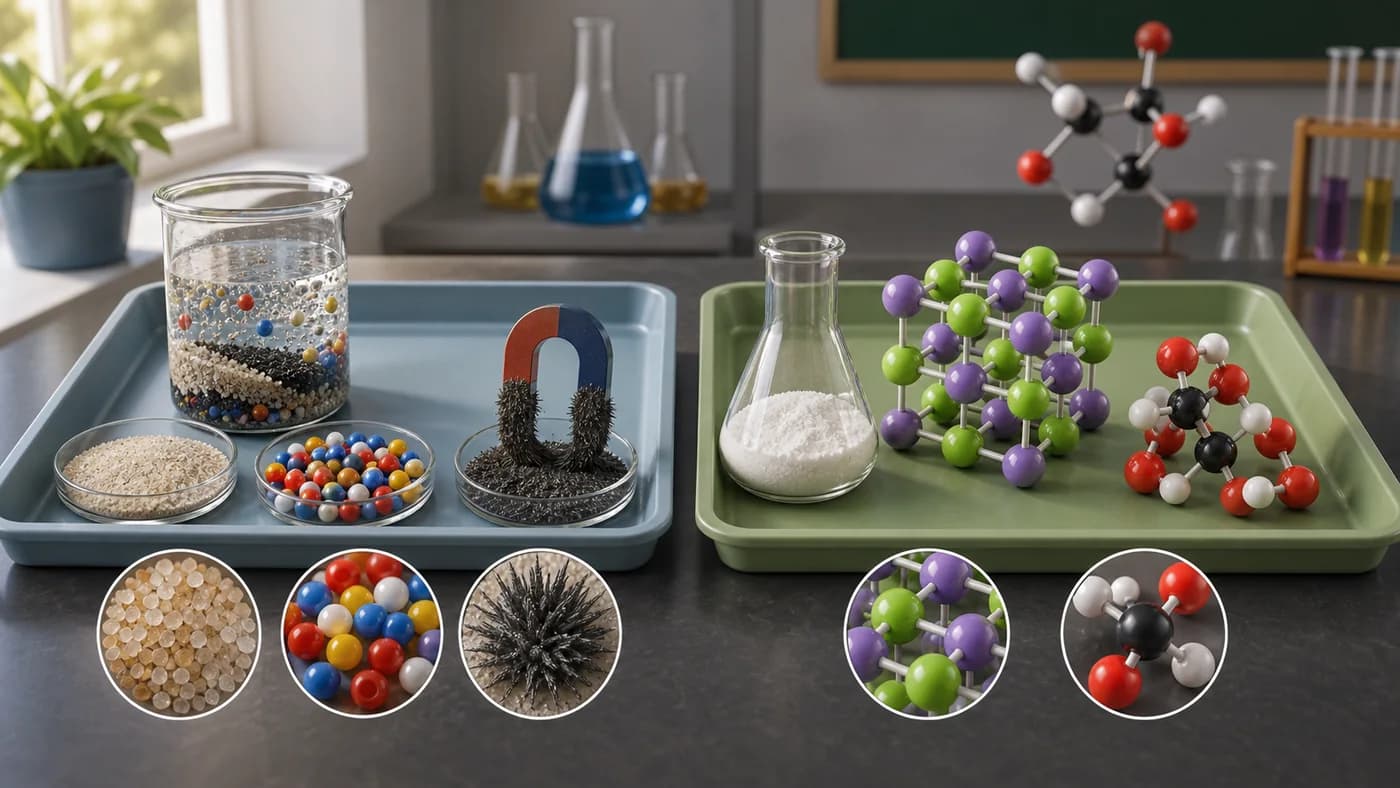
Use the labelled parts to connect observation with the chemistry idea in reading formulae.Symbol
Element abbreviation.Capital letter
Starts a new element symbol.Checking progress account…
Opening your study space…
Grade 7 revision
Rebuild the chapter shape, scan the key points, then open one focused practice step.
Revision workspace
Revision plan
Refresh the chapter structure first.
Check the core terms before writing.
Take one quick pass through formulas and reminders.
Finish with one focused chapter check.
Chapter revision sheet
Exam strategy
3 marks
Name the substance/process, state the observation or property, then give the reason.5 marks
Write the setup or equation, explain conditions, describe observations, and conclude with product or inference.Diagram checks

Symbol
Element abbreviation.Capital letter
Starts a new element symbol.
Mixture
Components physically together.Compound
Elements chemically combined.
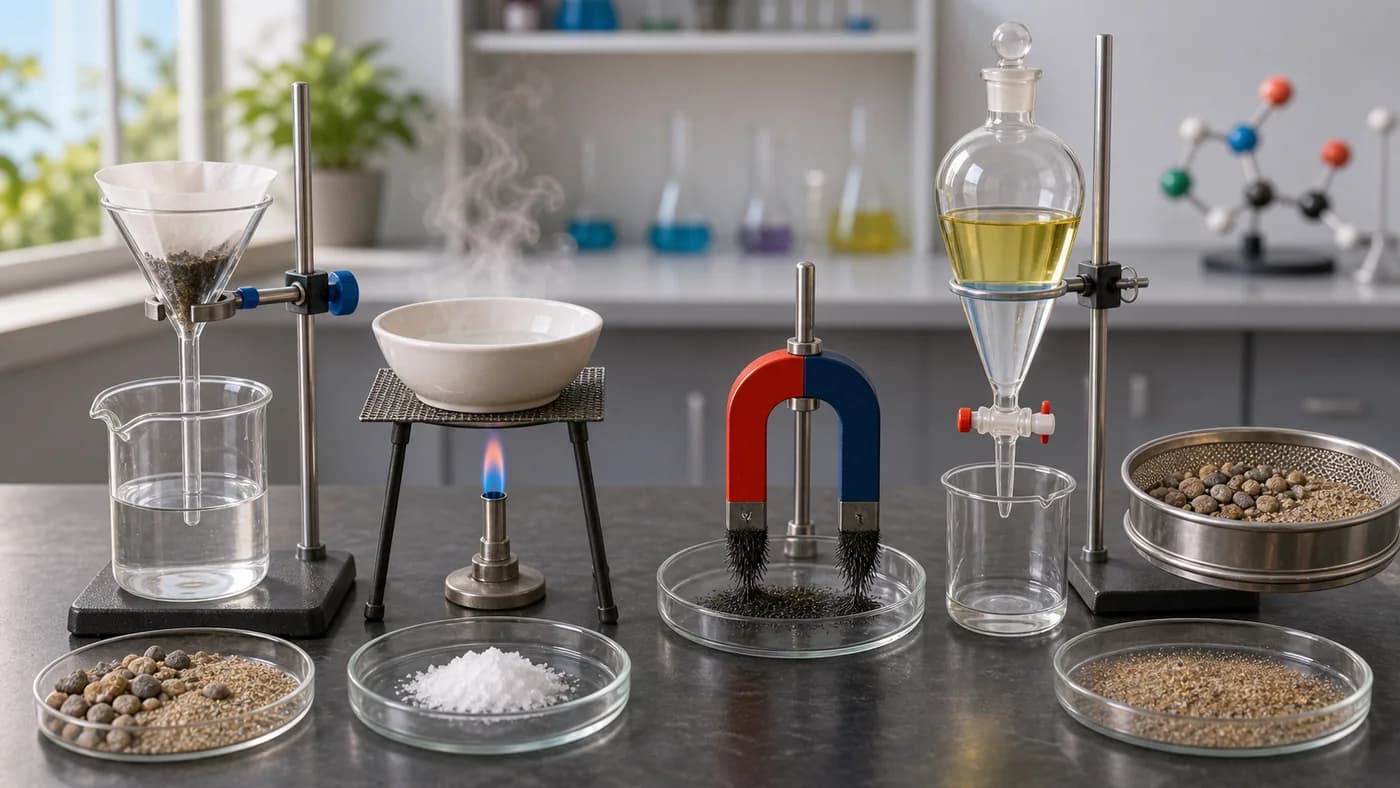
Solubility
Use filtration or evaporation.Magnetism
Use magnet.
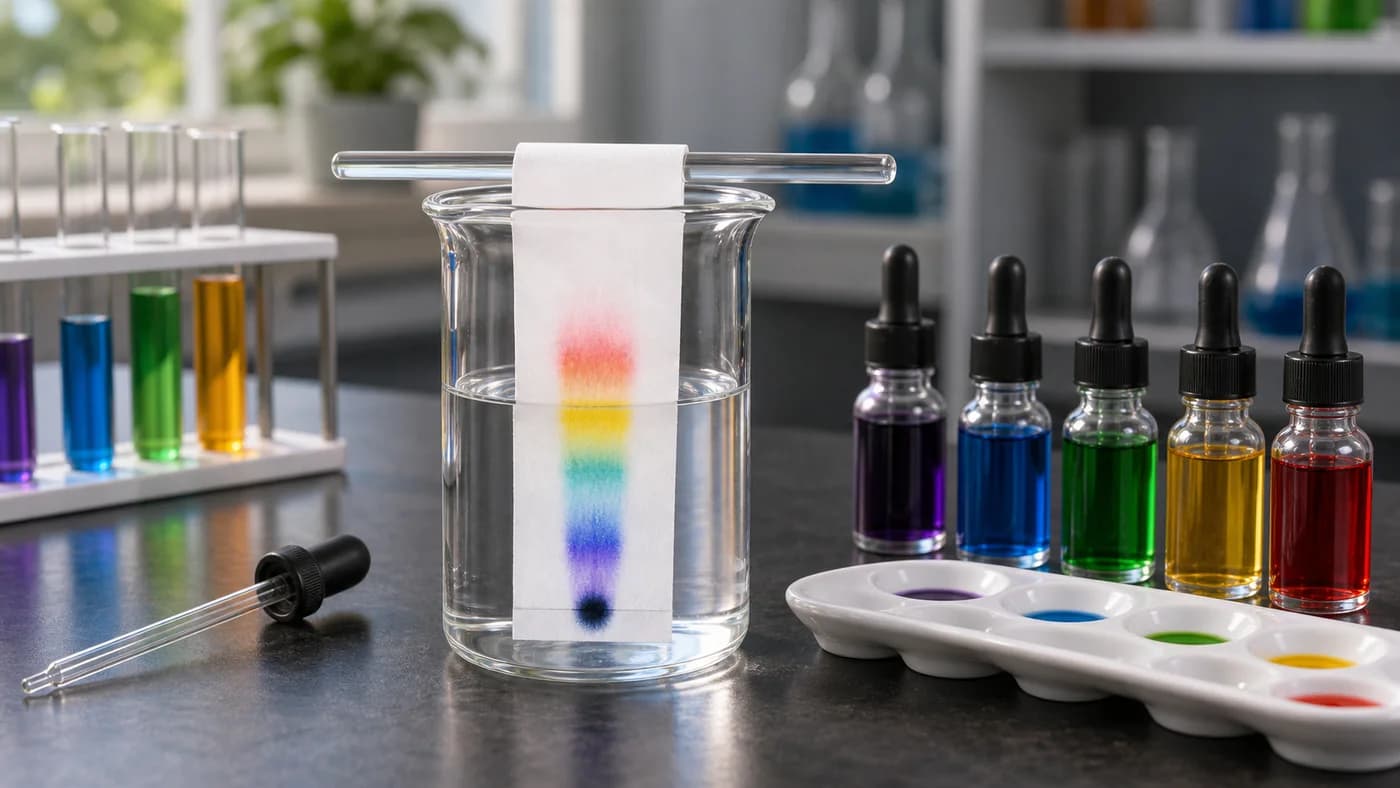
Paper strip
Stationary phase.Ink spot
Mixture to separate.Practice next
Focused practice
7190 MCQs and 5536 written prompts are ready for one focused chapter pass.
Chapter pack
Recall and reinforce
Review session
Run one focused recall pass, mark weak cards honestly, then switch to notes or practice while the idea is still fresh.
28
cards
24
notes
4
topics
Warm up
Flip cards
Repair weak
Practice
Switch formats when recall slows down, then test the same scope before leaving revision.
Study method
Use compact notes to search for one concept, filter by topic, then connect the point back to practice questions.
24
Notes
28
Cards
4
Topics
Look for a definition, formula, contrast, or common mistake.
Narrow to the exact topic before moving into broader chapter review.
After scanning notes, switch to flashcards or practice to retrieve it.
Flashcard review
0 reviewed cards. 0 known cards. 0 cards marked for review.
Topics
4
Recall
12
Cards
24
Topic 1
A symbol stands for one element; a formula shows composition.
Topic 2
Mixtures can usually be separated by physical methods; compounds need chemical methods.
Topic 3
Separation method depends on the properties of the components.
Topic 4
Chromatography separates components based on different movement through paper with a solvent.