Comparison map
Collection and Organisation of Data: relationships and examples
Organising observations preserves their categories, frequencies and total count.Exam cue: Define what counts as one observation before collecting data.
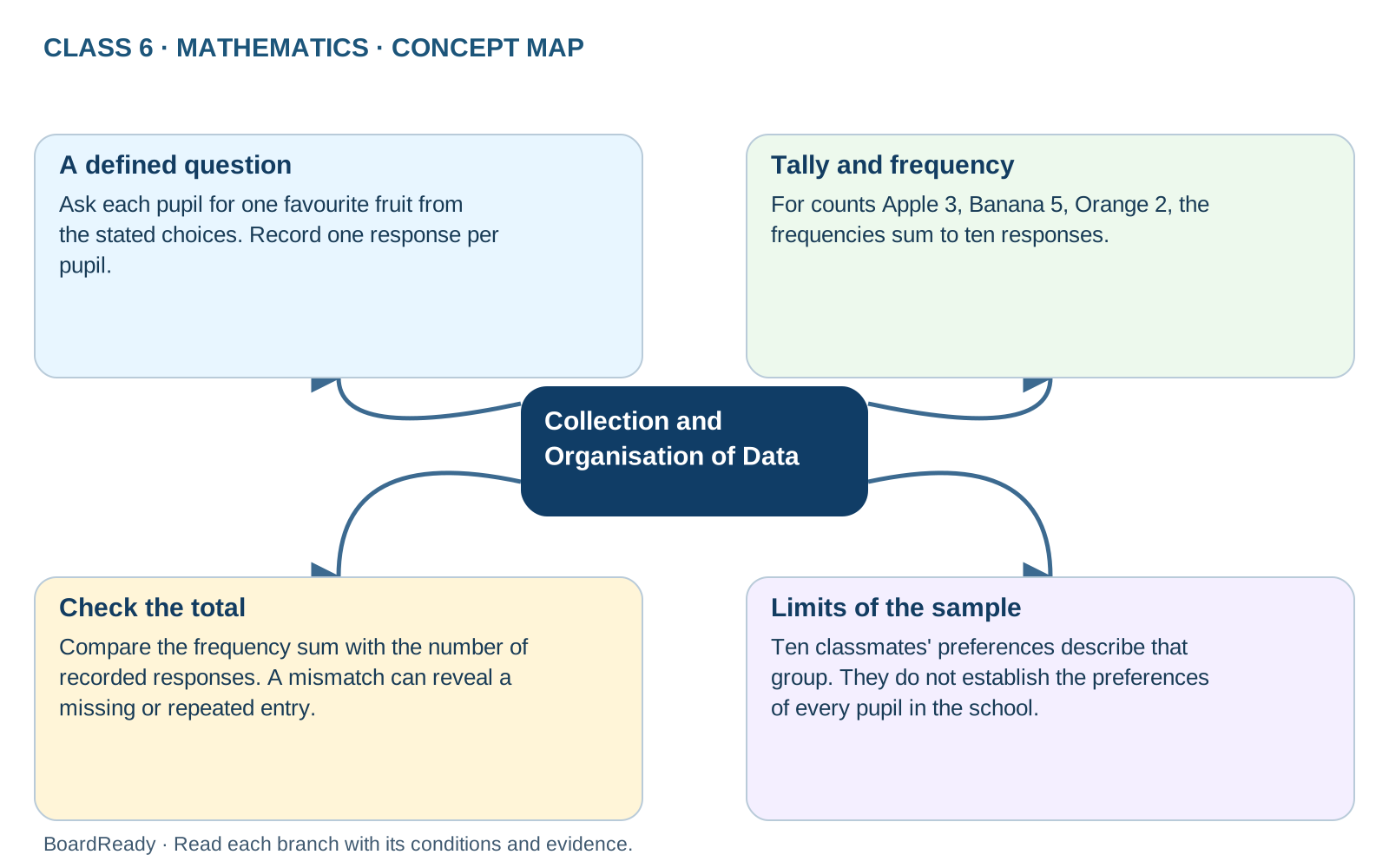
- 1Collection and Organisation of Data -> A defined question: Ask each pupil for one favourite fruit from the stated choices. Record one response per pupil.
- 2Collection and Organisation of Data -> Tally and frequency: For counts Apple 3, Banana 5, Orange 2, the frequencies sum to ten responses.
- 3Collection and Organisation of Data -> Check the total: Compare the frequency sum with the number of recorded responses. A mismatch can reveal a missing or repeated entry.
- 4Collection and Organisation of Data -> Limits of the sample: Ten classmates' preferences describe that group. They do not establish the preferences of every pupil in the school.