Comparison map
Solutions and Separation: relationships and examples
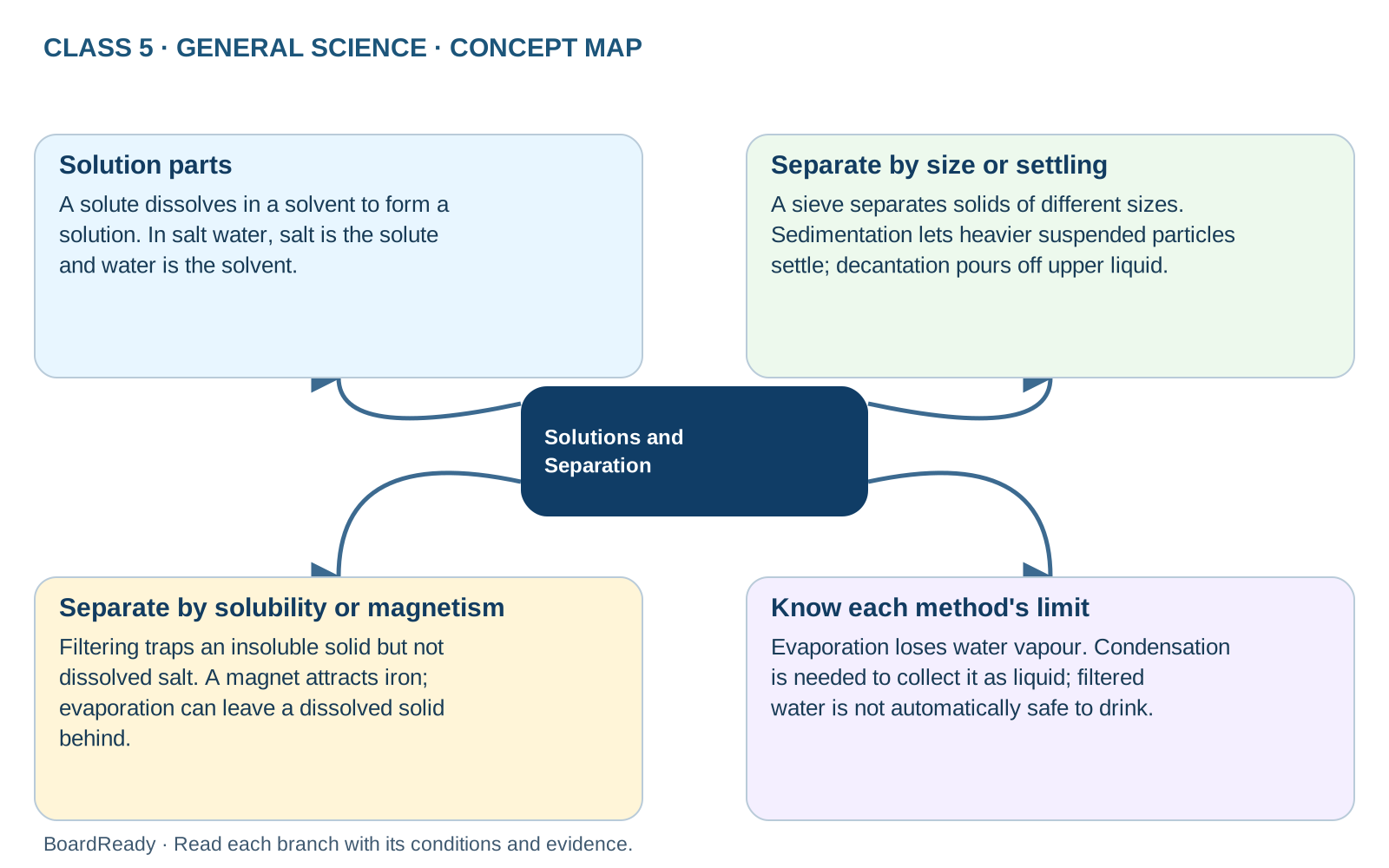
Name the solute and solvent, then choose a separation method that uses a property of the mixture. Solution parts: A solute dissolves in a solvent to form a solution. In salt water, salt is the solute and water is the solvent. Separate by size or settling: A sieve separates solids of different sizes. Sedimentation lets heavier suspended particles settle; decantation pours off upper liquid. Separate by solubility or magnetism: Filtering traps an insoluble solid but not dissolved salt. A magnet attracts iron; evaporation can leave a dissolved solid behind. Know each method's limit: Evaporation loses water vapour. Condensation is needed to collect it as liquid; filtered water is not automatically safe to drink.Exam cue: Name the property, choose a method, and say which part is collected. Check the limits and follow adult or teacher safety directions.
- 1Solutions and Separation -> Solution parts: A solute dissolves in a solvent to form a solution. In salt water, salt is the solute and water is the solvent.
- 2Solutions and Separation -> Separate by size or settling: A sieve separates solids of different sizes. Sedimentation lets heavier suspended particles settle; decantation pours off upper liquid.
- 3Solutions and Separation -> Separate by solubility or magnetism: Filtering traps an insoluble solid but not dissolved salt. A magnet attracts iron; evaporation can leave a dissolved solid behind.
- 4Solutions and Separation -> Know each method's limit: Evaporation loses water vapour. Condensation is needed to collect it as liquid; filtered water is not automatically safe to drink.