Comparison map
Changes in Materials: relationships and examples
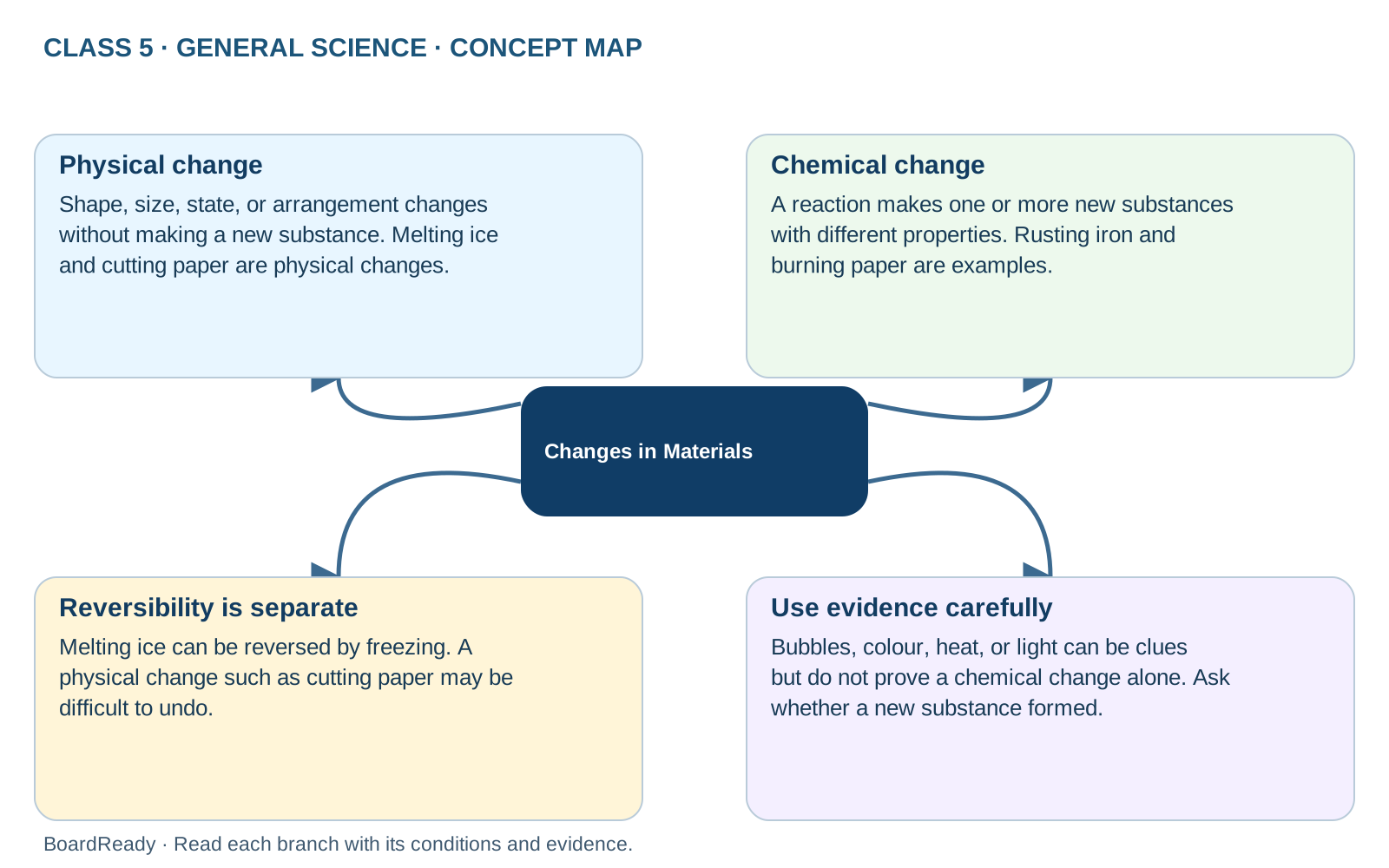
Classify a change by asking whether a new substance forms, then consider separately whether the change is easy to reverse. Physical change: Shape, size, state, or arrangement changes without making a new substance. Melting ice and cutting paper are physical changes. Chemical change: A reaction makes one or more new substances with different properties. Rusting iron and burning paper are examples. Reversibility is separate: Melting ice can be reversed by freezing. A physical change such as cutting paper may be difficult to undo. Use evidence carefully: Bubbles, colour, heat, or light can be clues but do not prove a chemical change alone. Ask whether a new substance formed.Exam cue: First ask whether a new substance forms. Then ask separately whether the change can easily be undone in the stated conditions.
- 1Changes in Materials -> Physical change: Shape, size, state, or arrangement changes without making a new substance. Melting ice and cutting paper are physical changes.
- 2Changes in Materials -> Chemical change: A reaction makes one or more new substances with different properties. Rusting iron and burning paper are examples.
- 3Changes in Materials -> Reversibility is separate: Melting ice can be reversed by freezing. A physical change such as cutting paper may be difficult to undo.
- 4Changes in Materials -> Use evidence carefully: Bubbles, colour, heat, or light can be clues but do not prove a chemical change alone. Ask whether a new substance formed.