Comparison map
Classification Basics: relationships and examples
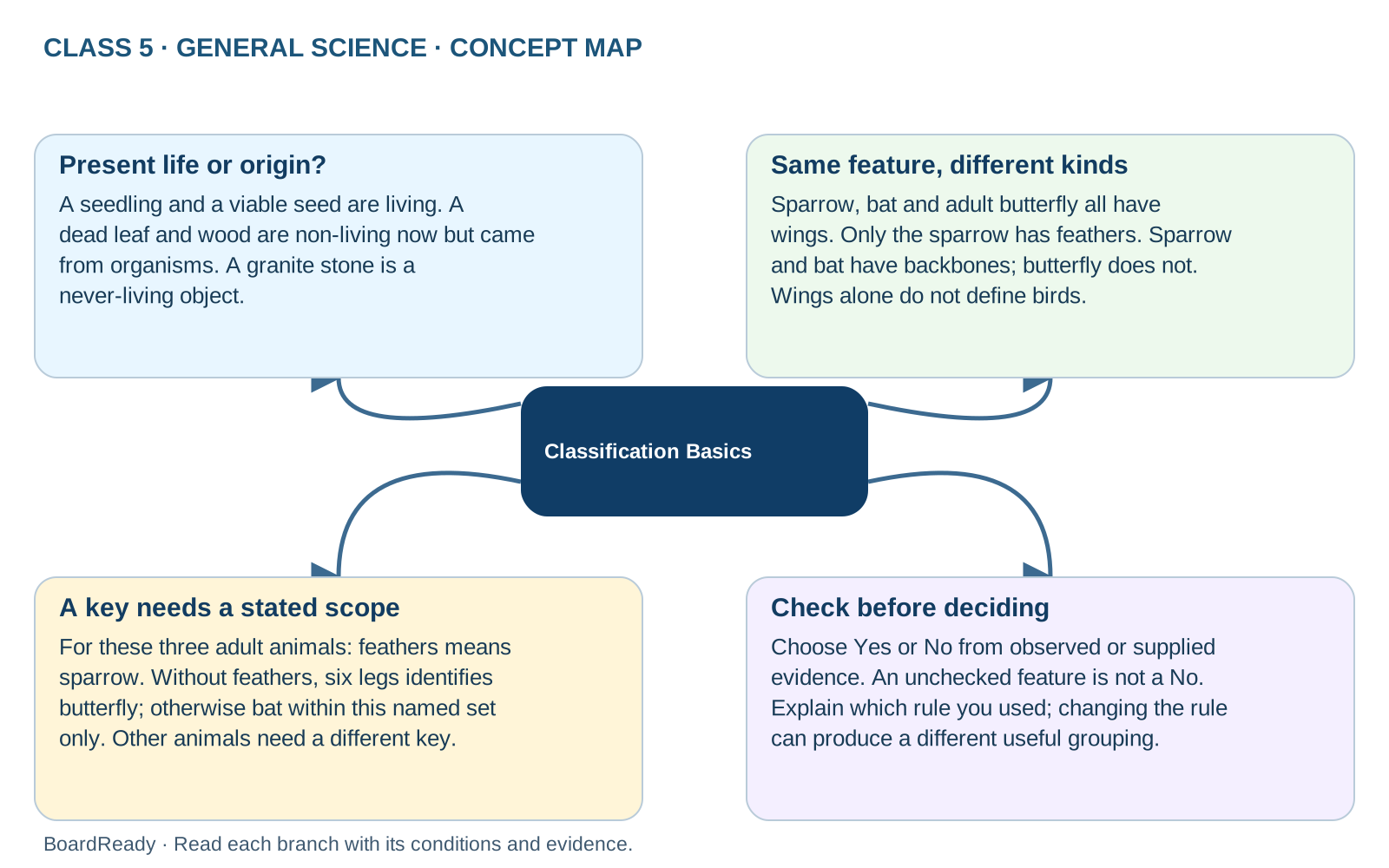
Name the examples, state a clear feature, use evidence consistently and explain the resulting groups. Present life or origin?: A seedling and a viable seed are living. A dead leaf and wood are non-living now but came from organisms. A granite stone is a never-living object. Same feature, different kinds: Sparrow, bat and adult butterfly all have wings. Only the sparrow has feathers. Sparrow and bat have backbones; butterfly does not. Wings alone do not define birds. A key needs a stated scope: For these three adult animals: feathers means sparrow. Without feathers, six legs identifies butterfly; otherwise bat within this named set only. Other animals need a different key. Check before deciding: Choose Yes or No from observed or supplied evidence. An unchecked feature is not a No. Explain which rule you used; changing the rule can produce a different useful grouping.Exam cue: State the group and the feature or life-process evidence. Keep present life, origin and the scope of a key distinct.
- 1Classification Basics -> Present life or origin?: A seedling and a viable seed are living. A dead leaf and wood are non-living now but came from organisms. A granite stone is a never-living object.
- 2Classification Basics -> Same feature, different kinds: Sparrow, bat and adult butterfly all have wings. Only the sparrow has feathers. Sparrow and bat have backbones; butterfly does not. Wings alone do not define birds.
- 3Classification Basics -> A key needs a stated scope: For these three adult animals: feathers means sparrow. Without feathers, six legs identifies butterfly; otherwise bat within this named set only. Other animals need a different key.
- 4Classification Basics -> Check before deciding: Choose Yes or No from observed or supplied evidence. An unchecked feature is not a No. Explain which rule you used; changing the rule can produce a different useful grouping.