Comparison map
Human Body Systems: relationships and examples
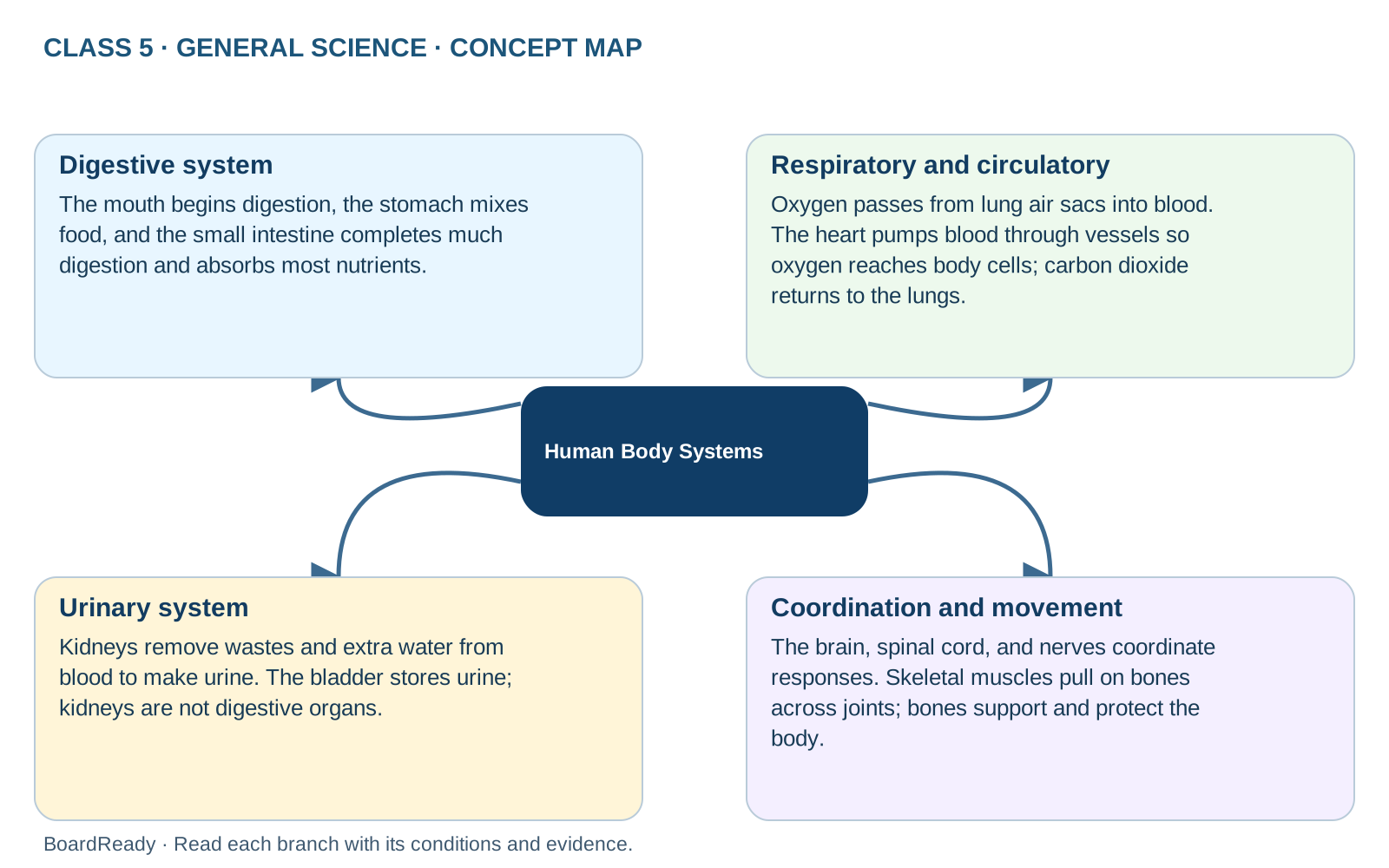
Follow how organs work in systems, then trace cooperation between digestion, breathing, circulation, nerves, muscles, and bones. Digestive system: The mouth begins digestion, the stomach mixes food, and the small intestine completes much digestion and absorbs most nutrients. Respiratory and circulatory: Oxygen passes from lung air sacs into blood. The heart pumps blood through vessels so oxygen reaches body cells; carbon dioxide returns to the lungs. Urinary system: Kidneys remove wastes and extra water from blood to make urine. The bladder stores urine; kidneys are not digestive organs. Coordination and movement: The brain, spinal cord, and nerves coordinate responses. Skeletal muscles pull on bones across joints; bones support and protect the body.Exam cue: For each system, name an organ and its job. To explain teamwork, trace a material or message from one system to another.
- 1Human Body Systems -> Digestive system: The mouth begins digestion, the stomach mixes food, and the small intestine completes much digestion and absorbs most nutrients.
- 2Human Body Systems -> Respiratory and circulatory: Oxygen passes from lung air sacs into blood. The heart pumps blood through vessels so oxygen reaches body cells; carbon dioxide returns to the lungs.
- 3Human Body Systems -> Urinary system: Kidneys remove wastes and extra water from blood to make urine. The bladder stores urine; kidneys are not digestive organs.
- 4Human Body Systems -> Coordination and movement: The brain, spinal cord, and nerves coordinate responses. Skeletal muscles pull on bones across joints; bones support and protect the body.