Comparison map
Health, Hygiene, and First Aid: relationships and examples
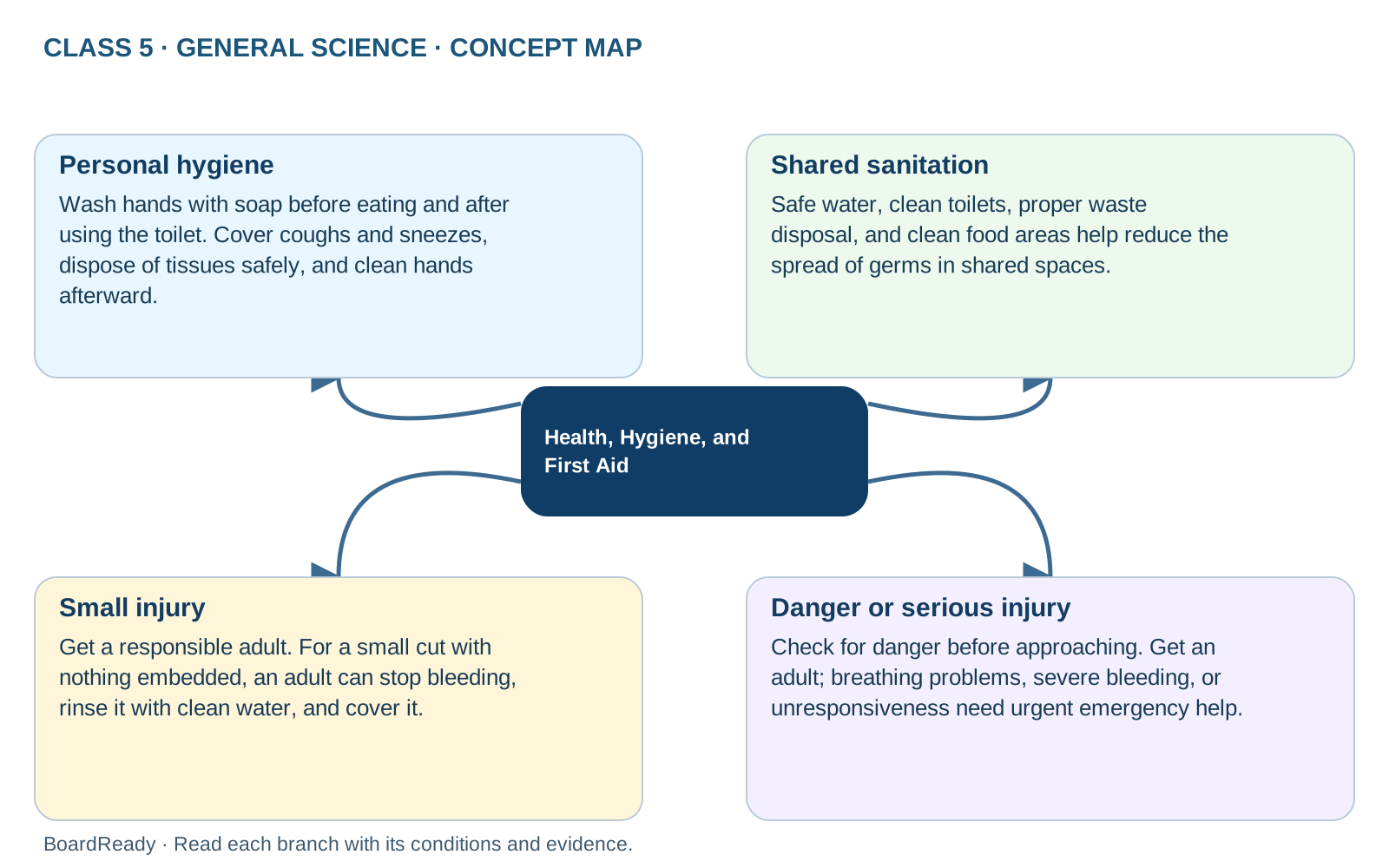
Connect everyday hygiene and sanitation with reducing germ spread, and use a safety-first order when someone is hurt. Personal hygiene: Wash hands with soap before eating and after using the toilet. Cover coughs and sneezes, dispose of tissues safely, and clean hands afterward. Shared sanitation: Safe water, clean toilets, proper waste disposal, and clean food areas help reduce the spread of germs in shared spaces. Small injury: Get a responsible adult. For a small cut with nothing embedded, an adult can stop bleeding, rinse it with clean water, and cover it. Danger or serious injury: Check for danger before approaching. Get an adult; breathing problems, severe bleeding, or unresponsiveness need urgent emergency help.Exam cue: Use a safe order: check for danger, get a responsible adult, then follow first aid suited to the situation. Serious problems need emergency help.
- 1Health, Hygiene, and First Aid -> Personal hygiene: Wash hands with soap before eating and after using the toilet. Cover coughs and sneezes, dispose of tissues safely, and clean hands afterward.
- 2Health, Hygiene, and First Aid -> Shared sanitation: Safe water, clean toilets, proper waste disposal, and clean food areas help reduce the spread of germs in shared spaces.
- 3Health, Hygiene, and First Aid -> Small injury: Get a responsible adult. For a small cut with nothing embedded, an adult can stop bleeding, rinse it with clean water, and cover it.
- 4Health, Hygiene, and First Aid -> Danger or serious injury: Check for danger before approaching. Get an adult; breathing problems, severe bleeding, or unresponsiveness need urgent emergency help.