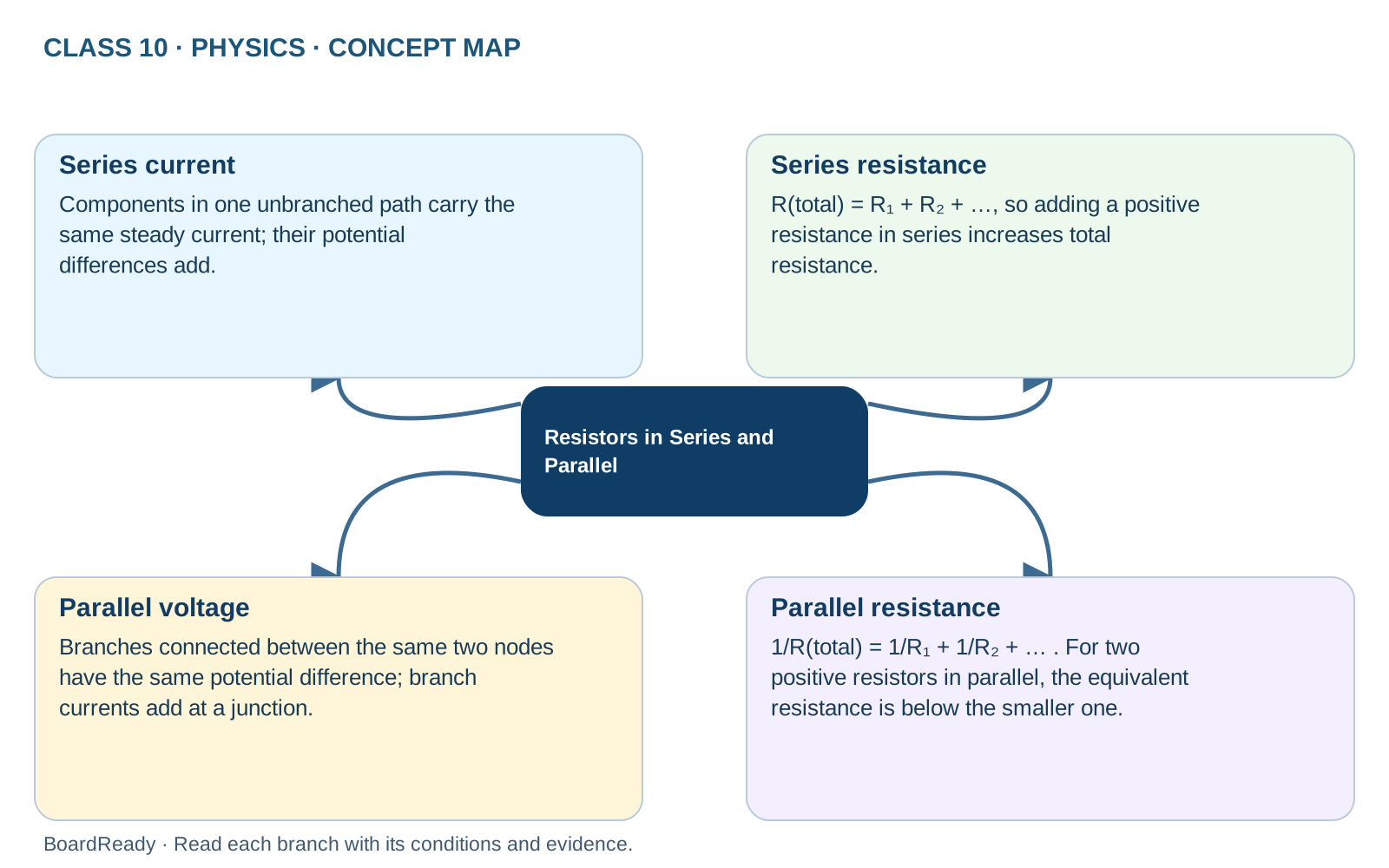
Comparison map
Resistors in Series and Parallel: relationships and examples
Identify shared current in series and shared potential difference in parallel before combining resistances.Exam cue: Parallel branches share voltage, not necessarily current. With the same branch voltage, the lower-resistance branch carries more current.
- 1Resistors in Series and Parallel -> Series current: Components in one unbranched path carry the same steady current; their potential differences add.
- 2Resistors in Series and Parallel -> Series resistance: R(total) = R₁ + R₂ + …, so adding a positive resistance in series increases total resistance.
- 3Resistors in Series and Parallel -> Parallel voltage: Branches connected between the same two nodes have the same potential difference; branch currents add at a junction.
- 4Resistors in Series and Parallel -> Parallel resistance: 1/R(total) = 1/R₁ + 1/R₂ + …. For two positive resistors in parallel, the equivalent resistance is below the smaller one.