Comparison map
Domestic Electric Circuits: relationships and examples
Analyse household loads as parallel branches, then distinguish normal load current from a short-circuit or earth-fault current.Exam cue: That would describe a series chain. Household appliance branches are arranged in parallel for independent operation.
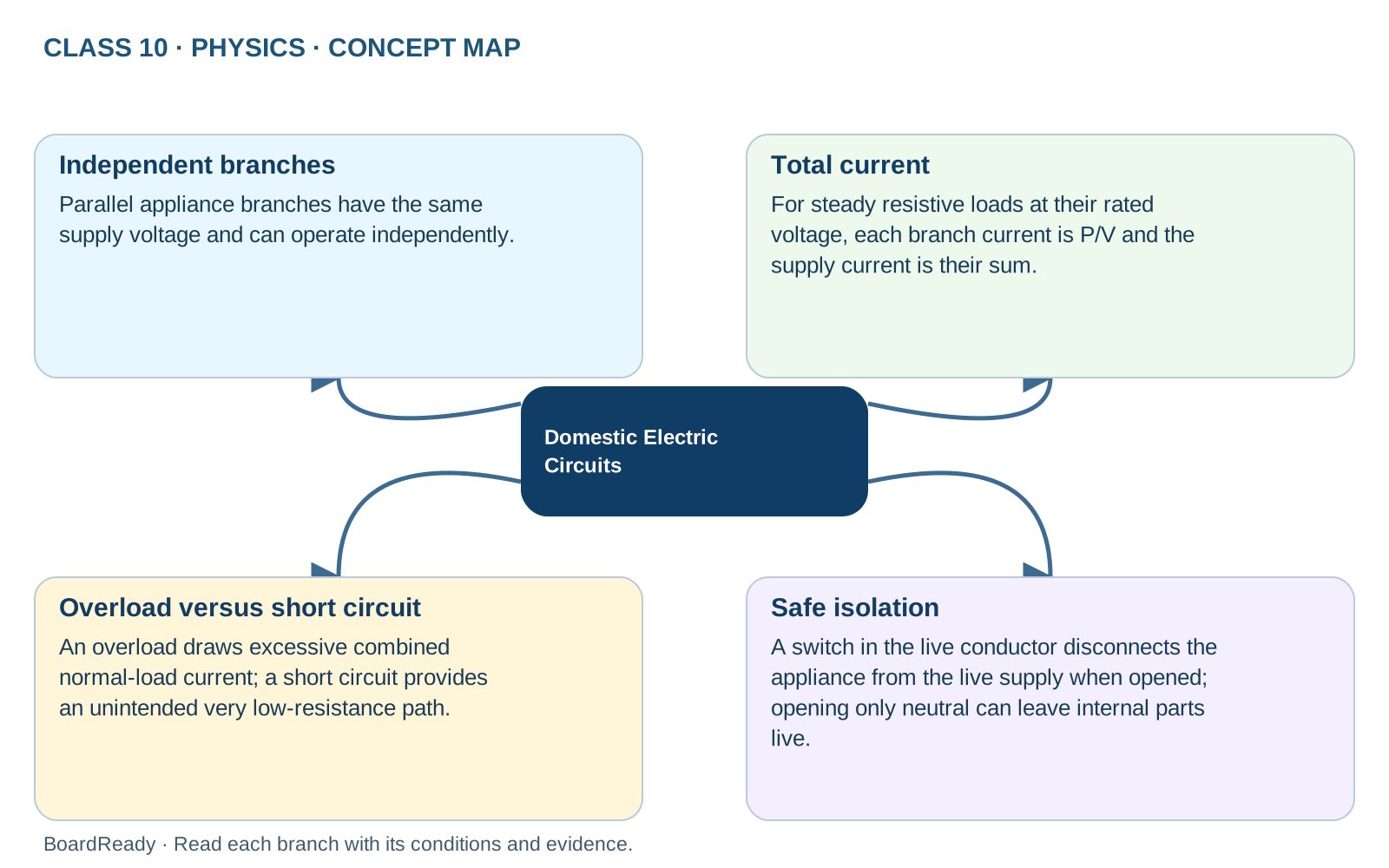
- 1Domestic Electric Circuits -> Independent branches: Parallel appliance branches have the same supply voltage and can operate independently.
- 2Domestic Electric Circuits -> Total current: For steady resistive loads at their rated voltage, each branch current is P/V and the supply current is their sum.
- 3Domestic Electric Circuits -> Overload versus short circuit: An overload draws excessive combined normal-load current; a short circuit provides an unintended very low-resistance path.
- 4Domestic Electric Circuits -> Safe isolation: A switch in the live conductor disconnects the appliance from the live supply when opened; opening only neutral can leave internal parts live.