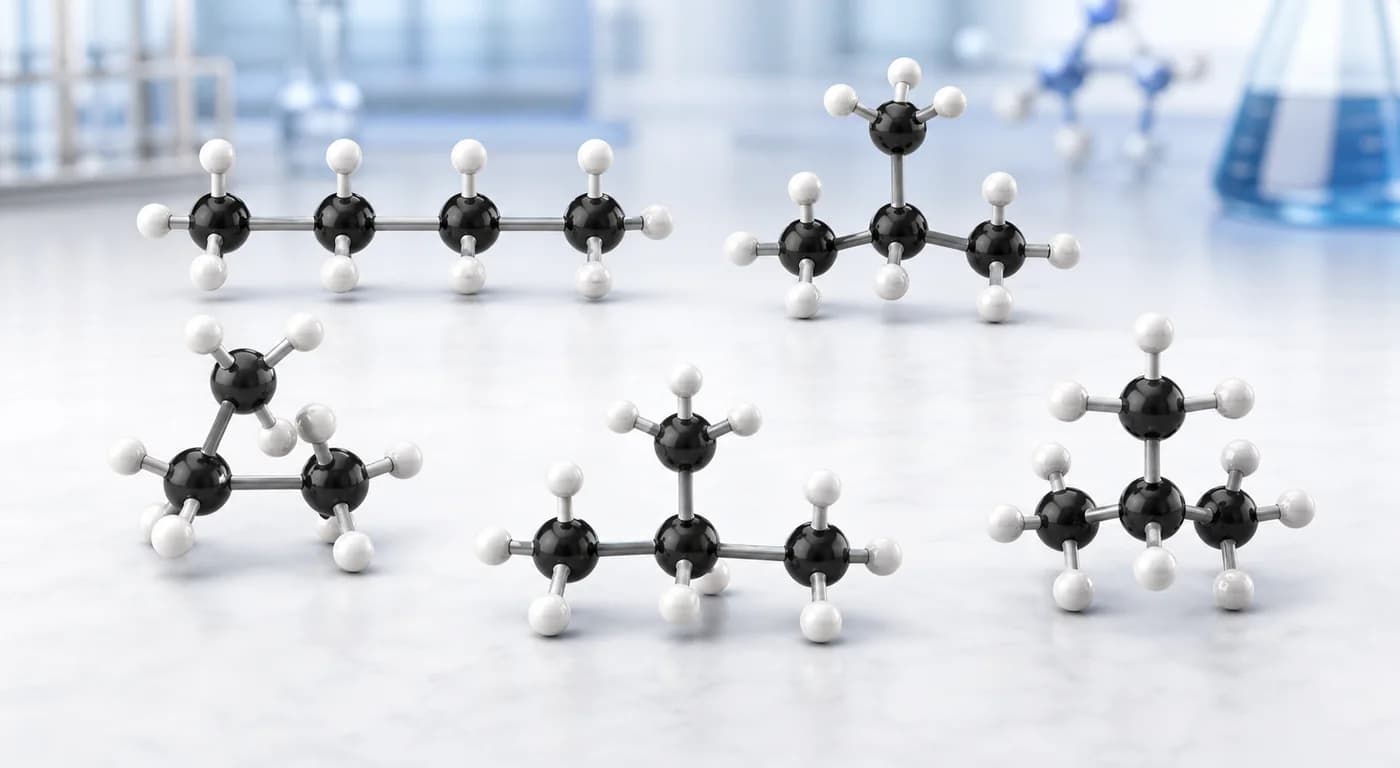
Nomenclature and Isomerism focuses on Nomenclature and Isomerism focuses on Nomenclature and Isomerism focuses on Name simple organic compounds, draw structures, and identify chain and position isomerism. When naming organic compounds, always start with the parent chain and then add substituents in alphabetical order. For isomers, look for differences in carbon chains or positions of functional groups. In exams, be clear about distinguishing between different types of isomerism. Pay attention to how changes in the arrangement of atoms can lead to new compounds with potentially different properties. Follow the IUPAC rules for naming organic compounds, starting with the parent hydrocarbon and adding prefixes for substituents. Nomenclature gives the correct name to an organic compound, while isomerism explains how the same formula can have different structures. Nomenclature and Isomerism focuses on Name simple organic compounds, draw structures, and identify chain and position isomerism. When naming organic compounds, always start with the parent chain and then add substituents in alphabetical order. For isomers, look for differences in carbon chains or positions of functional groups. In exams, be clear about distinguishing between different types of isomerism. Pay attention to how changes in the arrangement of atoms can lead to new compounds with potentially different properties. Follow the IUPAC rules for naming organic compounds, starting with the parent hydrocarbon and adding prefixes for substituents. When naming organic compounds, always start with the parent chain and then add substituents in alphabetical order. For isomers, look for differences in carbon chains or positions of functional groups. Nomenclature and Isomerism must be answered with exact chemistry vocabulary, not only general description. Nomenclature gives the correct name to an organic compound, while isomerism explains how the same formula can have different structures. Nomenclature and Isomerism focuses on Nomenclature and Isomerism focuses on Name simple organic compounds, draw structures, and identify chain and position isomerism. When naming organic compounds, always start with the parent chain and then add substituents in alphabetical order. For isomers, look for differences in carbon chains or positions of functional groups. In exams, be clear about distinguishing between different types of isomerism. Pay attention to how changes in the arrangement of atoms can lead to new compounds with potentially different properties. Follow the IUPAC rules for naming organic compounds, starting with the parent hydrocarbon and adding prefixes for substituents. Nomenclature gives the correct name to an organic compound, while isomerism explains how the same formula can have different structures. Nomenclature and Isomerism focuses on Name simple organic compounds, draw structures, and identify chain and position isomerism. When naming organic compounds, always start with the parent chain and then add substituents in alphabetical order. For isomers, look for differences in carbon chains or positions of functional groups. In exams, be clear about distinguishing between different types of isomerism. Pay attention to how changes in the arrangement of atoms can lead to new compounds with potentially different properties. Follow the IUPAC rules for naming organic compounds, starting with the parent hydrocarbon and adding prefixes for substituents. When naming organic compounds, always start with the parent chain and then add substituents in alphabetical order. For isomers, look for differences in carbon chains or positions of functional groups. Nomenclature and Isomerism must be answered with exact chemistry vocabulary, not only general description. Nomenclature gives the correct name to an organic compound, while isomerism explains how the same formula can have different structures. Nomenclature and Isomerism must be answered with exact chemistry vocabulary, not only general description.