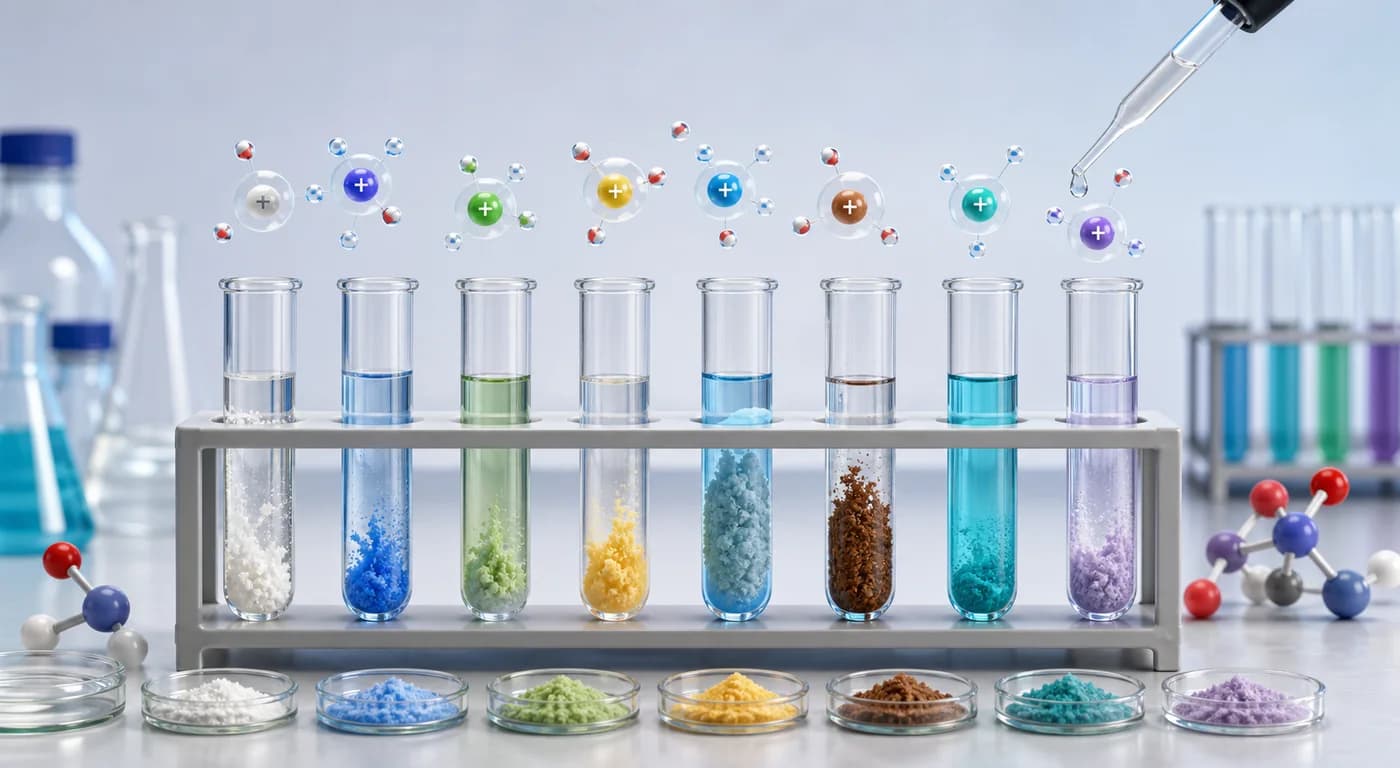
Tests for Cations focuses on Tests for Cations focuses on Tests for Cations focuses on Use flame tests and reagent-based observations to identify common metal cations. When performing flame tests, ensure that all reagents and equipment are clean to avoid contamination. Also, remember that some cations may require specific conditions or additional tests for accurate identification. In exams, always specify the exact metal cation identified after conducting relevant tests. Be aware of common mistakes such as confusing similar colors in flame tests or misinterpreting precipitate reactions. Different metal cations produce distinct colors when heated in a flame. For example, lithium produces a crimson red color and potassium produces a lilac/purple color. Cation analysis depends on the correct reagent, precipitate colour, and solubility behaviour. Tests for Cations focuses on Use flame tests and reagent-based observations to identify common metal cations. When performing flame tests, ensure that all reagents and equipment are clean to avoid contamination. Also, remember that some cations may require specific conditions or additional tests for accurate identification. In exams, always specify the exact metal cation identified after conducting relevant tests. Be aware of common mistakes such as confusing similar colors in flame tests or misinterpreting precipitate reactions. Different metal cations produce distinct colors when heated in a flame. For example, lithium produces a crimson red color and potassium produces a lilac/purple color. When performing flame tests, ensure that all reagents and equipment are clean to avoid contamination. Also, remember that some cations may require specific conditions or additional tests for accurate identification. Tests for Cations must be answered with exact chemistry vocabulary, not only general description. Cation analysis depends on the correct reagent, precipitate colour, and solubility behaviour. Tests for Cations focuses on Tests for Cations focuses on Use flame tests and reagent-based observations to identify common metal cations. When performing flame tests, ensure that all reagents and equipment are clean to avoid contamination. Also, remember that some cations may require specific conditions or additional tests for accurate identification. In exams, always specify the exact metal cation identified after conducting relevant tests. Be aware of common mistakes such as confusing similar colors in flame tests or misinterpreting precipitate reactions. Different metal cations produce distinct colors when heated in a flame. For example, lithium produces a crimson red color and potassium produces a lilac/purple color. Cation analysis depends on the correct reagent, precipitate colour, and solubility behaviour. Tests for Cations focuses on Use flame tests and reagent-based observations to identify common metal cations. When performing flame tests, ensure that all reagents and equipment are clean to avoid contamination. Also, remember that some cations may require specific conditions or additional tests for accurate identification. In exams, always specify the exact metal cation identified after conducting relevant tests. Be aware of common mistakes such as confusing similar colors in flame tests or misinterpreting precipitate reactions. Different metal cations produce distinct colors when heated in a flame. For example, lithium produces a crimson red color and potassium produces a lilac/purple color. When performing flame tests, ensure that all reagents and equipment are clean to avoid contamination. Also, remember that some cations may require specific conditions or additional tests for accurate identification. Tests for Cations must be answered with exact chemistry vocabulary, not only general description. Cation analysis depends on the correct reagent, precipitate colour, and solubility behaviour. Tests for Cations must be answered with exact chemistry vocabulary, not only general description.