
Comparison map
Magnetic and Non-Magnetic Materials: concepts and evidence
A classroom magnet strongly attracts some materials, including iron and many steels. Being a metal does not by itself make a material strongly magnetic.Exam cue: Magnetic behaviour depends on the material, not its shine. Even different stainless steels can behave differently.
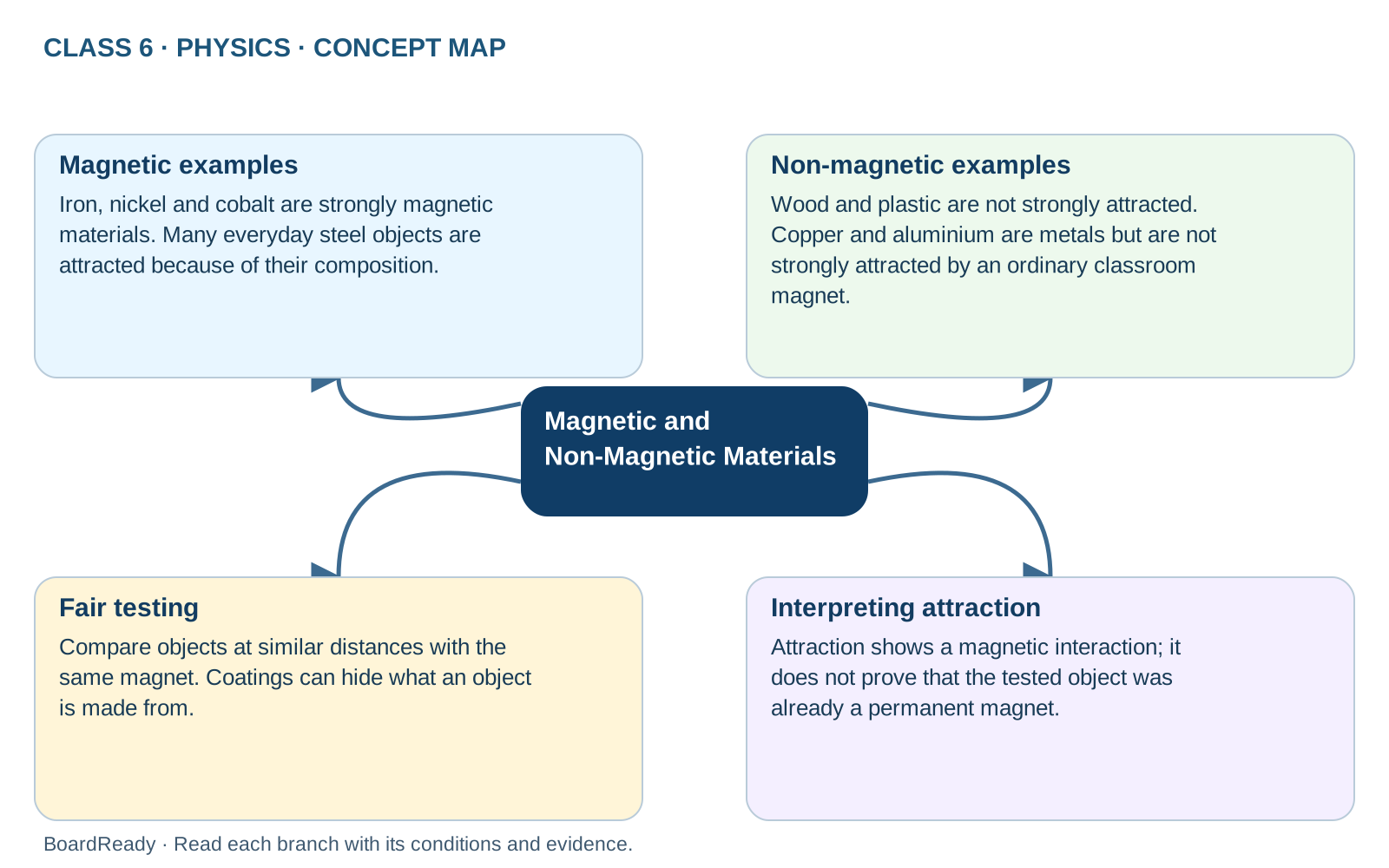
- 1Magnetic and Non-Magnetic Materials -> Magnetic examples: Iron, nickel and cobalt are strongly magnetic materials. Many everyday steel objects are attracted because of their composition.
- 2Magnetic and Non-Magnetic Materials -> Non-magnetic examples: Wood and plastic are not strongly attracted. Copper and aluminium are metals but are not strongly attracted by an ordinary classroom magnet.
- 3Magnetic and Non-Magnetic Materials -> Fair testing: Compare objects at similar distances with the same magnet. Coatings can hide what an object is made from.
- 4Magnetic and Non-Magnetic Materials -> Interpreting attraction: Attraction shows a magnetic interaction; it does not prove that the tested object was already a permanent magnet.