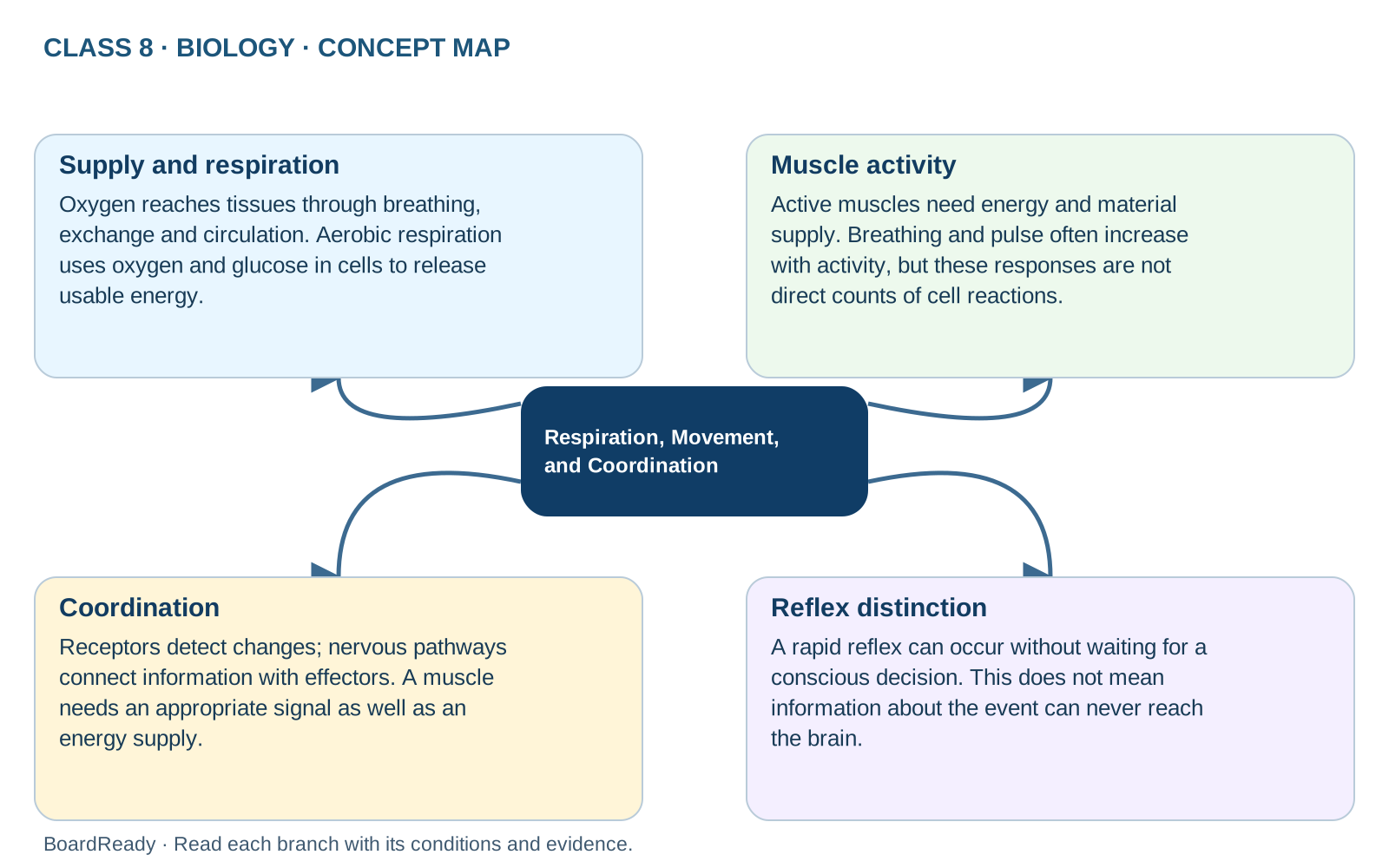
Comparison map
Respiration, Movement, and Coordination: relationships and examples
Link cell energy demand, supply routes and the information needed for a muscle response.Exam cue: Use separate arrows for information, blood transport and reactions in cells.
- 1Respiration, Movement, and Coordination -> Supply and respiration: Oxygen reaches tissues through breathing, exchange and circulation. Aerobic respiration uses oxygen and glucose in cells to release usable energy.
- 2Respiration, Movement, and Coordination -> Muscle activity: Active muscles need energy and material supply. Breathing and pulse often increase with activity, but these responses are not direct counts of cell reactions.
- 3Respiration, Movement, and Coordination -> Coordination: Receptors detect changes; nervous pathways connect information with effectors. A muscle needs an appropriate signal as well as an energy supply.
- 4Respiration, Movement, and Coordination -> Reflex distinction: A rapid reflex can occur without waiting for a conscious decision. This does not mean information about the event can never reach the brain.