Comparison map
Public Hygiene and Sanitation: concepts and evidence
Community health depends on shared systems as well as personal habits. Safe water, waste handling and sanitation interrupt different exposure routes.Exam cue: Harmful microorganisms and some contaminants may be invisible. Use a known safe supply and appropriate adult guidance.
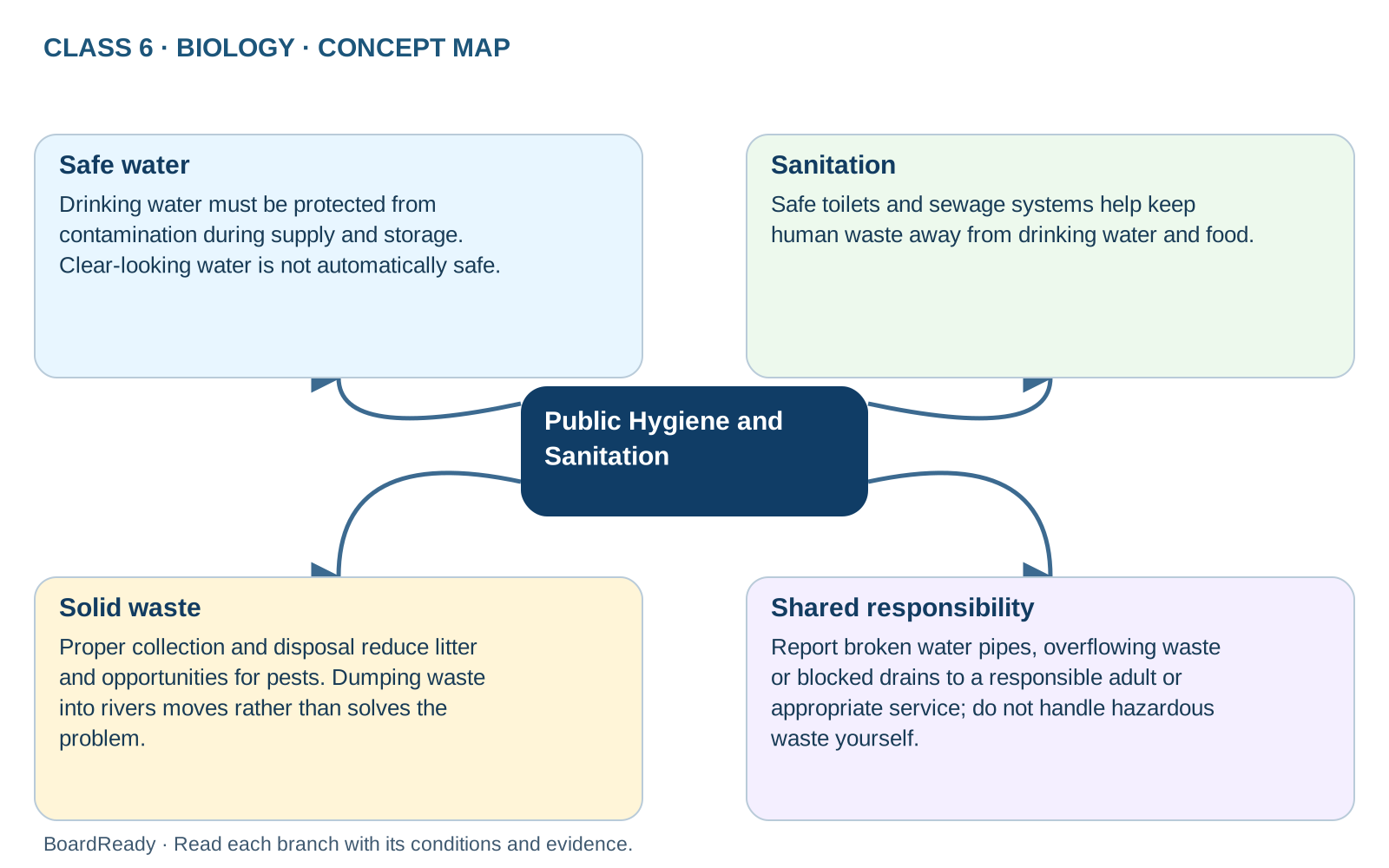
- 1Public Hygiene and Sanitation -> Safe water: Drinking water must be protected from contamination during supply and storage. Clear-looking water is not automatically safe.
- 2Public Hygiene and Sanitation -> Sanitation: Safe toilets and sewage systems help keep human waste away from drinking water and food.
- 3Public Hygiene and Sanitation -> Solid waste: Proper collection and disposal reduce litter and opportunities for pests. Dumping waste into rivers moves rather than solves the problem.
- 4Public Hygiene and Sanitation -> Shared responsibility: Report broken water pipes, overflowing waste or blocked drains to a responsible adult or appropriate service; do not handle hazardous waste yourself.