Comparison map
Living World Review: relationships and examples
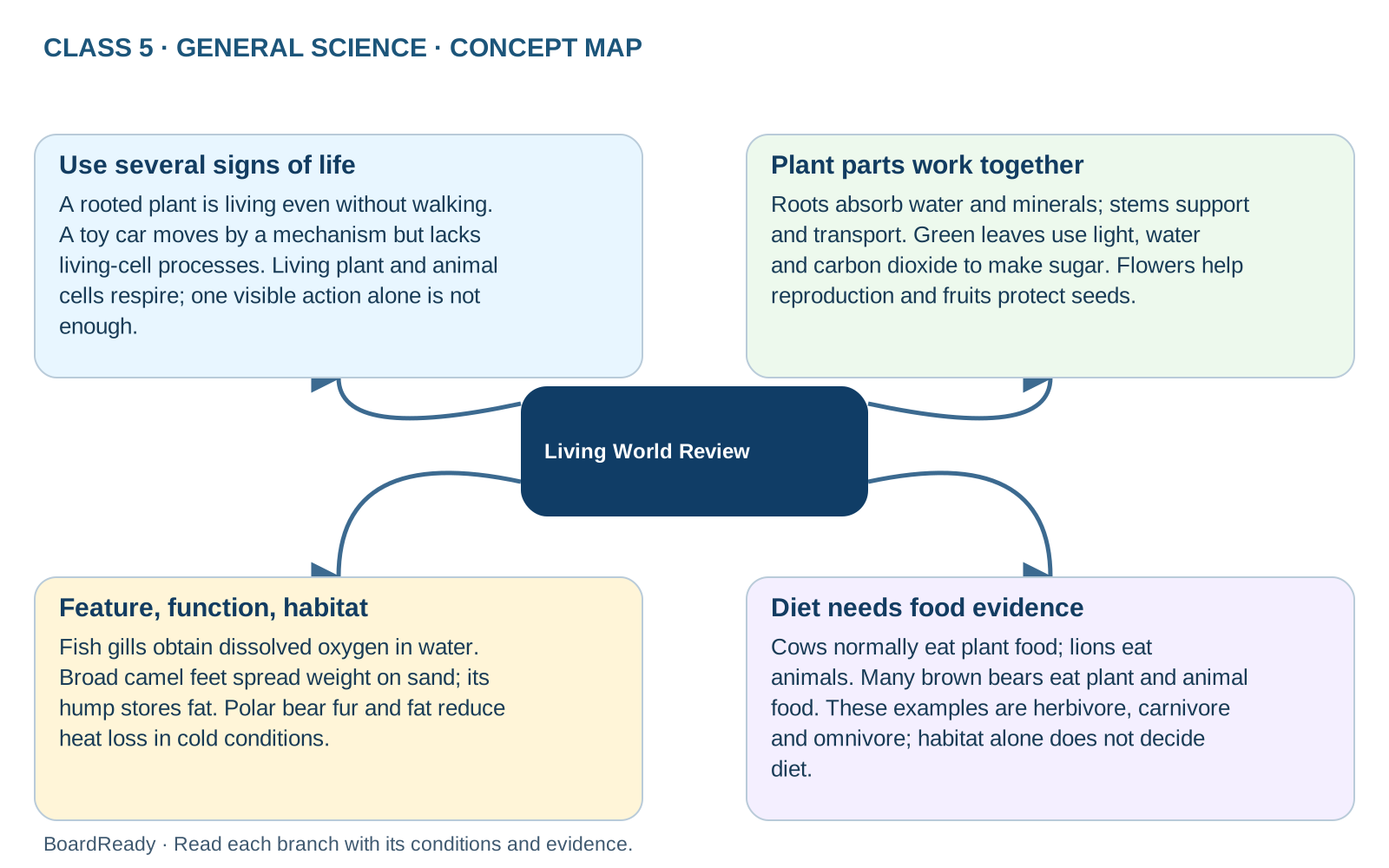
Connect life-process evidence, plant functions, habitat features and diet without mixing their meanings. Use several signs of life: A rooted plant is living even without walking. A toy car moves by a mechanism but lacks living-cell processes. Living plant and animal cells respire; one visible action alone is not enough. Plant parts work together: Roots absorb water and minerals; stems support and transport. Green leaves use light, water and carbon dioxide to make sugar. Flowers help reproduction and fruits protect seeds. Feature, function, habitat: Fish gills obtain dissolved oxygen in water. Broad camel feet spread weight on sand; its hump stores fat. Polar bear fur and fat reduce heat loss in cold conditions. Diet needs food evidence: Cows normally eat plant food; lions eat animals. Many brown bears eat plant and animal food. These examples are herbivore, carnivore and omnivore; habitat alone does not decide diet.Exam cue: State the evidence and explain the connection: part → job, feature → habitat benefit, or normal foods → diet group.
- 1Living World Review -> Use several signs of life: A rooted plant is living even without walking. A toy car moves by a mechanism but lacks living-cell processes. Living plant and animal cells respire; one visible action alone is not enough.
- 2Living World Review -> Plant parts work together: Roots absorb water and minerals; stems support and transport. Green leaves use light, water and carbon dioxide to make sugar. Flowers help reproduction and fruits protect seeds.
- 3Living World Review -> Feature, function, habitat: Fish gills obtain dissolved oxygen in water. Broad camel feet spread weight on sand; its hump stores fat. Polar bear fur and fat reduce heat loss in cold conditions.
- 4Living World Review -> Diet needs food evidence: Cows normally eat plant food; lions eat animals. Many brown bears eat plant and animal food. These examples are herbivore, carnivore and omnivore; habitat alone does not decide diet.